







Here’s how to use a pollen press: line the chamber with a small piece of parchment, fill it with dry kief, screw or crank the press closed as tight as you can by hand, leave it under pressure for a minute or more, then push the finished puck out. A little gentle warmth helps the resin stick. The result is a compact disc of pressed kief, a simple form of hash, that’s easier to store and handle than loose powder.
This 2026 guide covers what a pollen press actually presses, the tools you need, step-by-step instructions, fixes for crumbly pucks, common mistakes and safety and legal notes. It’s for adults 21+ only where cannabis is legal. A pollen press is a solventless, mechanical tool: never use butane or other solvents at home.
Key takeaways
- A “pollen” press doesn’t press pollen. It compresses kief, the resin glands (trichomes) sifted off cannabis flowers, which are sometimes wrongly called pollen (Wikipedia: Hashish).
- Pressing sifted resin into slabs is a traditional way of making hashish, and the sieved powder is usually compressed after sifting (UNODC).
- Kief is much stronger than flower (Wikipedia: Kief), so treat pressed hash as a concentrate and use small amounts.
- Keep it dry. Moisture in resin can make it moldy as it ages (UNODC).
What a pollen press does
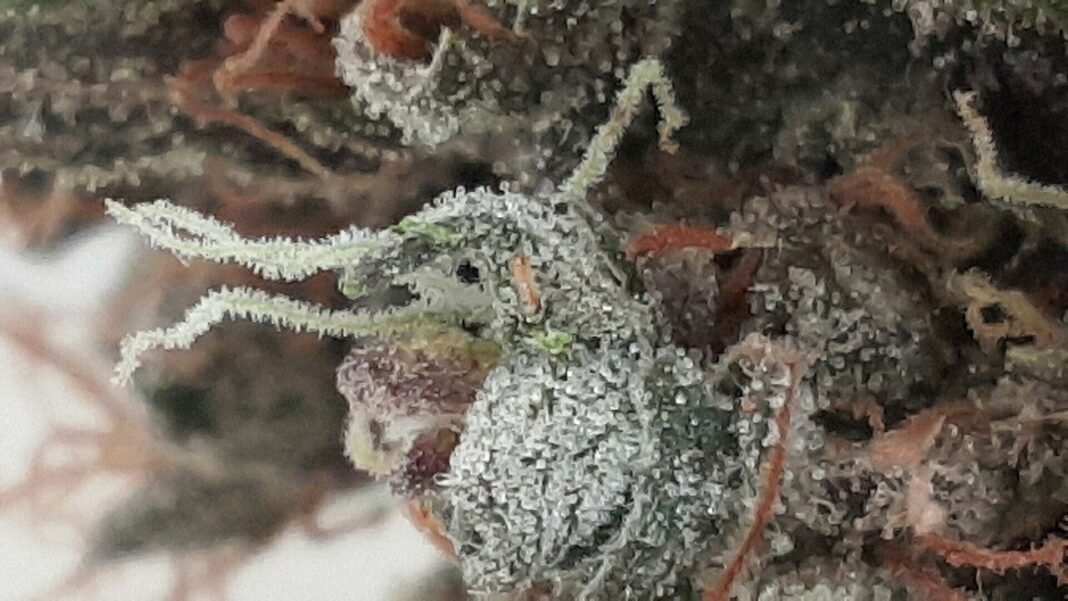
Cannabis flowers are covered in glandular trichomes that make and store resin rich in cannabinoids such as THCA and CBDA, plus terpenes (Tanney et al. 2021). When you grind or sift dry flower, the heads break off and collect as a fine powder called kief. Our how to collect kief guide covers that part.
Loose kief spills easily and its large surface area exposes it to air. A pollen press squeezes it into a dense puck. According to UNODC’s description of traditional methods, sieved resin powder is compressed into slabs, and heat and kneading help it bind (UNODC). Wikipedia’s hashish entry describes the same idea: kief compressed with heat into blocks, which becomes gooey and pliable when it’s pure (Wikipedia: Hashish).

This loose, pale green powder is kief. It’s what goes into a pollen press.
What you need
| Item | Why |
|---|---|
| Pollen press (screw type or crank type) | Applies steady pressure in a small chamber |
| Dry kief, about 1 to 3 grams | Enough for a solid puck in most small presses |
| Parchment paper discs | Stop the puck sticking to the metal |
| Small scoop or card | Moves kief into the chamber with less mess |
| Warm water or your hands (optional) | Gentle warmth helps resin bind |
| Airtight glass jar | Stores the finished puck away from air and light |
| Small scale (optional) | Weighs kief so you know how much is in each puck |
How to use a pollen press: step by step
These steps describe common home practice for a hand-operated press. Exact methods vary with the press.
- Collect dry kief. Make sure the kief is dry and free of big plant bits. The cleaner it is, the better it holds together, since finer plant material is what keeps sifted resin from binding well (UNODC).
- Clean the press. Wipe the chamber and both plungers so old residue doesn’t mix in.
- Warm the press slightly (optional). Hold it in your hands for a few minutes or set it in a cup of warm tap water while it’s closed and empty, then dry it completely. Never use an open flame or anything hot enough to burn you.
- Add a parchment disc. Thread one plunger part way in and drop a small parchment circle on top so the kief won’t stick.
- Fill the chamber. Tip the kief in with a scoop or card. Tap the press gently to settle it. Don’t overfill; leave room for the second plunger.
- Add the second disc and plunger. Put another parchment circle on top and start threading the other end in.
- Tighten firmly. Screw or crank the press as tight as you comfortably can by hand. Don’t use tools that could strip the threads.
- Wait. Leave it under pressure for at least a minute. Many people leave it longer, retightening once as the kief compresses.
- Remove the puck. Unscrew one end and push the puck out with the other plunger. Peel off the parchment.
- Store it right away. Put the puck in a labeled, airtight jar in a cool, dark place. UNODC notes THC degrades over time with exposure to air, light and humidity (UNODC).
Lex Blazer shows how to make a hash puck from grinder kief with a pollen press:
Have a question about kief or hash?

Send us your question and we’ll point you to the Hempland guide that covers it.
Ask Hempland
Why won’t my kief press together?
| Problem | Likely cause | Fix |
|---|---|---|
| Puck crumbles | Lots of plant material in the kief | Sift through a finer screen next time |
| Puck crumbles | Press and kief are cold | Warm the press gently in your hands first |
| Puck sticks to the press | No parchment | Use parchment discs on both ends |
| Press won’t close | Overfilled | Use less kief per puck |
| Puck looks damp or smells musty | Moisture | Only press fully dry kief; discard anything moldy |
Resin texture also varies by plant. Researchers note that the mix of terpenes affects how thick or runny cannabis resin is (Tanney et al. 2021), so some kief binds more easily than others.

Hand-rolled hash like this is made by rubbing and kneading resin. A pollen press gets a similar compact result mechanically.
How to use pressed kief
Pressed kief still contains mostly THCA, the acid form made in the trichomes (Tanney et al. 2021), so it needs heat to become intoxicating. Adults where it’s legal typically crumble a small piece over flower, use it in a dry herb vaporizer that handles concentrates, or decarb it for cooking. See how to use a dry herb vaporizer and how to decarb weed.
It’s potent. NIDA notes that dispensary flower and concentrates can exceed 40% THC (NIDA), and UNODC reports resin with 25% THC is not unusual (UNODC). Start with a tiny amount. If you’d rather make a softer, oil-like concentrate with heat and pressure, our how to make rosin guide covers that.
Leafly’s Master Hashmaker video explains dry sift hash, the step before pressing:
Common mistakes
- Pressing damp kief. Moisture invites mold.
- Using too much heat. Hot plates or flames can burn you and degrade the kief. Gentle hand warmth is enough for a manual press.
- Skipping parchment. The puck sticks and breaks coming out.
- Overtightening with tools. Stripped threads ruin the press.
- Using too much at once. Pressed kief is far stronger than flower.
- Using solvents to “clean up” kief. Never use butane, propane or other solvents at home. California, for example, bars volatile solvents for home-made cannabis products (California DCC).
Safety and legal notes
- For adults 21+ only, where cannabis is legal. Laws on concentrates and hash differ by state, and cities can be stricter than the state (California DCC). Check your own state’s rules.
- Cannabis is still illegal under federal law, so don’t carry it across state lines or onto federal land (California DCC).
- Kief can cause unwelcome levels of intoxication (Wikipedia: Kief). Start low, and don’t drive after use.
- Store pucks in a labeled, locked container away from kids and pets. If someone eats some by accident, call Poison Control at 1-800-222-1222.
- Talk to a healthcare professional before using THC if you’re pregnant, breastfeeding, take medication or have a health condition.
Make grinders, presses or storage gear?
Hempland readers are looking for tools like these right now. Ask us about sponsored articles and advertising for your brand.
Advertise with us
FAQ
Why is it called a pollen press if it presses kief?
Trichome resin is sometimes mistakenly called pollen, and sellers have long used the term. It has nothing to do with real plant pollen.
How much kief do I need for a pollen press?
A gram or two makes a small puck in most hand presses. Too little won’t compress well, and too much won’t let the press close.
Do I need heat to press kief?
Not necessarily, but gentle warmth helps the resin bind. A warm press usually gives a firmer puck than a cold one.
Is pressed kief the same as hash?
Pressed kief is a simple form of hash. Traditional hashish is made by sieving resin and compressing it, often with heat and kneading.
How long does pressed kief last?
Stored dry, airtight, cool and dark, it keeps for months, though THC slowly degrades over time.
Sources
Image credits and disclaimer
Image disclaimer: Images in this post are displayed from their original sources (such as Amazon, Wikimedia Commons or Unsplash) and are not hosted on Hempland.net. Product images belong to their respective brands and retailers, and other images belong to their credited creators and are used under their stated licenses. Hempland.net claims no ownership of these images. About the images: because they are hotlinked from third-party sources, they may change or disappear, and they are for illustration only and may not show the exact product, plant or method described. If you own an image and would like it credited differently or removed, please contact us.
Medical and legal disclaimer: This article is for general information and educational purposes only and reflects details available as of November 2026. It is not medical, legal or financial advice. Cannabis laws vary by country and state and are changing in 2026, and cannabis products are intended only for adults 21+ where legal. Grow only where home cultivation is legal and follow local plant limits. Talk to a qualified healthcare professional before using cannabis, THC or CBD, especially if you are pregnant, breastfeeding, take medication or have a health condition. Do not drive or operate machinery after using THC. Any steps described are followed at your own risk. Mention of a company or product is not an endorsement. Hempland.net makes no warranties about the completeness or accuracy of this information and is not liable for any loss or damage arising from its use.

Hempland Editorial researches hemp products and the hemp industry from primary sources: USDA data, lab reports and manufacturer specs.
Sponsored Content
This informative article is brought to you by NUBO CBD →