







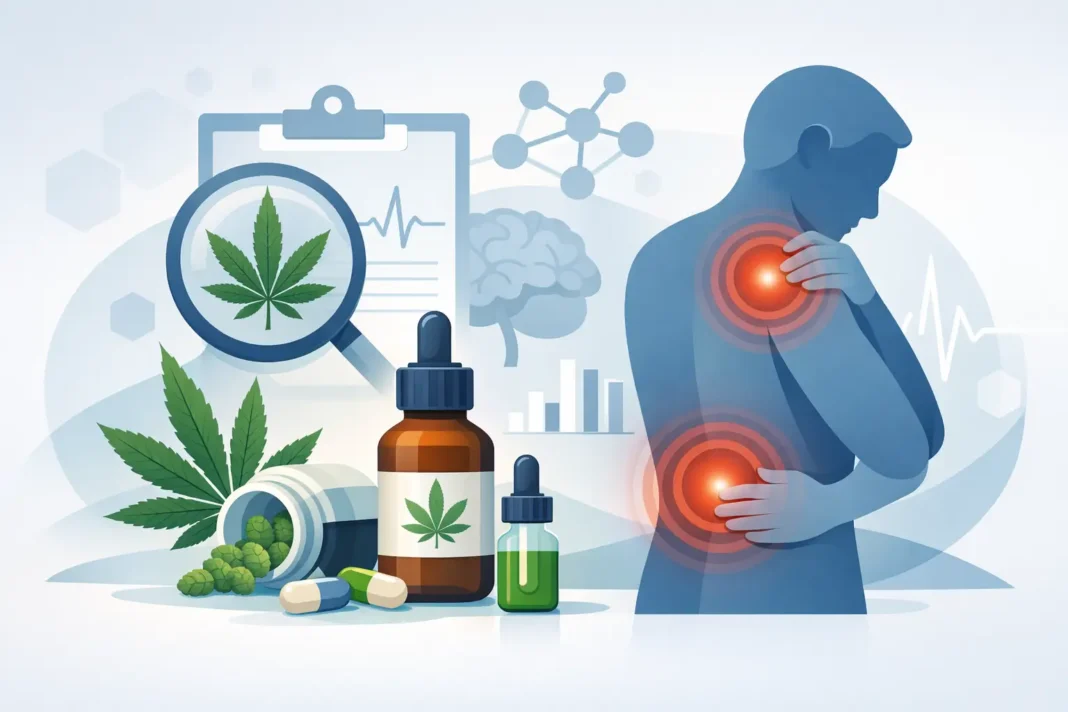

Cannabis is not a viable option for patients that have tried all conventional treatments. Medical cannabis is used to treat chronic pain. But is the research strong enough? Current answers are measured. While cannabinoids might help people who suffer from neuropathic chronic pain, the benefits of clinical trials have been modest on average and there has also been a high rate of adverse reactions.
As the European medical marijuana market expands, it is important to note this distinction. Changes in policy, enthusiasm for commercial cannabis and the demand of patients can happen faster than clinical guidelines. The evidence suggests that for prescribers, operators and regulators, a cautious message would be more appropriate than either an outright rejection of the product or large therapeutic claims.
Evidence for medical marijuana in chronic pain
Chronic pain does not refer to a single condition. This includes pain from cancer or nerve disease as well musculoskeletal problems such as osteoarthritis. The biological mechanisms of these conditions are different, making a blanket verdict about cannabis ineffective.
Chronic neuropathic symptoms are the most common. In randomised controlled studies of THC-containing medications, THC:CBD combination and certain inhaled cannabis products, a percentage of patients reported clinically significant pain relief when compared to placebo. This proportion of patients who report clinically meaningful pain relief is small and averages a very low score. However, for those whose sleep or mobility has been affected, this can have a significant impact.
The evidence is not as convincing for common musculoskeletal problems. The studies on low back pain and other conditions such as osteoarthritis or fibromyalgia tend to be small and short. The results of cancer research have also been mixed. The fact that there is no cannabis in this setting does not negate the role of cannabis. The data available is behind the claims that cannabis has a proven benefit.
The results of systematic reviews are the same: Non-inhaled cannabis products can produce small improvements in chronic pain. However, they also have a greater likelihood to cause dizziness and drowsiness as well as nausea, cognitive impairment, and drowsiness. Because of the differences in trial designs, dosages, formulations and patients, it is common to rate evidence as low or moderate.
Study results can be difficult to translate into prescription
Cannabis does not constitute a singular medicine. Oil prepared in pharmacies with defined concentrations of CBD and THC is different than a product made from high-THC flowers that’s used via a vaporiser. Oral products take longer to start and are less predictable. Inhaled product act quicker but have different considerations for respiratory issues and dosage. Some extracts contain additional ingredients. minor cannabinoids and terpenesThere is limited clinical evidence to support the claim that these ingredients reliably reduce pain.
The evidence base is behind the patient’s experience because of this product variability. The conventional drug trial usually tests a standardised treatment at a tightly controlled or fixed dosage. The medical cannabis industry prescribes cannabis based upon titrations and changes in ratios THC/CBD based on tolerability and efficacy. This may be a reflection of real-life clinical practice but complicates comparisons.
The placebo effect is also important in the research on pain. Sleep, mood, expectation, and stress can all influence pain. Pain is also subjective and fluctuates with time. Patients can feel real improvement even if the improvement is not backed up by a particular pharmacological impact. It is therefore important to conduct well-designed, blinded clinical trials. However, blinding participants who are aware of THC effects can prove difficult.
Observational research can provide useful information in real life, such as reports about better sleep and reduced use of pain medications, or an improved quality of living. However, these studies do not provide reliable evidence of causation. Cannabis treatment patients may have different characteristics from non-cannabis users, and those with no benefits may not report their results or remain in the study.
Benefits are not always measured by a pain score.
In a report on the results of a clinical trial, a one-point difference in pain may not seem impressive. A modest decrease in pain, coupled with better sleep and fewer flare-ups, can make a difference for some patients. Others will find that the change does not compensate for daytime sedation or impaired concentration, nor the costs of private treatment.
It is therefore more important to set a goal of functional treatment than to promise pain relief. Both the clinician and the client may decide that they want to determine whether treatment will allow them to walk longer, sleep more consistently, reduce their reliance upon sedatives, or return to normal work. It is hard to justify continuing the treatment when these changes don’t occur after a sufficiently monitored trial.
The cannabis plant should not also be promoted as a simple substitute for prescribing opioids. The fact that some patients claim to have reduced their opioid consumption after starting on medical cannabis is of great interest. Yet, controlled evidence demonstrating that cannabinoids consistently decrease opioid needs or improve opioid safety is still lacking. Individual care may involve substitution, but this should not be assumed for the population.
Patient selection, safety and impairment
THC accounts for most of the analgesic potential and dangers of cannabis. Short-term symptoms include nausea, dizziness and fatigue. The effects of these drugs are especially relevant for people who operate machines, drive cars, perform safety-critical tasks, or take care of children.
In vulnerable individuals, higher THC levels can lead to acute anxiety or panic symptoms, paranoia and, at times, psychotic manifestations. A risk assessment must take into account a family or personal history of schizophrenia, current serious mental illness, substance abuse problems and cardiovascular diseases. When dizziness and sedation are added to current medicines, older patients can also be at greater risk of falling.
Attention is needed to drug interactions. CBD affects liver enzymes which are responsible for metabolising many medicines. THC increases the sedative effect of alcohol, benzodiazepines and opioids. It is important to note that a medication review does not constitute an extra administrative task. This is part of prescribing safely.
Because safety data is insufficient, pregnant women and nursing mothers are not appropriate settings to use medical cannabis. Due to their ongoing neurodevelopment, adolescents and young adult should be treated with caution.
How to recognize good clinical practices
The first step in a credible medical cannabis path is to diagnose the patient and review existing therapies. It’s not about a menu of products. The document should identify the type of pain, treatable factors such as depression or poor sleep, and record medicines that have been tried. Even when cannabinoids are being considered, physical rehabilitation, psychological treatment and specific condition management remain important.
When a test is necessary, it is best to begin low and gradually increase, especially with THC. Safety is improved and outcomes are easier to evaluate with standardized products and clearly defined dosing directions. The patients need to be given direct information on driving under the influence of alcohol and THC, as well as legal implications. The UK doesn’t automatically consider a prescription to be a valid driving license.
It is better to plan the follow-up than leave it open ended. Recording baseline pain, sleep and function as well as side effects, other medications used, and the use of these medicines, should then be reviewed. Treatments that do not produce a meaningful gain in function or cause persistent negative effects should be reduced, or even stopped. This disciplined method protects patients, and increases the legitimacy of programs that use medical cannabis.
Policy and Market Implication
A practical problem for European policymakers is the disparity between high certainty evidence and patient demands. Patients who are denied access to legitimate products may become dependent on them. Systems that are too permissive can encourage exaggerated and inconsistent marketing, as well as prescribing without regard to evidence. The medical industry cannot be trusted if either outcome occurs.
A model of regulated access that is tied to standards for products, education and training for clinicians, data collection, and pharmacovigilance, will be more durable. Well-designed national registries, as well as pragmatic trials, could help answer some of the questions conventional short studies struggled with: what pain phenotypes responded, which formulations were best tolerated and if benefits lasted beyond a couple months.
The commercial lessons are equally obvious. The basis for product differentiation is not based on claims of pain relief. Investors in companies that are consistent, have transparent content on cannabinoids, report adverse events and conduct clinically relevant studies will benefit from the demands of payers and regulatory agencies.
There is no evidence to support the use of medical cannabis for chronic pain. The evidence does not support treating medical cannabis as a universal solution to chronic pain. It is not louder claims that will be the next development. The next useful development will not be a louder claim.