







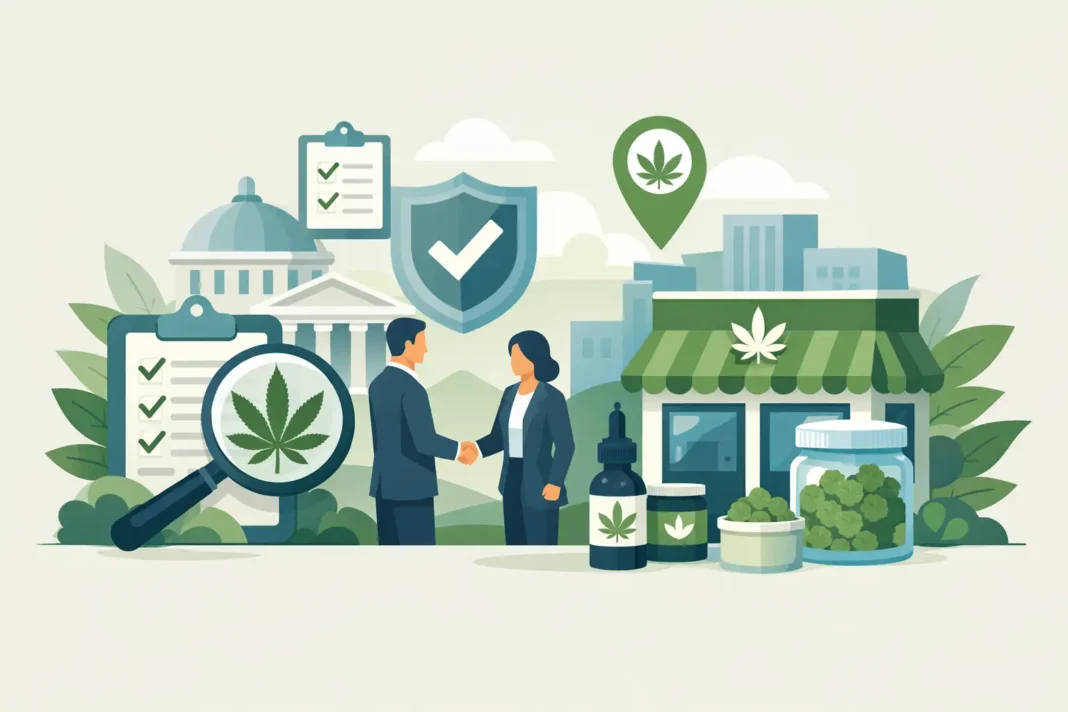

If one approval is not obtained, a dispensary may have an attractive shopfront and experienced staff, but still fail to sell even a single grain of cannabis. It is a fact that cannot be ignored. What is the licensing process for dispensaries?Cannabis retailing is not covered under a business license. This is a multi-layered process of regulation that takes into account the local community, product, and premises.
The first concern for European investors and operators isn’t how to fill out a form. A dispensary-style model may be allowed or not. In Europe, cannabis access is being developed in many different ways, such as pharmacy-led systems for medical purposes, regulated projects, non profit associations, tolerable retail arrangements, and markets that are strictly defined. In some countries, a licence may be valid in another country but not in that one.
Start with the legal model to understand how dispensary licensing is done
The word “dispensary”, especially in North American reporting, is used very loosely. The rules governing a Dutch-style coffeeshop, a Dutch medical pharmacy and an adult use retailer are all different.
There is currently no retail market in the UK for cannabis used by adults. Specialized clinicians may prescribe medical cannabis. However, the supply and handling of controlled substances are still subject to pharmacy and medicines rules. It is, therefore, not feasible to obtain a license for a traditional cannabis shop.
The German example is another good one for why labels are important. The Cannabis Act of Germany created an environment for home cultivation and non-commercial associations, while the medical cannabis was supplied by pharmacies. This does not equate to a commercially licensed dispensary. The federal government may change its policy or launch regional pilot programs in the future, which could lead to more retail opportunities. But operators need to assess current laws before making plans.
The Netherlands, on the other hand, combines a municipal policy for coffeeshops with a nationwide experiment to test controlled cannabis supply. Switzerland authorized controlled adult use pilot projects. Malta allows non-profit cannabis organizations under a different model. Each structure addresses a distinct policy question and sets different limitations on membership, ownership, quantity, sourcing, and advertising.
Commercially, the lesson is obvious: A cannabis retailer’s licence can only be as expansive as the local laws and statutes that support it. Cannabis sales are not allowed by a general retail licence, nor is every category of product permitted, like CBD, extracts, edibles, or CBD-containing CBD goods.
What approvals are required for a retail cannabis licence?
In cases where a commercial path exists, the licensing process is usually a joint effort between several authorities. National regulators may regulate cannabis activities or controlled substances while municipalities determine whether proposed premises are allowed to operate in a certain location. The cannabis application may be accompanied by other requirements such as tax registration, registration of the company, and approvals for fire safety.
The applicant is expected to set up a legally binding entity, reveal beneficial owners, and show that the funding came from reputable sources. The regulators want to find out who controls the company, if they have any criminal convictions and if investors are able to exert their influence even despite not being disclosed.
The application will also include a site inspection. Distances to schools, youth centers, health care settings, or cannabis businesses may be restricted. Even if national laws permit cannabis sales, local planning regulations can still be important. The unit may look perfect from the retail point of view, but it could fail due to its landlord restrictions, zoning classification or lack of access control.
Security is another important test. The authorities may demand alarm systems, CCTV, limited storage areas, visitor checks, safe transport procedures, and documentation of incidents. The standard is determined by the country and whether cannabis has been classified as a controlled substance. However, the logic remains the same: Regulators expect operators to protect against theft, diversion, and unauthorised entry.
The traceability of a product is more than a small detail.
The licensing authorities pay increasing attention to whether or not cannabis can be traced back from the authorized source through final supply. This means that retailers must keep clear purchase records, batch details, stock count, returns policies, and system for quarantining non-compliant or recalled goods.
This is a requirement that creates a real divide between businesses which are legal and those who just appear to be compliant. Dispensaries cannot depend on verbal promises from suppliers. A dispensary must have proof that all products were cultivated and processed within the approved system, as well as tested, transported, and labelled.
Testing and labelling rules Variations are large. Some medical markets impose standards of pharmaceutical grade or demand that products conform to defined specifications. Pilot programmes for adult-use may limit potency and packaging, and require child-resistant containers. Operators may find that marketing restrictions are more restrictive than they expect, especially when there is a concern over youth appeal and therapeutic claims.
Traceability is as important to businesses as conformity. Costs are ongoing for software from seed-to-sale, lab testing, training staff, and stock reconciliation. The licence fee represents only a small part of regulatory costs.
Why and who do regulators evaluate?
Most licensing systems check the background of the person behind the business, as well as the location. Background checks may include directors, major shareholders, managers, and in some instances, key employees. Background checks are not necessarily triggered by a past conviction. However, crimes involving fraud, violence or organized crime, as well as drug-related offenses, will likely be taken seriously.
Competence matters. Regulators will expect that named responsible people have expertise in pharmacy practice, retail, quality, or security management. Professional oversight in a medical environment may be required. If a license holder is in the commercial sector, they may still have to prove that staff members understand how to verify age, handle products, keep records and respond to suspicions about diversion.
Informal ownership agreements are risky for this reason. The presence of side agreements, undeclared lenders or nominee shareholders may threaten an application. They can also be used as grounds to suspend the application. Cannabis is still a highly-regulated sector. Transparency does not just refer to corporate governance.
The local politics and timing of the approval process
The licensing process is not always quick. Even the best-prepared applicants may have to face lengthy consultations, additional information requests, inspections or appeals. Local opposition to the application can prolong it, particularly when there is discretionary authority over approvals of premises or hours.
The cost is equally jurisdiction-specific. The cost of application and renewal may seem modest when compared to the costs associated with legal advice, commitments for property, security, insurance and compliance personnel, as well as working capital. Some schemes demand proof of the company’s ability to remain solvent prior to trading. Some schemes cap the number available of licenses, making the approval process more competitive than simple.
The operators must be careful when signing a lengthy lease without confirming their licensing strategy. For some markets, leases with conditional terms and break clauses that are carefully drafted can be essential tools for risk management. It is the same for technology, supplier contracts and recruitment. The application for a licence does not guarantee the opening of a business.
The licence itself is not the end of the compliance process
Dispensaries are generally subject to ongoing obligations once they have been authorised. This can include reporting on a regular basis, staff checks, renewal of licences, notifying ownership changes and unannounced inspectors. Regulators can review any discrepancies, such as between sales and purchases, or failures to verify age, along with complaints by neighbours or incidents of security.
In the event of non-compliance, there may be corrective orders issued, as well as fines and product seizure, or license suspension or revocation. It can have a negative impact on your reputation, especially in a market that is still developing, when banks, landlords and suppliers, as well as local authorities assess sector risks.
Investors are not most interested in the launch date of a retailer or its shop design. The operation must have a legal supply chain and a budget for compliance that is realistic, as well as management who can work under constant supervision. It is equally important for policymakers to have clear, workable licensing regulations. Overly vague rules can actually push the demand toward unregulated channels.
Next cannabis retail opportunities may be created by a pilot program, a medical change or a decision made locally. Businesses who treat the license as a discipline to be followed, and not just a document that must be obtained, will do better when this happens.