






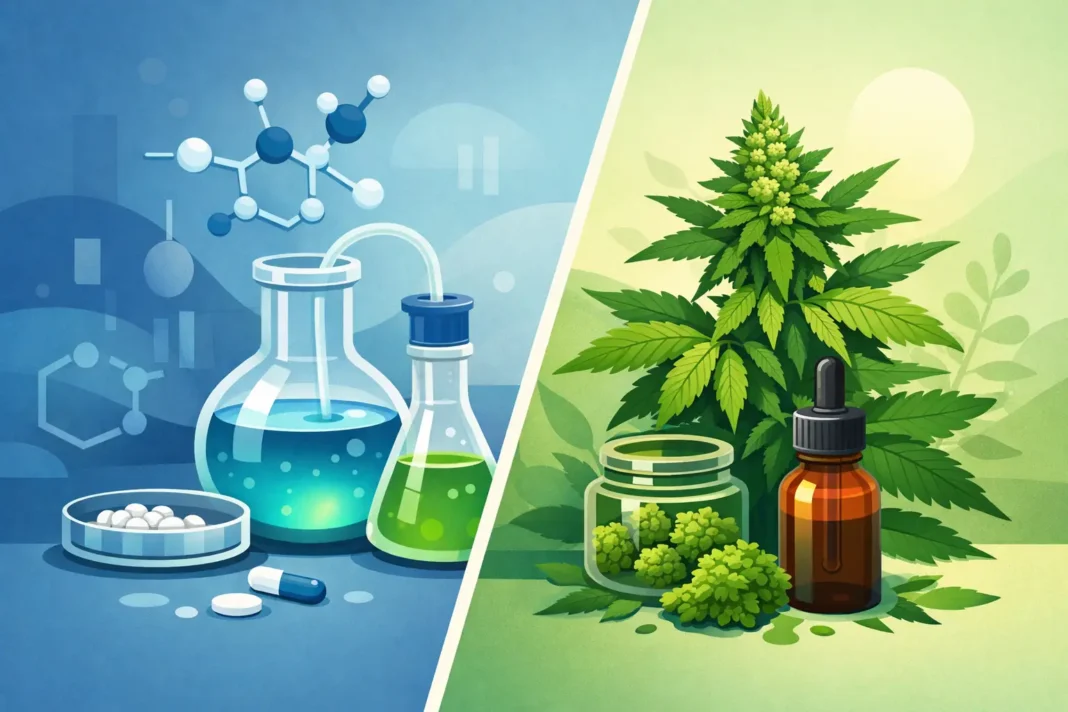

The packaging of cannabis flower that is labeled as “herbal smudge” may look similar to a packet of herbal incense. The pharmacology of cannabis, the supply chain or risk profile could be totally different. In the debate on Synthetic cannabinoids and cannabisThis distinction goes beyond semantics. It affects emergency treatment, workplace policy and enforcement, clinical decisions, public health messages, and criminal law.
In Europe’s regulated marijuana sector, the problem is that different substances are frequently grouped under one banner. The categories of illicit products such as Spice and K2, prescription cannabinoid medicine, laboratory-made THCA and regulated cannabis based medicines cannot be interchanged. By treating them as such, real risks are obscured and policy discussions about legitimate patient access can be distorted.
Synthetic cannabinoids and cannabis: the main differences
Cannabis is a plant containing hundreds of chemical compounds, including cannabinoids such as delta-9-tetrahydrocannabinol (THC) and cannabidiol (CBD). THC is the main ingredient in cannabis that produces its intoxicating effects. The effects of any given product can vary greatly depending on its THC or CBD content, dosage, route of administration and individual tolerance.
Synthetic cannabinoids, or synthetic cannabinoids, are chemicals that humans have created to interact with the cannabinoid-receptors in the body. In news reports, the term is used to describe synthetic cannabinoid agonists (SCRAs), which are sprayed on plant material, mixed with liquids, or sold in powder form. Spice is a common name for these products, which have no real connection to cannabis.
The key difference lies in the activity of receptors. THC can be described as partial agonist of the CB1 CB receptor. Many illicit SCRAs activate this receptor more strongly, and in a less predictable way. The experience can be drastically altered by a tiny change in the concentration, composition or distribution of a batch. It helps to explain why adverse effects can be more severe than those associated with cannabis products that are regulated.
Cannabis does not come without risk. High-THC products may cause anxiety, panic attacks, short-term memory issues, and even psychotic symptoms in some people. Frequent cannabis use can lead to cannabis use disorders. The comparison does not negate the fact that the potency of synthetic illicit cannabinoids is unpredictable and their chemical composition changes frequently. This creates a level of concern.
The dangers of illicit synthetic products
A person who is using illegal cannabis may only have limited knowledge about its potency, especially on unregulated markets. Some people who use synthetic cannabinoids may not be aware of the active ingredient. Packaging can be misleading. A single packet may contain material that is unevenly distributed, resulting in a markedly different inhalation.
SCRAs are linked with severe agitation or confusion, hallucinations and seizures. They can also cause chest pain, nausea, loss of consciousness, and acute psychiatric discomfort. When products are extremely potent, are mixed with other substances, or are used by individuals with cardiovascular or mental conditions it is more likely that serious outcomes will occur. The symptoms of dependence and withdrawal are also pronounced. These include anxiety, sleep disturbance, sweating and nausea.
The danger is not just that the product is synthetic. The illicit market rewards novelty in chemical compounds and attempts to evade detection. Producers can switch to a different analogue when a substance becomes controlled. The health services, toxicology labs and drug-checking programs may be working behind the scenes, with limited capability to quickly identify a newly circulated compound.
This presents a communication challenge. Public warnings need to be direct about the acute dangers without implying that all cannabis-derived or laboratory-manufactured cannabinoid medicines are equivalent to Spice. The framing of the issue can stigmatise some patients, while not helping people recognize an immediate risk of overdose.
Medical cannabinoid medicine is a separate category
Some cannabinoid medications that are prescribed or authorised by doctors use synthetic cannabinoid compounds or purified cannabinoid components. Dronabinol is a synthetic THC available in certain markets. Nabilone, on the other hand, is a cannabinoid analog used for clinical purposes. Nabiximols are cannabis-derived medicines with standardized THC and CBD contents. Their availability and indications vary between European countries.
What separates these medicines from illicit synthetic cannabinoids is not a simplistic natural-versus-artificial divide. Standardisation, manufacturing controls and known active ingredients are important. Clinical evidence, information on dosing, pharmacovigilance, and medical oversight also play a role. In certain circumstances, a synthetic medicine may be appropriate. The same standard cannot be applied to a packet of unidentified plant material sprayed.
This distinction also applies to medical cannabis flowers and extracts that are regulated. These products can still have side effects, interact negatively with other medications and require careful prescribing. Patients should not assume a plant-derived product is harmless. Yet, they are produced and supplied in a framework designed to manage quality and trackability. This is fundamentally different than the illicit SCRA marketplace.
Chemistry is changing at a rapid pace, and so must the regulations.
Cannabis law is fragmented across Europe. Medical access frameworksThe policy on adult-use, the rules for cultivation and enforcement priorities are different in each country. The regulation of synthetic cannabinoid is also complicated because regulators are required to deal with both well-known chemicals and new analogues.
In the UK, many cannabinoids synthetic have been placed under drug control. The Psychoactive Substances Act also targets the supply of psychoactive substances that are not exempted from or controlled. In other parts of Europe, authorities combine substance-specific scheduling with generic controls and temporary prohibitions. Businesses, clinicians and advocacy groups should pay attention to the details because a product’s legal status may change quickly and not be obvious by its branding.
Policymakers have not been able to eliminate demand by a broad prohibition. Synthetic cannabinoids are linked to specific harms among prisoners, people who are homeless, and other settings in which low-cost, concealability, or drug testing concerns influence the use. For effective responses, it is not only necessary to enforce the law, but also to provide targeted health support, credible educational materials, mental health services, and treatment pathways.
What to look for as a consumer and professional
It is best to avoid using product names, colorful packaging, or the term “herbal” when claiming safety. Regulated medical product are available only through licensed clinical and pharmaceutical channels. These products have identifiable producers, batch information, and an easy way to report adverse effects. Illicit synthetic products rely on ambiguity because of their unstable legal status and unclear contents.
Clinicians and frontline workers should assess a patient who presents with severe agitation or confusion, or has seizures, after using a cannabis product. Routine toxicology screenings may not detect SCRAs that are newer. Clinical history and symptom patterns will remain important. Contact emergency services if someone is unconscious or has a convulsion, or if they are experiencing chest pains, or are struggling to breath, or if they may harm themselves or others.
Precision is also important to employers and operators of the cannabis industry. Conflating illegal SCRAs and regulated cannabis may undermine public confidence in the medical programs, and can obscure the value tested, labelled products. A risk communication that portrays cannabis as harmless is also unreliable. In order to maintain the sector’s legitimacy, it is important that both product-specific harms as well as the importance of regulation are acknowledged.
Precision, not panic, is the lesson of policy.
The question of synthetic cannabinoids or cannabis is often reduced into a headline comparison between “fake drugs” and “real drugs”. It is more useful to distinguish between products that are known, with quality control and oversight, and those which are unknown and unregulated.
This distinction will become more important as Europe’s cannabis laws continue to evolve. Clear labels and proportionate regulation, as well as honest public education, will protect patients and consumers more than treating cannabinoids products the same.