







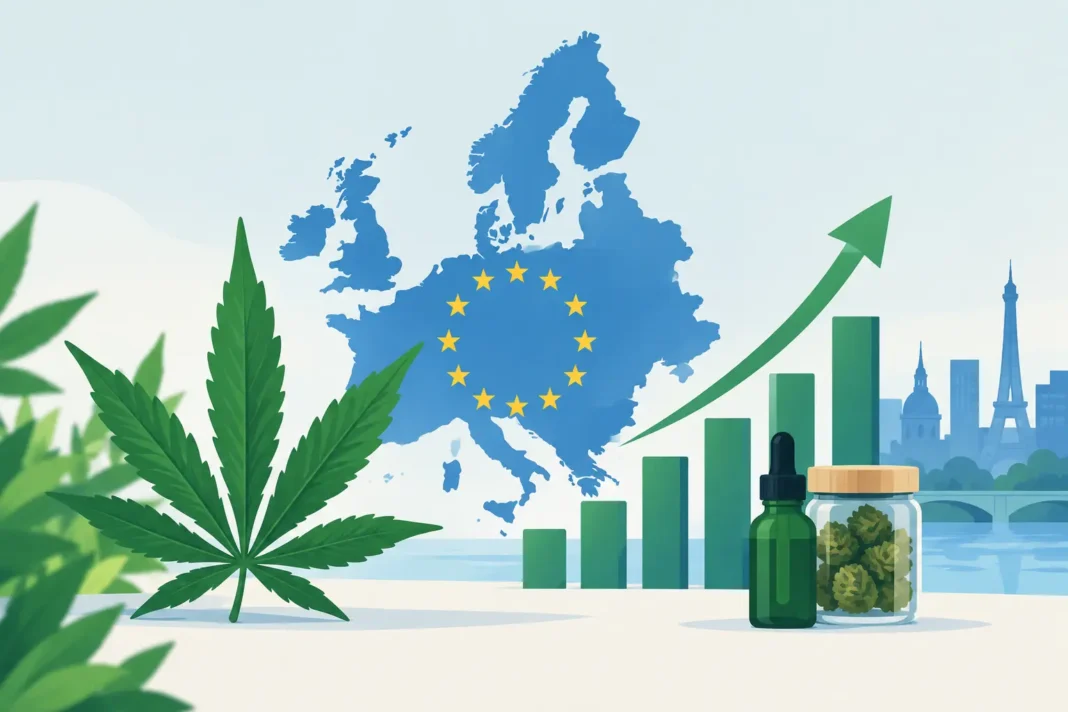

Cannabis reform is often reduced to a single question: is a country legalising cannabis or not? For patients, operators and investors, that framing misses the practical consequences. What cannabis reform means is a redistribution of rights, responsibilities and risk across healthcare, policing, product regulation and the commercial market.
A change to possession rules may reduce criminal penalties without creating a legal supply chain. A medical programme may permit prescribed products while leaving most patients unable to afford them. A regulated adult-use framework may open opportunities for cultivators and retailers, but only after imposing strict rules on licensing, testing, advertising and tax. The detail determines who benefits.
What cannabis reform means in practice
Reform is an umbrella term, not a uniform policy outcome. Across Europe, governments are taking different routes shaped by domestic law, public-health priorities, international treaty commitments and political appetite. That is why a headline about legalisation in one jurisdiction should never be read as a blueprint for another.
At one end, decriminalisation removes or reduces criminal sanctions for small-scale possession or personal cultivation. This can limit the long-term harm of criminal records and reduce pressure on police and courts. It does not necessarily make the market legal. Consumers may still have no regulated place to buy products, leaving unlicensed supply intact.
Medical cannabis reform operates differently. It creates a controlled route for patients to access cannabis-based medicines or prescribed cannabis products, usually through clinicians, pharmacies and licensed suppliers. The question is not only whether a programme exists, but which conditions qualify, whether doctors are willing to prescribe, how products are classified and whether public or private insurers will reimburse the cost.
Adult-use regulation goes further by establishing legal rules for cultivation, distribution, retail and consumption by adults. This is the version most associated with new commercial markets, but it is also the most complex. Policymakers must decide who can hold a licence, whether imports are allowed, how potency is displayed, where products can be sold and how youth access is prevented.
Patients gain a route to care, not guaranteed access
For the medical sector, reform can move cannabis out of an exceptional legal category and into a more recognisable healthcare setting. That may encourage clinical education, improve product standards and give patients greater certainty about cannabinoid content and contaminants. It can also make it easier to collect real-world evidence on outcomes, side effects and prescribing patterns.
Yet a legal prescription pathway is not the same as accessible treatment. A narrow list of eligible conditions, specialist-only prescribing, high consultation fees or limited product availability can keep access out of reach. In countries where reimbursement is rare, patients may remain dependent on private clinics and out-of-pocket spending.
The evidence debate also remains central. Some cannabis-based medicines have clear, authorised uses, while evidence for many other conditions is mixed, limited or still developing. Credible reform should not force clinicians to choose between stigma and overstatement. It should support appropriate prescribing, pharmacovigilance, patient follow-up and research that answers the questions patients and healthcare professionals actually face.
For patients, the strongest measure of reform is therefore practical: can they obtain a consistent, safe product through a clinician they trust, at a cost they can sustain? A statute alone cannot answer that.
A regulated market creates opportunity and compliance costs
Cannabis reform can bring a grey or illicit economy into a regulated system. That creates openings for cultivators, manufacturers, laboratories, software providers, logistics firms, pharmacies and specialist advisers. It may also create demand for quality-assurance staff, compliance professionals and medical education.
But legal market entry is rarely simple. Cannabis businesses often face extensive controls over security, seed-to-sale tracking, packaging, product testing, financial reporting and advertising. Licences can be scarce, expensive and slow to obtain. Small businesses may struggle to absorb the cost of compliance, while larger firms have greater access to capital, legal advice and established supply chains.
Tax policy is one of the decisive variables. Excessive duties can keep legal prices above those of the unregulated market. Taxes set too low may fail to fund prevention, enforcement and public-health programmes. The workable balance depends on local consumption patterns, production costs and the stated aims of reform.
Banking is another continuing constraint. Even where activity is lawful nationally, financial institutions may treat cannabis as high risk because of anti-money-laundering rules, cross-border exposure and uncertainty over enforcement. Entrepreneurs should distinguish between political announcements and the operational infrastructure needed to trade legally.
Enforcement does not disappear, it changes focus
One of reform’s most immediate effects can be a change in policing priorities. Where possession is decriminalised or regulated, police resources can be directed away from low-level possession cases and towards unlicensed commercial activity, sales to minors, organised crime and impaired driving.
That shift needs clear rules. Vague possession limits, uncertain public-consumption restrictions and inconsistent local enforcement can leave citizens and businesses unsure of their position. Employers also need proportionate workplace policies. A positive test does not automatically establish impairment at work, particularly where cannabinoids can remain detectable after their acute effects have passed.
Road safety requires similar care. Governments have a legitimate interest in preventing impaired driving, but scientific, fair enforcement should separate recent use from impairment wherever possible. Blanket measures that do not reflect this distinction may undermine confidence in the wider reform programme.
Europe will remain a patchwork market
European cannabis policy is developing through national systems rather than a single continental rulebook. The European Union influences areas such as medicines regulation, trade and product standards, but member states retain significant control over criminal law, healthcare delivery and adult-use policy. Non-EU markets add another layer of variation.
For companies, this means the phrase “European cannabis market” can be misleading. A business model that works in one country may not transfer across a border. Medical product requirements, import permissions, advertising restrictions, prescription rules and distribution channels can differ sharply. Cross-border strategy demands legal discipline, not assumptions based on a neighbour’s reform.
The UK illustrates the point. Medical cannabis is lawful on prescription, but access remains tightly constrained and recreational cannabis remains prohibited. Elsewhere, governments may tolerate personal possession, authorise limited pilot programmes or permit controlled associations without creating conventional retail. These are distinct models with distinct commercial and public-health implications.
The tests that matter after the announcement
The most useful way to assess a reform is to look beyond the launch date. Are patients using the legal medical route, or turning to unregulated sources? Are legal products competitively priced and reliably available? Are small operators able to compete? Is enforcement applied fairly? Are young people protected without treating adult consumers as criminals?
Data should guide the next stage. Policymakers need credible information on prescribing, emergency presentations, impaired driving, youth use, criminal justice outcomes, product quality and unlicensed-market activity. Businesses need transparent reporting on licences, market demand and regulatory enforcement. Patients need clearer clinical guidance and routes to raise concerns when care falls short.
Cannabis reform is not a finish line. It is a continuing policy test, and its credibility will rest on whether the rules improve real access, reduce avoidable harm and create a market that can operate openly rather than merely legally on paper.