







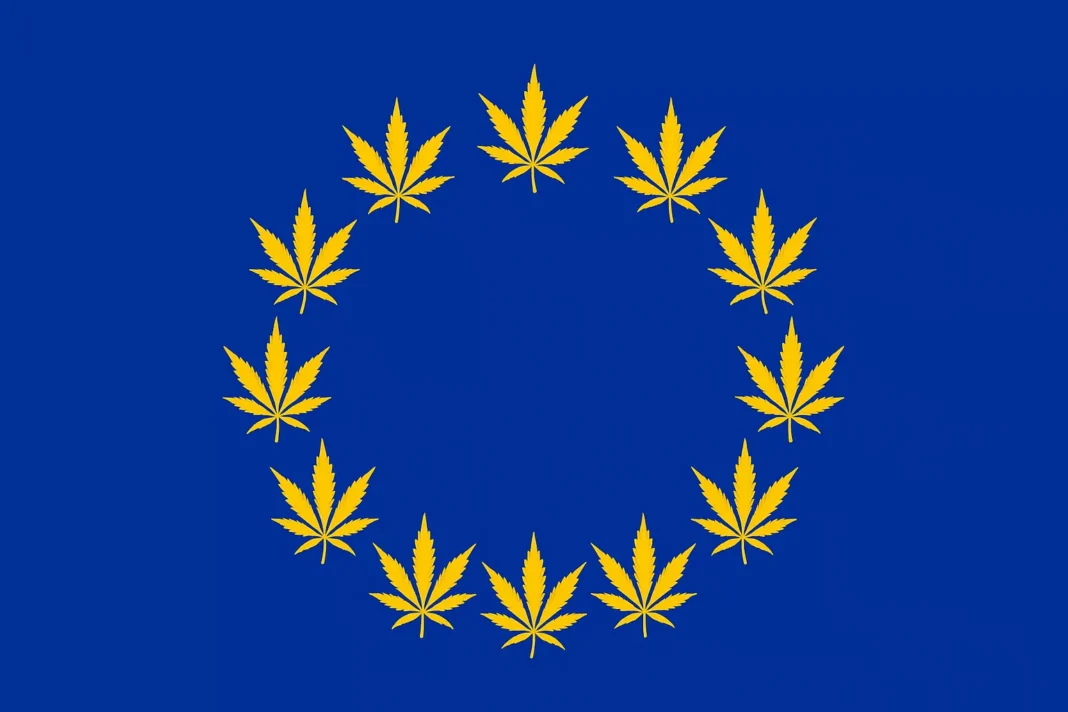

Below you can read the full statement that EUDA sent to MEDCAN24 on Cannapol’s perceived objectives.
It also declined our request for an interview with its Executive Director, Alexis Goosdeel, who had previously stated how the EU’s approach to drugs is ‘strong and explicit in relation to a human-rights-based approach, based on harm reduction and the active involvement of civil society’.
Rand and Trimbos Instituut refused to make any comments on this project. They referred us to EUDA. A spokesperson responded to MEDCAN24 by saying:
Cannapol was one of a number of major new projects commissioned by the EUDA following its recent budgetary and new mandate.
The Agency, in recent years has received numerous requests for help and advice by EU countries who are interested to change their laws with respect to the recreational use of marijuana (Cannapol won’t look into medical or industrial usages), during a changing period of public opinion.
The EU and Switzerland have both insisted that they monitor carefully the effects of regulatory changes by examining several indicators.
“The Cannapol project takes this interest in the effects of regulatory changes and extends it so its toolkit will be applicable to any policy change – decreasing or increasing control measures, home-grow or retail markets – with its core philosophy being that proposed changes should have clearly expressed goals and actions, which should then be rigorously scientifically monitored by using appropriate indicators and datasets.
“Monitoring indicators of unintended consequences is also recommended, and – as requested by several MS already – core indicators with common criteria used by several countries will allow cross-comparisons, for each to better understand if a change might be affected by domestic policy or perhaps by general international trends.
The project’s practical advice will consist of a database of experiences in implementation, tools to create logic models for actions that are in accordance with objectives and options for indicators suitable for national datasets for monitoring the progress and the impact of these actions.
The research of major change in the Americas revealed that many indicators weren’t compared with credible control groups. Also, data sets were not collected to be used as an evaluation tool. Cannabis use rates was the preferred indicator, even if it wasn’t a primary aim of the changes.
“Implementation challenges to date have included identifying suitable locations for cultivation, supplier bank accounts, producing enough stock to meet demand, balancing the demand for and the health effects of smoked cannabis, surveying a range of indicators in order to establish a monitoring baseline, identifying indicators that may show effects on the illegal market, considering how to ensure road safety, etc – and all of these within a defined legislative period, after which a new government may make significant changes.
This knowledge and expertise can also be put to use in proposals for changes in the cannabis policy within a legal frame that prohibits any form of recreational marijuana, such as increasing or decreasing punishments or rehabilitation measures for criminals.
This tool aims at establishing an evaluative cultural that is applicable to policy changes on drugs and ensuring preparedness for evaluations.
The European Cannabis Policy Toolkit, which will continue to be available indefinitely on our website as a resource, will also remain accessible for a period of time.
The contract for the development of this toolkit will last up to 3 years. However, the project should continue beyond that. The EUDA site will gradually be updated with the elements of the EUDA toolkit. It will take several iterations before the final format and structure is achieved.
Can you also inform as to which organisations will be approached by your partners Rand and & Trimbos?
The consortium will conduct a data collection exercise during the first year to reach out to up to fifty individuals and organisations in 10-12 different countries to better understand how to implement existing policies.
“The data-gathering exercise will feed into the deliverables of different work streams (implementation experiences, the development of an indicator database and other resources for policymakers/implementers).
It is not possible to draw up a final list at this time. However, the decision making process will include this in order to meet mixed-methods research criteria.
The research participants are mainly the end-users of the toolkit, which will include the government and its institutions. However, they will also include some NGOs working in the recreation space, as well as user groups and cultivation clubs, where these exist.
“Furthermore, additional research participants may include treatment organisations/systems or police and prosecutor offices.
We appreciate your questions and value the interest you show in our project. We are in the very early stages of this project, so we cannot provide more detailed answers. Speculation is not appropriate.
Sponsored Content
This informative article is brought to you by NUBO CBD →
Below you can read the full statement that EUDA sent to MEDCAN24 on Cannapol’s perceived objectives.
It also declined our request for an interview with its Executive Director, Alexis Goosdeel, who had previously stated how the EU’s approach to drugs is ‘strong and explicit in relation to a human-rights-based approach, based on harm reduction and the active involvement of civil society’.
Rand and Trimbos Instituut refused to make any comments on this project. They referred us to EUDA. A spokesperson responded to MEDCAN24 by saying:
Cannapol is just one of many major projects that the EUDA has commissioned in response to its new budget and mandate.
In recent years, the Agency received several requests from EU member states for advice and assistance in regards to changing their laws regarding recreational cannabis use (Cannapol does not consider medical or industrial applications). This is at a period of shifting public opinion.
The EU and Switzerland have both insisted that they monitor carefully the effects of regulatory changes by examining several indicators.
“The Cannapol project takes this interest in the effects of regulatory changes and extends it so its toolkit will be applicable to any policy change – decreasing or increasing control measures, home-grow or retail markets – with its core philosophy being that proposed changes should have clearly expressed goals and actions, which should then be rigorously scientifically monitored by using appropriate indicators and datasets.
“Monitoring indicators of unintended consequences is also recommended, and – as requested by several MS already – core indicators with common criteria used by several countries will allow cross-comparisons, for each to better understand if a change might be affected by domestic policy or perhaps by general international trends.
“The project’s practical advice includes a database containing implementation experiences and tools that can be used to develop logic models in order to align actions with goals, as well as identifying indicators for use in the national data sets in order for the actions and their impact and progress of each action.
Research of major changes has revealed that the majority of indicators have not been compared to credible control groups. Datasets weren’t collected for the purpose of evaluation. And the cannabis usage rates were the most common indicator used for evaluations, even though that wasn’t the primary goal of the change.
“Implementation challenges to date have included identifying suitable locations for cultivation, supplier bank accounts, producing enough stock to meet demand, balancing the demand for and the health effects of smoked cannabis, surveying a range of indicators in order to establish a monitoring baseline, identifying indicators that may show effects on the illegal market, considering how to ensure road safety, etc – and all of these within a defined legislative period, after which a new government may make significant changes.
All this experience and knowledge can be used to propose changes in cannabis policies within a framework which does not allow recreational cannabis use, or even increase or decrease penalties for those who violate the law.
This tool aims at establishing an evaluative cultural that is applicable to policy changes on drugs and ensuring preparedness for evaluations.
The European Cannabis Policy Toolkit, which will continue to be available indefinitely on our website as a resource, will also remain accessible for a period of time.
The contract for the development of this toolkit will last up to 3 years. However, the project should continue beyond that. There will be many iterations of the toolkit before its final form and structure are achieved.
Can you also inform as to which organisations will be approached by your partners Rand and & Trimbos?
The consortium will conduct a data collection exercise during the first year to reach out to up to fifty individuals and organisations in 10-12 different countries to better understand how to implement existing policies.
“The data-gathering exercise will feed into the deliverables of different work streams (implementation experiences, the development of an indicator database and other resources for policymakers/implementers).
It is not possible to draw up a final list at this time. However, the decision making process will include this in order to meet mixed-methods research criteria.
The research participants are mainly the end-users of the toolkit. They will include the government and its institutions. However, they will also include some NGOs working in the recreation space, as well as user groups and cultivation clubs, where these exist.
“Furthermore, additional research participants may include treatment organisations/systems or police and prosecutor offices.
We appreciate your questions and value the interest you show in our project. We are in the very early stages of this project, so we cannot provide more detailed answers. Speculation is not appropriate.
Sponsored Content
This informative article is brought to you by NUBO CBD →
Cannabis Law Resources in Poland
Discover essential legal information about the cultivation of cannabis, its sale, and regulations governing medical products in Poland. These guides will help you understand the legal requirements, such as certification, licensing, and other compliance issues.
-
Polish News Registration and Interests of Cannabis Businesses
-
Permissions for Cannabis Sales in Poland
-
Authorization for Importing or Manufacturing Medical Products
-
Permission for Manufacturing or Importing Medical Products
-
Certificate of Good Manufacturing Practices (GMP)
-
Registration of Medical Products in Poland