








A new study funded by the federal government found that states with high taxes on marijuana products regulated drive adult users to the illegal market.
This study, which was published in Health Economics journal, examined the past-month marijuana purchasing behaviors of 1,525 adults over 21 years old.
The researchers at Ohio State University discovered that higher cannabis prices and taxes are associated with “lower THC consumption” and cannabis purchases from legal sources, however that most of these reductions (89%) could be offset by the consumers who switch to illegal products.
According to the study, “Policymakers should expect that cannabis prices will increase if they restrict the illegal market. This would reduce THC consumption and the unit price of the product, all while increasing tax revenue.” The study said that, due to the size of the illegal market, the tax reduction may not be as significant as it appears.
States tried to achieve a balanced price for marijuana that was low enough for adults to switch to a regulated marketplace, but high enough so as to still generate revenue. So far, the results have been mixed. There is no universally agreed upon price or tax.
While the study was underway, it also revealed that both legal and illegal cannabis flowers are basically “substitutes.”
The researchers discovered that raising the price of legal marijuana flower by 10% results in an increase (in terms of THC and units) in illegal cannabis consumption between 0.9 and 1 percent.
“While the cross‐price elasticities for unit demand between legal and illegal flowers are symmetric (not statistically significant), the cross elasticities for THC demand suggest that the increase in THC from illegal flowers in response to higher legal flower prices exceeds the increase from legal flowers in response to higher illegal flower prices.”
Illicit flower is also being used as a replacement for cannabis cartridges. A 10 percent price increase on a THC cartridge increases the consumption of illicit flower by 0.4%.
This study was partially funded by a grant from the National Institute on Drug Abuse under the National Institutes of Health.
Paul Armentano is the deputy director at NORML. He said, “Many States are sacrificing long-term stability and health of the legal marijuana market in order to reap theoretical short-term benefits from sky-high taxation.”
“Imposing excess taxes on legal marijuana strengthens illegal markets, while weakening those that are legal,” said he. It encourages customers to look for unlicensed vendors who do not check IDs and don’t have the resources or desire to ensure the quality of their product. They also operate without regulatory oversight.
—
MEDCAN24 has been tracking the hundreds of bills relating to cannabis, psychedelics or drug policies that have passed through state legislatures as well as Congress in this past year. Patreon members who pledge at least $25/month gain access to interactive maps, charts, and hearing schedules so that they do not miss anything.
Find out more about our marijuana law tracker. To gain access, become a Patreon supporter.
—
Separately a recent study by the Marijuana Policy Project revealed that the states generated over $28,4 billion of tax revenue since the recreational cannabis markets were launched a decade ago.
It was noted that some states are now earning more money from cannabis legalization than alcohol.
Vangst Whitney Economics released a separate analysis last month that found, for the very first time, since recreational cannabis markets in states were introduced in 2014, there was a decrease in the national revenue generated by the marijuana industry in 2025.
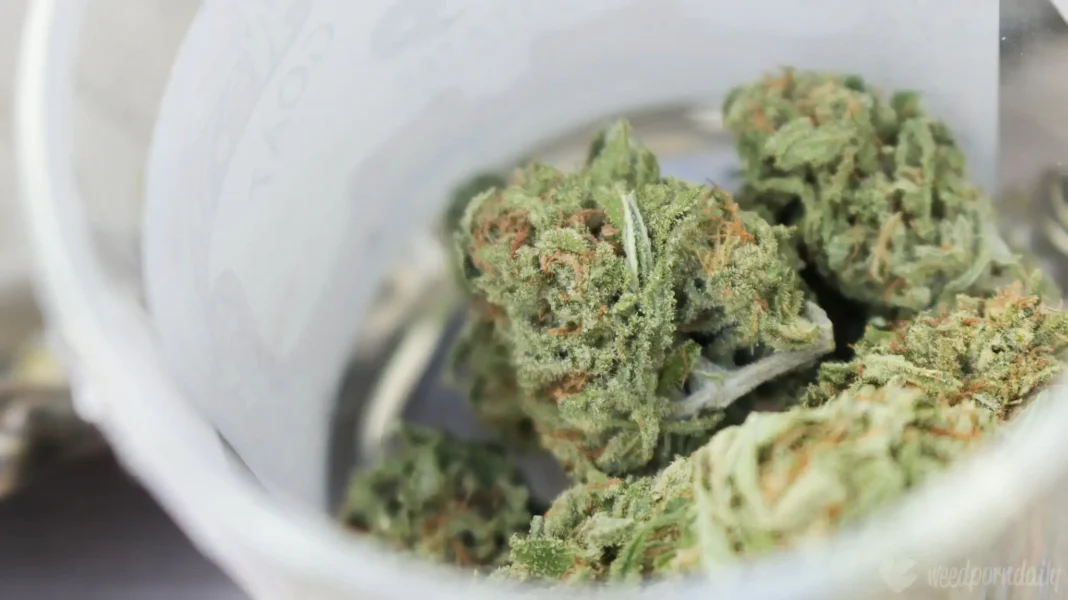
WeedPornDaily.com is the source of this photo.
MEDCAN24 could not exist without readers’ support. Consider a Patreon subscription if our marijuana advocacy journalism is what you use to keep informed.

Sponsored Content
This informative article is brought to you by NUBO CBD →