







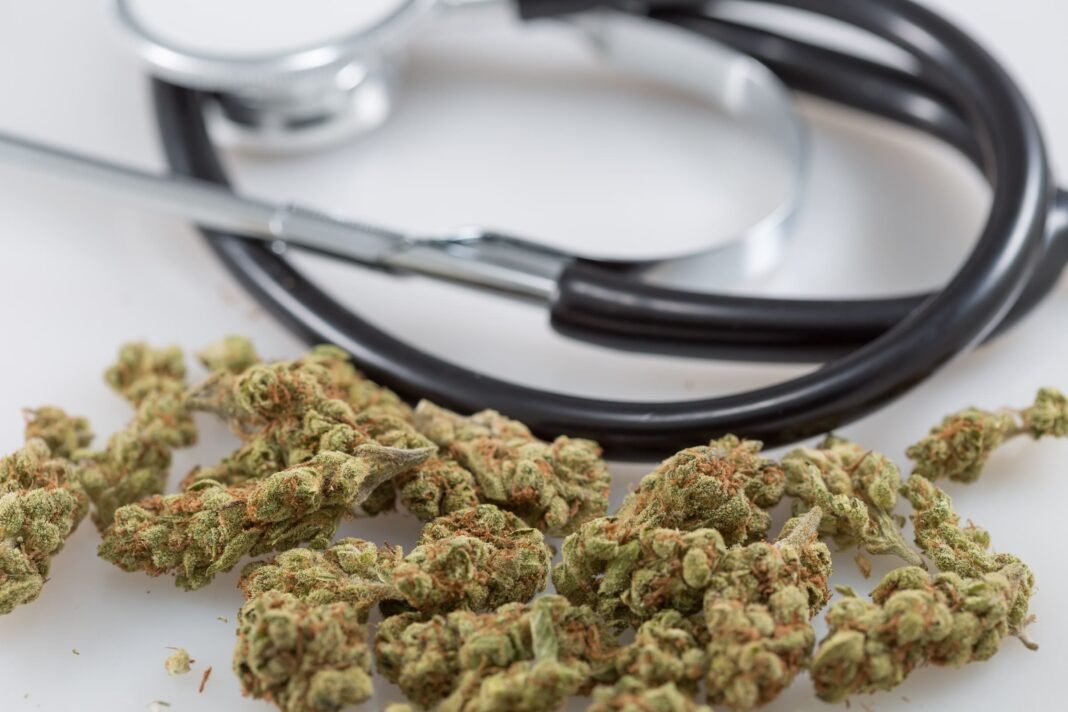

Wisconsin’s Senate presidant announced on Monday she, along with two other Republican members of the bicameral legislature have presented legislation that would legalize medical cannabis in Wisconsin.
In a release, Senate President Mary Felzkowski(R), who previously sponsored a bill on medical cannabis, announced that the measure was filed with Sen. Patrick Testin(R), and an Assembly version by Assemblymember Patrick Snyder.
Text of the proposed bill has yet to be posted, but Felzkowski’s earlier bill allowed doctors in eight states to prescribe medical cannabis to their patients who suffer from cancer, epilepsy disorders, posttraumatic stress disorder, or multiple sclerosis.
It was a restrictive law, since it did not allow patients to cultivate cannabis for their own personal use. Patients were only allowed to obtain cannabis in oils, pills and tinctures.
There’s no way to tell if Senate President and her co-workers have widened the reform scope for the new bill that has yet to be published.
In a recent press release, cancer survivor Felzkowski said that someone who is suffering from a serious illness should not be forced to break the law or travel out of state to try alternative medicines.
This legislation gives our neighbors, relatives, and friends who are suffering from chronic diseases the opportunity to talk with their doctors about other treatment options. It is also an opportunity for the small businesses of our state to be a part of this market.
As the 2025 session was set to get underway, the Senate leader said she was “hoping to have a conversation” in the legislature about legalizing medical marijuana this year—though the Republican Assembly speaker still represented “an obstacle,” she added.
A Republican candidate running for Governor of Wisconsin in July said he is “open to exploring different options” in terms of legalizing marijuana, whether it be medical or adult use, in his state. However, the specifics of this statement are still unclear.
On the Democratic Side, incumbent Gov. Tony Evers, a Democrat who is in favor of legalizing marijuana, won’t be running for reelection. But he said in June that if his party can take control of the legislature, the state can “finally” legalize marijuana so that residents don’t have to go to neighboring Illinois to visit its adult-use market.
A separate poll by Marquette Law School in June found that in Wisconsin, two out of three voters are in favor of legalizing cannabis.
The poll found that public support for legalizing cannabis has increased steadily since 2013, when the institute began tracking the opinion of the general population. 67 percent now back the change in policy. This is 17 points more than 2013’s results.
The Democrats, with 88 percent of the vote, are most likely to support legalizing marijuana, followed by Independents (79%). A majority of Republicans (56%), however, said that they are still against legalizing adult-use cannabis.
Underscoring the importance of party control, the state’s Republican-controlled Senate and Assembly this summer rejected another attempt to legalize marijuana, defeating amendments to budget legislation that would have ended prohibition in the state and established new medical and recreational cannabis programs.
Evers has routinely attempted to change that policy as part of his budget requests—and Democratic leaders have similarly pushed for reform.
Republicans in the legislature also cut the marijuana provisions from a state budget proposal in May, as they’ve done in past sessions.
Despite Republicans’ move to cut legalization from the budget legislation, party leaders recently acknowledged that the debate over medical marijuana legalization is “not going to go away,” and there’s hope it can be resolved this session.
—
MEDCAN24 tracks hundreds of marijuana, psychedelics, and drug policy legislation in state legislatures this year. Patreon members who pledge at least $25/month gain access to interactive maps, charts, and hearing schedules so that they do not miss anything.
Find out more about our marijuana law tracker. To get access, become a Patreon supporter.
—
Tyler August (R), Assembly Majority leader, said: “I’m not sure anyone can be so naive as to assume that THC and marijuana products don’t exist in Wisconsin. These are easily available outside of the state. We need to find a solution to this.” I’m optimistic that we will be able to.”
“If it’s going to be called medical marijuana it has to treated as a drug.” “But the marijuana debate won’t go away”, said Sen. Dan Feyen, the assistant majority leader at that time. “The margins of victory are smaller.”
There have been repeated attempts to legalize medical marijuana in the legislature over recent years, including the introduction of legislation from Assembly Speaker Robin Vos (R) that called for a limited program facilitated through state-run dispensaries. This was controversial with his Republican colleagues and ultimately failed last year.
Evers previewed his plan to include marijuana legalization in his budget in January, while also arguing that residents of the state should be allowed to propose new laws by putting binding questions on the ballot—citing the fact that issues such as cannabis reform enjoy sizable bipartisan support while the GOP-controlled legislature has repeatedly refused to act.
Previously, in 2022, the governor signed an executive order to convene a special legislative session with the specific goal of giving people the right to put citizen initiatives on the ballot, raising hopes among advocates that cannabis legalization could eventually be decided by voters. The GOP-controlled legislature, however, did not approve the proposal.
Evers said in December that marijuana reform is one of several key priorities the state should pursue in the 2025 session, as lawmakers work with a budget surplus.
Days after he made the remarks, a survey found the reform would be welcomed by voters in rural parts of the state. Nearly two-thirds of respondents (65%) said that they supported legalizing cannabis.
Last May, the governor said he was “hopeful” that the November 2024 election would lead to Democratic control of the legislature, in part because he argued it would position the state to finally legalize cannabis.
He said, “We have been hard at work for the past five years and several budgets to achieve this.” I know that we are surrounded by other states who have legalized recreational marijuana. We will continue doing it.
A Wisconsin Democratic Assemblymember tried to force a vote on a medical cannabis compromise proposal last year, as an amendment to an unrelated kratom bill, but he told MEDCAN24 he suspects leadership intentionally pulled that legislation from the agenda at the last minute to avoid a showdown on the issue.
Meanwhile, the state Department of Revenue released a fiscal estimate of the economic impact of a legalization bill from then-Sen. Melissa Agard (D) in 2023, projecting that the reform would generate nearly $170 million annually in tax revenue.
A legislative analysis requested by lawmakers estimated that Wisconsin residents spent more than $121 million on cannabis in Illinois alone in 2022, contributing $36 million in tax revenue to the neighboring state.
Evers and other Democrats have since at least last January insisted that they would be willing to enact a modest medical marijuana program, even if they’d prefer more comprehensive reform.
MEDCAN24 would not be possible without the support of readers. Please consider making a Patreon monthly pledge if you depend on our cannabis journalism for information.

Sponsored Content
This informative article is brought to you by Gen-Europa →