







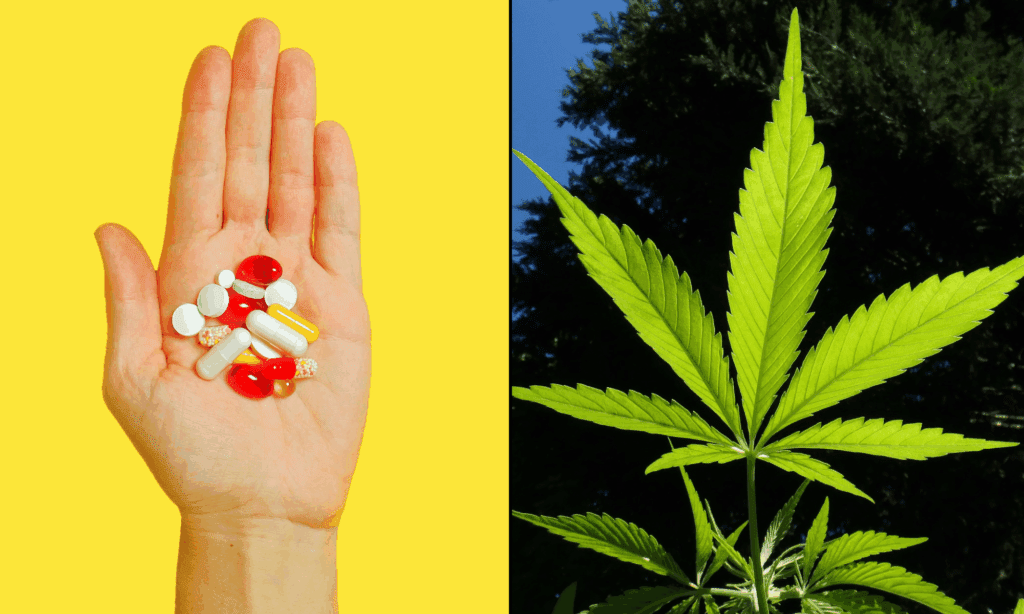

According to a study funded by the federal government and published in The American Medical Association, legalizing marijuana as a medical or recreational drug is associated with reducing opioid usage among cancer patients.
Examining prescription drug claims data from an average of more than 3 million patients annually from 2007 to 2020, the researchers found “significant reductions…in the rate of patients with cancer with opioid prescriptions, the mean daily supply, and the mean number of prescriptions per patient after medical and recreational cannabis dispensary openings.”
This study concludes that “Cannabis may substitute opioids as a treatment for cancer-related discomfort.” The paper was published on the Journal of the American Medical Association’s Health Forum on Friday and funded with a National Institute on Drug Abuse grant.
Results of the study show that cannabis could be used to manage cancer-related pain in place of opioids, highlighting how cannabis policy can impact opioid consumption.
According to researchers at the University of Georgia Indiana University and University of Chicago the opening of recreational and medical marijuana dispensaries was linked with “significant reductions of all opioid outcomes” in the state.
“The rate of patients with cancer with opioid prescriptions changed by −41.07 per 10 000, the quarterly mean days’ supply by −2.54 days, and the mean number of prescriptions per patient by −0.099. The opening of recreational dispensaries was also linked to a decrease in opioid outcomes. Though the treatment effects estimated were less, they were still significant. The rate of prescriptions changed by −20.63 per 10 000, the mean daily supply by −1.09 days supplied per prescription, and the mean number of prescriptions per patient by −0.097.”
The analysis showed that reductions in opioid prescription rates and daily supply were greater when dispensaries actually opened than when states initially changed their laws to allow for medical marijuana use—”highlighting the potential impact of easier cannabis availability.”
There were no significant differences opioid use as a result of cannabis reform based on age, sex, or race and ethnicity—”indicating that dispensary openings may influence opioid prescription patterns similarly across demographic subpopulations,” the paper says, suggesting that “cannabis availability may help diverse patients equally manage cancer-related pain if the observed reductions reflect substitution to cannabis.”
These findings suggest that cannabis law reforms, whether medical or recreational, may have a significant impact on the opioid usage of cancer patients.
Future studies should “explore the individual-level effects, the mechanisms behind these changes, as well as the longterm impacts of cannabis policies in cancer pain management.”
According to the report, “the overall results confirm prior research that suggests cannabis can be used as an alternative for opioids when managing pain.”
The same paper found in a separate publication this month that the legalization of medical marijuana “is associated with significant reductions” in opioid prescribing.
In August, meanwhile, Australian researchers published a study showing that marijuana can serve as an effective substitute for opioids in pain management treatment.
Another study published earlier this year in the journal Drug and Alcohol Review found that, among drug users who experience chronic pain, daily cannabis use was linked to a higher likelihood of quitting the use of opioids—especially among men.
Research published late last year also found that legalizing medical cannabis appeared to significantly reduce monetary payments from opioid manufacturers to doctors who specialize in pain, with authors finding “evidence that this decrease is due to medical marijuana becoming available as a substitute” for prescription painkillers.
Recent research has also shown a drop in the number of fatal opioid overdoses among jurisdictions that have legalized marijuana for adults. That study found a “consistent negative relationship” between legalization and fatal overdoses, with more significant effects in states that legalized cannabis earlier in the opioid crisis. The authors estimated that legalizing recreational marijuana “is associated” with a reduction of approximately 3.5 fatalities per 100,000 people.
This report stated that “our findings suggest that broader access to recreational marijuana could help combat the opioid epidemic.” Previous research has shown that marijuana, primarily used for medical purposes, can help reduce the number of opioid prescriptions. We also found it could reduce overdose deaths.
Another recently published report into prescription opioid use in Utah following the state’s legalization of medical marijuana found that the availability of legal cannabis both reduced opioid use by patients with chronic pain and helped drive down prescription overdose deaths statewide. It concluded that the results showed “cannabis plays a significant role in pain management, and it can reduce opioid use.”
Sponsored Content
This informative article is brought to you by NUBO CBD →