







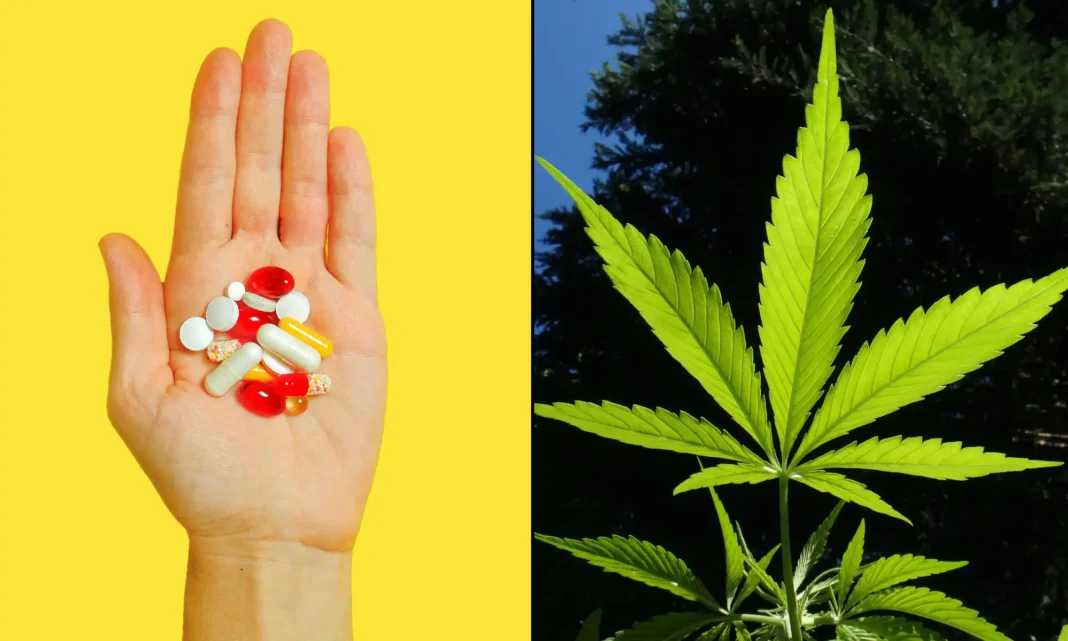

According to Colorado officials, covering the cost of medical marijuana under workers’ compensation is a viable option. It could improve health outcomes as well as lead to voluntary reductions in the use of opioids.
The Colorado Department of Labor and Employment’s Division of Workers’ Compensation (DOWC) conducted the first-of-its-kind experiment as part of its Alternative Pain Management Program, following a rigorously screened chronic pain patient for a year to assess the potential impact of medical cannabis reimbursements.
The study, published in the Journal of Occupational & Environmental Medicine, resulted in “meaningful life improvements,” no adverse events and voluntary reductions in opioid use.
In addition to a reduction in pain, the patient receiving compensation for non-inhalable marijuana reported improved physical functioning and quality of living, as well as psychosocial stability. The initial reduction of opioids, which was not tapered, was “modest”.
Colorado officials reported that “due to better symptom control, under clinical supervision the participant reduced his monthly opioid consumption by 17%.” Since the completion of the data compilation, the participant has successfully stopped taking both THC and opioids, depending only on cannabinoids with less psychoactive effects.
The study states that “this program evaluation indicates that medical marijuana reimbursement could be a feasible option for select workers’ comp patients.”
The data revealed measurable and clear reductions in the pain, along with improvements to physical function, mobility, quality of living, etc.
Researchers said that while the “primary objective” of the research was not related to opioid consumption, “improved symptoms control under clinical supervision”, which is a voluntary 17 percent reduction in opioid intake.
DOWC stated that since completing the 12-month trial, the patient has “successfully graduated off of both THC, and all opioids completely, using only less psychoactive cannabis cannabinoids.”
Ethan Moses of DOWC told Westword, a local news outlet, that the medical literature was “really quite mixed” on cannabis’ efficacy for many health conditions. This is in part due to marijuana being classified under Schedule I drugs of the Controlled Substances Act.
That’s changed under the Trump administration for medical marijuana authorized for patients as part of state programs, which is now Schedule III—though cannabis remains in Schedule I for recreational use, pending the outcome of an administrative hearing.
Moses added that while Colorado researchers found that medical marijuana could be covered by workers compensation, they “cannot force the insurance companies” to cover it.
He said that the program’s voluntary nature was important for patients, insurers and their primary care physicians. Medical cannabis is a better alternative to opioids. I believe some insurance firms would consider it. The insurance companies may be interested in medical cannabis to reduce the cost of settlements.
The program showed that reimbursement of medical cannabis could be done under a model of coordinated care.
Last month, a congressional committee voted to prevent federal employees from having medical marijuana covered under their workers’ compensation programs—regardless of the administration’s move to reschedule cannabis.
Colorado’s study was a pioneer in its design. However, previous research supports the notion that access to medical cannabis could have unique workplace benefits.
For example, legalizing medical marijuana appears to be associated with reduced rates of employees missing work—particularly in trades like manufacturing and agriculture where workers are more likely to experience symptoms such as pain that cannabis can help treat—according to a recent study.
—
MEDCAN24 has been tracking the hundreds of bills relating to cannabis, psychedelics or drug policies that have passed through state legislatures as well as Congress in this past year. Patreon subscribers who donate at least $25/month have access to the interactive maps and charts, as well as our hearing calendar.
Find out more about our marijuana law tracker. To get access, become a Patreon supporter.
—
Research published last year on marijuana legalization’s effect on workers’ compensation also found that while the policy change was associated with a “gradual increase” in workers’ comp claims, the average cost per claim in fact fell after the policy change—as did patient use of prescription drugs, especially opioids and other painkillers.
In 2021, a separate study by the National Bureau of Economic Research found that adult-use cannabis legalization was associated with an increase in workforce productivity and decrease in workplace injuries.
Researchers examined the effect of legalizing recreational cannabis on claims for workers compensation among older adults. They observed a decline in the number of such cases “both as a result of an increased likelihood of receiving benefits, and monetary benefit amounts” in the states which have implemented the new policy.
The study also found “complimentary decreases in the rates of non-traumatic work injuries and in the prevalence of disabilities that limit employment” across all legal states.
We provide evidence to support the claim that these reductions are primarily due to a decrease in oil consumption [in workers’ compensation] The National Institute on Drug Abuse funded the study that found that there was an increase in the ability to work due to the addition of a pain management treatment.
A 2020 study, meanwhile, found that legalizing medical marijuana led to fewer and cheaper workers’ compensation claims. The University of Cincinnati Ash Blue College, Temple University and researchers concluded that allowing medical marijuana “can help workers better manage the symptoms of workplace illnesses and injuries, and reduce their need for compensation.” [workers’ compensation].”
In the same year, also in America, the Supreme Court of United States declined to consider two workers compensation cases that involved medical marijuana.
Other research from 2023 into employee marijuana use found that workers who used the drug off the clock were no more likely to experience workplace injuries compared to those who didn’t consume cannabis at all. Those who indulged You can also read about our other services. Nearly twice as many workers are involved in workplace incidents than non-users or off-duty users.
Separately, a 2024 analysis of five years’ worth of federal health survey data by researchers at the Centers for Disease Control and Prevention (CDC) found that employees in the food service and hospitality industries were some of the most common consumers of marijuana among U.S. workers.
Workers in the construction industry and in extraction also had high cannabis usage rates in the past month. The least likely group to disclose marijuana usage was law enforcement and health care workers, as well as those in education and libraries.
MEDCAN24 would not be possible without the support of readers. Consider a Patreon subscription if our marijuana advocacy journalism is what you use to keep informed.

Sponsored Content
This informative article is brought to you by NUBO CBD →