







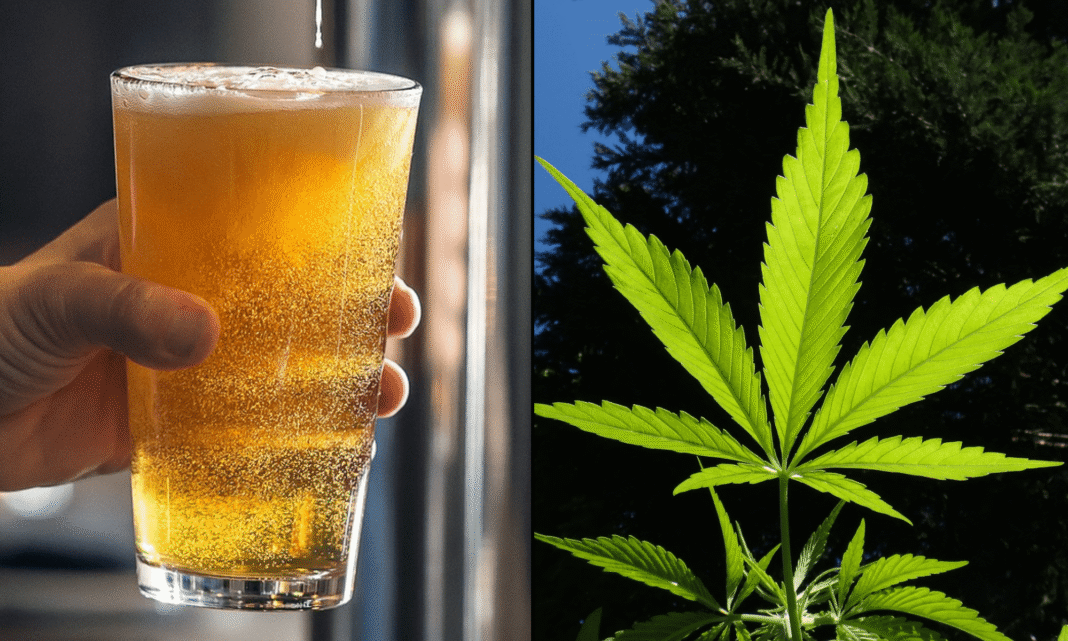

A new study shows that frequent use of cannabis is associated with lower risk of liver disease caused by alcohol. People who met the “cannabis-use disorder” criteria, or CUD showed a lower risk than those who do not consume any marijuana.
A new study published in Liver International this week analyzed alcohol-associated liver diseases (ALDs) rates among 66.228 patients between 2010 and 2022. The team of researchers from Virginia Commonwealth University divided the patients in three categories. They were those who have CUD, and are defined clinically as cannabis dependents (CU), non-users or occasional users.
The study states that cannabis usage was linked to reduced ALD risk in this cohort study. Patients with CUD had the lowest risk compared with those with CU or non-CU. Our findings indicate that modulation cannabinoid-receptors could be a potential new therapeutic target in the treatment of ALD.
The use of cannabis was associated with a lower risk for ALD, liver related complications, and death when compared to other non-cannabis consumers.
Based on previous research focusing on CBD, the study authors theorized that the non-intoxicating cannabinoid could be a driving force behind this medical association—though “its clinical use remains limited.”
The study results “suggest that the cannabinoid systems may be a promising target therapeutic for ALD” after adjusting for several factors.
The researchers determined that marijuana use was associated with a 40% reduction of the risk for the composite ALD (including alcohol-associated steatosis. hepatitis. fibrosis. and cirrhosis), a reduction of 17% in liver decompensation and a reduction by 14 % in mortality.
The reduction in risk was seen across all ALD stages, with a gradient effect between CU & CUD. This pattern may suggest a dose–response relationship, though its interpretation remains uncertain, as it relies on diagnostic codes with no direct measures of cannabis consumption. Our findings also suggest an association between cannabis and ALD that may have a protective effect. However, we must interpret this with caution because cannabis has well-established risks, such as schizophrenia or cognitive impairment.
The observed protective associations [of cannabis] It said that “the ALD spectrum was uniform, even for patients with lower cardiometabolic profiles.” The inclusion of positive as well as negative control results strengthens internal validity.
This study found that, “Given an expanding body experimental data supporting CBD’s hepatoprotective effects and its favourable profile of safety, it is both justifiable and necessary to conduct further research evaluating the impact of CBD on ALD by using proper dosing, and duration of treatment,” concluded the researchers.
CBD may be responsible for the observed protective effects based on evidence from preclinical studies.
On a related note, a survey published earlier this month found that nearly four in five adults who drink cannabis-infused beverages say they’ve reduced their alcohol intake—and more than a fifth have quit drinking alcohol altogether.
Meanwhile, on the list of activities that Americans say is dangerous for pregnant women to engage in, using marijuana falls below drinking alcohol or smoking cigarettes, according to a new poll.
Marijuana use is linked to lower alcohol intake and diminished cravings in heavy drinkers, according to a recent federally funded scientific paper.
Scientists at the University of Sydney conducted a study in which they investigated the idea that cannabidiol, a non-intoxicating substance, could help to mitigate drinking problems. The research, published in the journal British Journal of Pharmacology with funding from the Australian National Health and Medical Research Council, found that “CBD represents a promising candidate to reduce voluntary alcohol consumption.”
According to a federally funded study published in the journal Nature earlier this year, CBD has potential to treat alcohol use disorder by reducing withdrawal symptoms and lowering the risk of relapse while also providing neuroprotective effects. This study’s results, they said, “underscore CBD’s therapeutic potential for alcohol abuse disorder (AUD), and give mechanistic insights about its effects.”
This also comes at a time when younger Americans are increasingly using cannabis-infused beverages as a substitute for alcohol—with one in three millennials and Gen Z workers choosing THC drinks over booze for after-work activities like happy hours, according to a new poll of 1,000 young professionals.
Sponsored Content
This informative article is brought to you by NUBO CBD →