







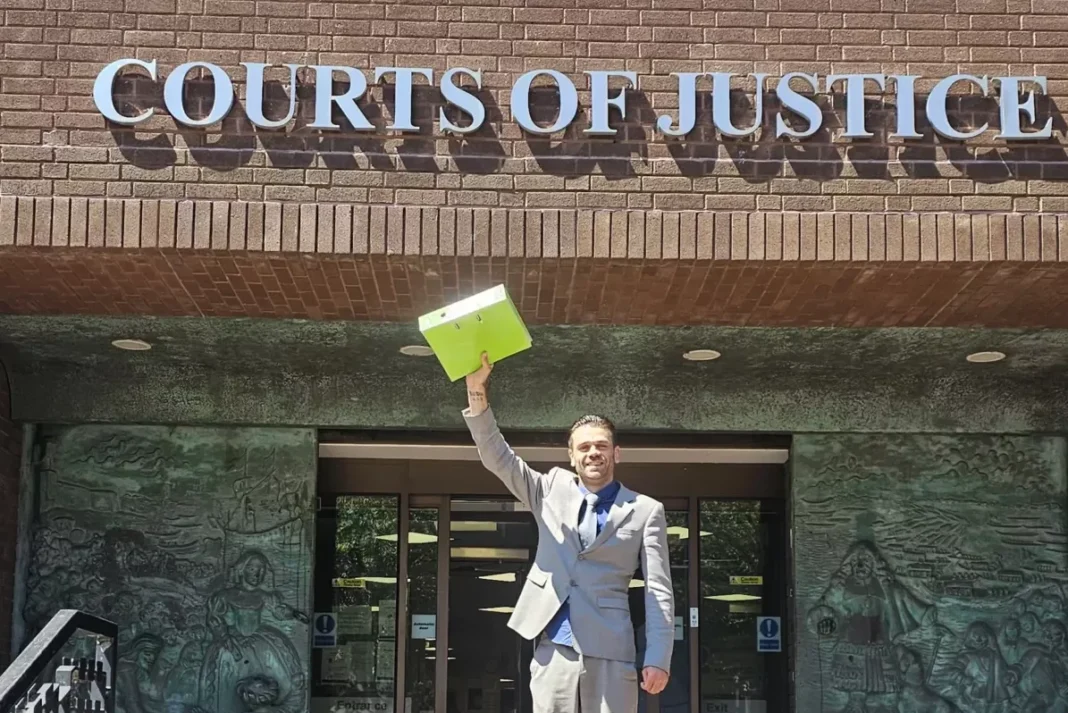

The UK Crown Court threw out criminal charges filed against CBD hemp flowers importers, ruling that the police had mishandled and misused evidence. This was after five and a half years of ordeals that caused businesses to collapse and compelled defendants to move abroad.
While the win offers a potential defence for other hemp importers facing similar prosecutions, the UK’s exit from the European Union has meant hemp businesses are now ‘more vulnerable than ever’.
Joseph Musumeci was the former director of Buds R Us based in Chichester. He and former business partner Sean Osborne were raided by police, who froze their bank accounts and labelled them as an organised crime group. They then lost their seized evidence over a period of four years.
The authorities failed to comply with EU mandatory testing protocols when they finally tested the product in April 2025 – just a few weeks before trial. David Melville ruled, that despite the poor police handling of evidence that it was still valid. The improper testing methods were the reason for the inadmissibility.
This ruling in July 2025 marks the first instance that a UK Court has excluded results of cannabis tests specifically because the police did not comply with EU Regulations 639/2014 Annexe III, which is the mandatory test protocol to determine THC levels in hemp products when the UK was under European Law.
Case and Collapse
In late 2019 and early 2010, customs officers and Border Force agents intercepted packages containing CBD hemp.
We were stocking 70 shops, from West Sussex up to Scotland. Musumeci said that things were great until customs confiscated parcels. It was not unusual, because the cannabis looked like it. But in Europe they usually test and find out that it’s CBD hemp.
Musumeci claims that he had CBD flowers seized and tested in several European countries including Germany, France and Austria.
The police have acted in a grossly abusive manner and we are not aware of any other country where this has happened.
The hemp, which was mistakenly identified as cannabis by Sussex Police after Royal Mail workers reported that the packages smelled like cannabis, was treated immediately. A criminal investigation followed.
They seized approximately 50kg and filed charges against Musumeci and Osborne for cannabis importation, conspiracy to provide a controlled substance, and other offenses.
Musumeci said that even though the business owners repeatedly requested tests in order to verify their CBD hemp-based products, Musumeci refused.
“Everything had been registered. But they didn’t bother testing the stuff for at least a year… They were saying it didn’t matter what the THC level was, that any flower or hemp was illegal. Musumeci said that was absurd at the time, as we were a part of the European Union. We had protection under Article 36 for free trade of goods.
They came at us hard. They raided several addresses, froze all our bank accounts, shut the website down, seized assets… everything.”
After claiming that the accused were a criminal group, the police proceeded without testing the seized evidence and filed charges against them.
Hemp flowers seized in February 2025 were missing. This was nearly four years following the seizures. The testing was conducted in April 2025 just weeks before trial began, so the defence had to prepare for the case without any knowledge of the scientific evidence presented by the prosecution.
During the cross-examination of Charles Langley KC (the defence counsel), Detective Constable Holmes faced evidence that nine exhibits had been lost by police in this case. When questioned about the missing evidence, DC Holmes insisted the exhibits “were not completely missing… they were not where we would expect them to be”.
The defendants were unable to run their businesses due to the frozen assets and criminal charges.
The defence questioned the test methodology and the chain-of-custody when the prosecution presented final results that showed THC levels between 0.3% and 0.4%.
Patel confessed under questioning by Langley, in a voir-dire hearing (a trial inside a trial) that Eurofins failed to follow EU Annex III’s testing protocol for several reasons. Laboratory used methanol in place of the prescribed Squalane Reagent. It also failed to grind the samples according to the protocol, used different sizes for the sample, didn’t apply centrifugal forces as instructed, and only reported the results up to one decimal instead of two.
Most significantly, Patel conceded that ‘had he used the methods appearing in Annex III one may get different results and one would not know the differences unless the tests were performed side by side,’ according to Judge Melville’s written ruling.
Patel admitted that he’d never done a test for THC before, and his accreditation testing revealed that the percentage difference between Scheme Test scores was 17.34% and 22.48 percent. This variation is more important when THC levels are nearing 0.2%.
Judge Melville ruled that the prosecution was ‘obliged to test the exhibits according to Annexe III’ and had ‘failed to do so.’ He concluded that admitting the flawed test results would have ‘an adverse effect on the fairness of the case.’
The written judgment of the court was harsh in its criticism of the conduct by the prosecution: “The prosecution is responsible for this entire situation, as they have misplaced or lost the exhibits in the past four years. They then proceeded to test in ways that could be avoided if the reference had been made to Annex III.”
After the decision, the prosecution presented no evidence against the seven defendants and the Judge instructed the jury not to convict them on any counts.
Sponsored Content
This informative article is brought to you by NUBO CBD →
After a 5-and-ahalf year ordeal, which destroyed their businesses and made them relocate overseas, a UK Crown Court dismissed criminal charges against CBD Hemp Flower importers.
While the win offers a potential defence for other hemp importers facing similar prosecutions, the UK’s exit from the European Union has meant hemp businesses are now ‘more vulnerable than ever’.
Joseph Musumeci was the former director of Buds R Us based in Chichester. He and former business partner Sean Osborne were raided by police, who froze their accounts and labelled them as an organised crime group. They then lost their seized evidence over a period of four years.
In April 2025, only weeks before the trial began, authorities did not follow EU-mandated testing protocol. David Melville ruled the inadmissibility of evidence, even though the police had handled the evidence poorly.
It is the first ruling by a UK court to exclude cannabis test results on the basis that the police had failed to adhere to EU Regulation 639/2014, Annex III. The mandatory protocol of testing for determining THC in hemp product during the time when the UK complied with European law.
Case and Collapse
In late 2019 and early 2010, customs officers and Border Force agents intercepted packages containing CBD hemp.
We were supplying around 70 shops, from West Sussex up to Scotland. Musumeci said that things were great until customs confiscated parcels. It was not unusual, because the cannabis looked like it. But in Europe they usually test and find out that it’s CBD hemp.
Musumeci claims that he had CBD flowers seized and tested in several European countries including Germany, France and Austria.
The police have acted in a grossly abusive manner and we are not aware of any other country where this has happened.
The hemp, which was misidentified as cannabis by Royal Mail workers, was treated immediately and criminal investigations were launched.
They seized approximately 50kg and filed charges against Musumeci and Osborne for cannabis importation, conspiracy to provide a controlled substance, and other offenses.
Musumeci said that even though the business owners repeatedly requested tests in order to verify their CBD hemp-based products, they refused.
“Everything had been registered. But they didn’t bother testing the stuff for at least a year… They were saying it didn’t matter what the THC level was, that any flower or hemp was illegal. Musumeci remembered that it was all nonsense because, at the same time, we were members of the European Union. The free flow of goods protected us under Article36.
They came at us hard. They raided several addresses, froze all our bank accounts, shut the website down, seized assets… everything.”
After identifying the accused as part of an organized crime group, police proceeded in bringing criminal charges against them without testing any of the material seized. They then misplaced the evidence.
Hemp flowers seized in February 2025 were missing. This was nearly four years following the seizures. Tests were not done until April 20, just a few weeks before the start of the trial. This forced the defence to plan without having any idea what the prosecution would prove scientifically.
During a cross-examination conducted by Charles Langley KC (the defence lawyer), Detective Constable Holmes faced evidence indicating that the police lost nine separate exhibits. When questioned about the missing evidence, DC Holmes insisted the exhibits “were not completely missing… they were not where we would expect them to be”.
The defendants were unable to run their businesses due to frozen assets and criminal charges.
The defence questioned the test methodology and the chain-of-custody when the prosecution presented final results that showed THC levels between 0.3% and 0.4%.
Patel confessed under questioning by Langley, in a voir-dire hearing (a trial inside a trial) that Eurofins failed to follow EU Annex III’s testing protocol for several reasons. Laboratory used methanol in place of the prescribed Squalane Reagent. It also failed to grind the samples according to the protocol, used different sizes for the sample, didn’t apply centrifugal forces as instructed, and only reported the results up to one decimal instead of two.
Most significantly, Patel conceded that ‘had he used the methods appearing in Annex III one may get different results and one would not know the differences unless the tests were performed side by side,’ according to Judge Melville’s written ruling.
Patel acknowledged that he has never before tested his lab for THC. The results of the accreditation tests showed that there were 17.34% to 22.48% differences between scheme test scores and Patel’s laboratory. These variations are more significant when THC is measured near 0.2%, which is legal.
Judge Melville ruled that the prosecution was ‘obliged to test the exhibits according to Annexe III’ and had ‘failed to do so.’ He concluded that admitting the flawed test results would have ‘an adverse effect on the fairness of the case.’
The written judgment of the court was harsh in its criticism of the conduct by the prosecution: “The prosecution is responsible for this entire situation, as they have misplaced/lost exhibits and conducted their tests in ways that could be avoided if only Annex III had been consulted.”
After the decision, the prosecution presented no evidence against the seven defendants and the Judge instructed the jury not to convict them on any counts.
Sponsored Content
This informative article is brought to you by NUBO CBD →
Cannabis Law Resources in Poland
Browse essential legal pages on cannabis sales and cultivation in Poland. You can use these resources to learn about the requirements for certifications, permissions and compliance.
-
Polish News Registration and Interests of Cannabis Businesses
-
Permissions for Cannabis Sales in Poland
-
Authorization for Importing or Manufacturing Medical Products
-
Permission for Manufacturing or Importing Medical Products
-
Certificate of Good Manufacturing Practices (GMP)
-
Registration of Medical Products in Poland