







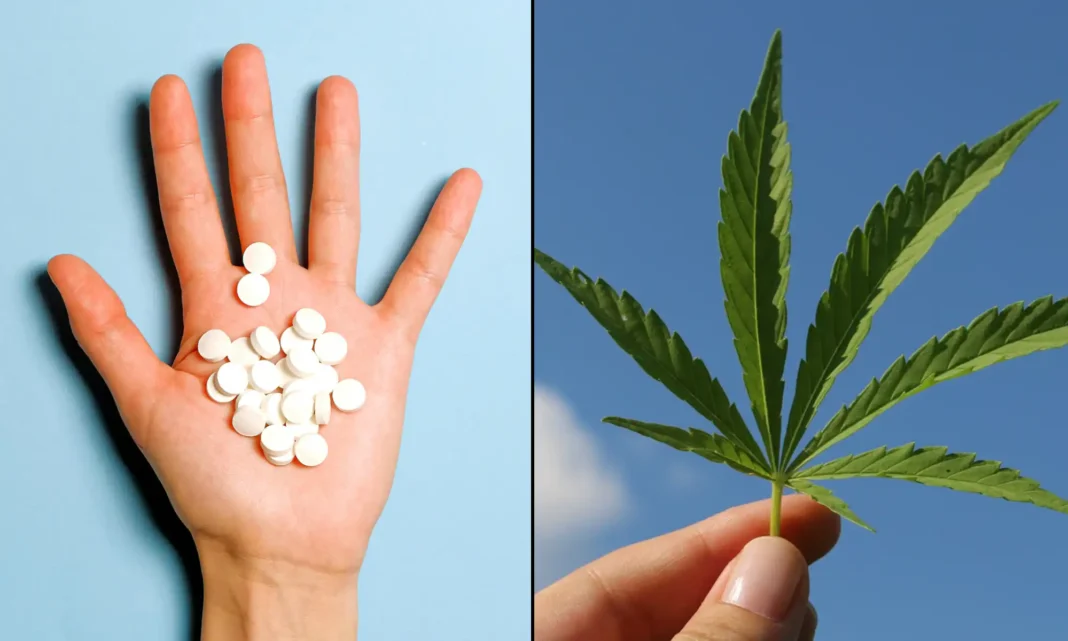

A new study funded by the federal government suggests that marijuana may help reduce opioid use and withdrawal from these substances.
In a study published in Journal of Cannabis Research in Vancouver, Canada, 197 respondents who had used both marijuana and opioids that were not regulated, such as heroin or fentanyl, reported their use.
Cannabis users reported a significant association between their self-reported cannabis use to treat unregulated withdrawal from opioids and a reduction in opioid usage. [people who use unregulated opioids] Living with Pain” was the conclusion of the study.
People with moderate or severe pain were more likely to reduce their opioid consumption when cannabis was used.
In a study conducted by researchers at Simon Fraser University, the University of California Los Angeles and the University of British Columbia (UBC), nearly half of the participants (45.2%) said that they used cannabis in the last six months to treat opioid withdrawal symptoms.
Sixty-six percent (66%) of those who participated said that they would not have to take as much opioids if they used marijuana.
Researchers found that after adjusting factors like age, gender and race, as well as pain levels, using marijuana for withdrawal management was linked to more than double the likelihood of reporting reduced opioid usage.
The use of cannabis for opioid withdrawal has a significant association with the self-reported reduction in opioid consumption.
Cannabis users who were suffering from moderate to severe pain had six times more chances of decreasing their opioid intake compared to those who didn’t use cannabis.
Researchers said that the research was the first quantitative study to specifically examine the relationship between the intentional use of marijuana for opioid withdrawal treatment and changes in unregulated drug consumption.
Prior research has looked at whether cannabis can treat individual withdrawal symptoms such as pain, anxiety and insomnia—while other studies have examined the link between marijuana use and reduced opioid cravings, for example.
In contrast, very little research has examined whether those who use marijuana for withdrawal purposefully reduce the number of opioids that they take.
Researchers wrote that their findings “contribute to a growing body evidence” and showed how cannabis could be intentionally used by people with pain to alleviate symptoms associated with unregulated opioid withdrawal.
Participants who had used cannabis in the last six months between December 2019 and Novembre 2021 were asked to fill out a questionnaire on marijuana consumption, reasons for using it, and its perceived impact on other substance use.
In total, 112 participants (56.9%) said that they use fewer opioids while cannabis is consumed.
The study found that cannabis was associated with lower rates of mortality and morbidity compared to opioids not regulated.
“Immediate efforts to improve access to legal cannabis—especially for structurally-marginalized [people who use drugs] at highest risk of overdose—may offer a step towards reducing the health and social harms of opioid use in Canada,” the authors concluded.
They said that “these findings support the conduct of experimental trials on cannabinoids for individuals who are experiencing opioid withdrawal or living with pain.”
This study received funding both from the U.S. National Institutes of Health, and Canadian Institutes of Health Research.
According to a recent study, people who suffer from chronic lower back discomfort and don’t respond well to opioids or other traditional treatments, switch to inhaled marijuana. They experience “large, sustainable, statistically robust” improvements.
States that legalize medical or recreational marijuana see “significant reductions” in opioid overdoses among adults with employer-sponsored health insurance—indicating that a “substitution” effect may be at play—according to a separate federally funded study.
In that same vein, another study showed that, as opioids continue to drive overdose deaths, making medical cannabis available and affordable seems to help patients reduce their use of the prescription painkillers.
That research came on the heels of a recent study showing that using medical marijuana appears to help people reduce the use of other medications, including opioids, sleeping aids and antidepressants. A study of more than 3,500 people found that patients who switched from prescription drugs to cannabis experienced far fewer adverse side effects.
—
MEDCAN24 has been tracking the hundreds of bills relating to cannabis, psychedelics or drug policies that have passed through state legislatures as well as Congress in this past year. Patreon members who pledge at least $25/month gain access to interactive maps, charts, and hearing schedules so that they do not miss anything.
Discover more about the marijuana bills tracker. Become a patron on Patreon and you will have access.
—
About one in three Americans who use CBD say they take it as an alternative or supplement to at least one medication—particularly painkillers—according to a federally funded study published in February.
Similarly, another recent federally funded study, published by the American Medical Association (AMA), added more evidence that marijuana can serve as an effective substitute for opioids in chronic pain treatment.
Other AMA-published research has found that legalizing marijuana for medical or recreational purposes is “significantly associated with reduced opioid use among patients diagnosed with cancer.”
A separate paper published in October similarly found that medical marijuana legalization is “associated with significant reductions in opioid prescribing.”
In August, meanwhile, Australian researchers published a study showing that marijuana can serve as an effective substitute for opioids in pain management treatment.
Another study published last year in the journal Drug and Alcohol Review found that, among drug users who experience chronic pain, daily cannabis use was linked to a higher likelihood of quitting the use of opioids—especially among men.
Other research also found that legalizing medical cannabis appeared to significantly reduce monetary payments from opioid manufacturers to doctors who specialize in pain, with authors finding “evidence that this decrease is due to medical marijuana becoming available as a substitute” for prescription painkillers.
Another recent study also found a decrease in opioid fatal overdoses when marijuana for adults was legalized. That study found a “consistent negative relationship” between legalization and fatal overdoses, with more significant effects in states that legalized cannabis earlier in the opioid crisis. According to the authors, recreational marijuana legalization is “associated with an approximate 3.5 death reduction per 100,000 persons.”
This report stated that “our findings suggest that broader access to recreational marijuana could help combat the opioid epidemic.” The report stated that “previous research shows marijuana can be used to reduce opioid prescriptions and may reduce overdose fatalities.”
Another recently published report into prescription opioid use in Utah following the state’s legalization of medical marijuana found that the availability of legal cannabis both reduced opioid use by patients with chronic pain and helped drive down prescription overdose deaths statewide. It concluded that the results showed “cannabis plays a significant role in pain management, and also reduces opioid use.”
MEDCAN24 would not be possible without the support of readers. Consider pledging a monthly Patreon if our marijuana advocacy journalism is what you use to keep informed.

Sponsored Content
This informative article is brought to you by NUBO CBD →