






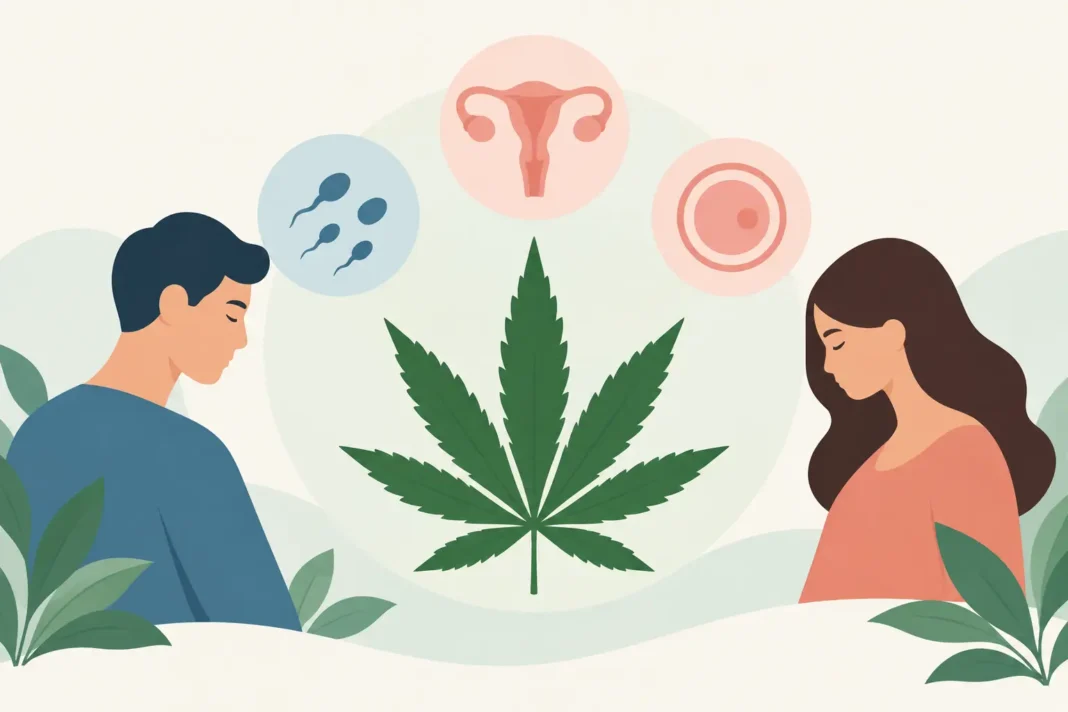

For people trying to conceive, the question is not merely whether cannabis is legal, prescribed or socially accepted. It is whether exposure could alter the chances of pregnancy in a particular reproductive window. Can cannabis affect fertility? The short answer is possibly, particularly with regular use of THC-containing products, but the evidence is uneven and far from a simple cause-and-effect story.
Research has raised credible concerns around sperm quality, ovulation, hormone signalling and outcomes in assisted reproduction. At the same time, many studies are observational, meaning cannabis use is difficult to separate from tobacco, alcohol, stress, sleep, diet, underlying illness and other factors that can also influence fertility. For patients using medical cannabis, the conversation should be clinical rather than moralistic: what is being used, how often, why, and what alternatives are realistic while conception is being attempted?
Can cannabis affect fertility in men?
The male evidence is the most developed, although it still contains contradictions. Several studies associate frequent cannabis use with lower sperm concentration, reduced motility and changes in sperm shape. THC acts on the endocannabinoid system, which has a role in the testes, sperm development and sperm movement. Disrupting that signalling may affect how sperm are produced and how effectively they reach and fertilise an egg.
Some research has also identified changes to sperm DNA and epigenetic markers among cannabis users. Epigenetic changes do not alter the DNA sequence itself, but they can affect how genes are expressed. This has prompted concern about possible effects on embryo development, though the clinical implications remain uncertain. It is not currently possible to say that a specific cannabis exposure will produce a specific outcome in a child.
The findings do not all point in one direction. A number of studies have reported no meaningful difference in semen parameters, while others have found results that vary according to age, frequency of use and the population being studied. Men attending fertility clinics are not necessarily representative of the wider population, and self-reported cannabis consumption is often imprecise.
What is clearer is that sperm production takes time. A full cycle of spermatogenesis is roughly 74 days, followed by further maturation. For that reason, clinicians commonly discuss a three-month period without cannabis when a couple is preparing to conceive or beginning fertility treatment. It is a precautionary approach, not a guarantee that stopping will resolve infertility.
Female fertility: ovulation, cycles and implantation
Evidence in women is less conclusive, partly because female fertility is harder to measure in large studies. Researchers have examined whether cannabis exposure can influence ovulation, menstrual regularity, ovarian reserve, implantation and early pregnancy. THC interacts with receptors found in the brain, ovaries, uterus and placenta, so there is a biologically plausible pathway for an effect.
Some studies suggest cannabis may be associated with altered ovulatory timing or a greater chance of anovulatory cycles, where no egg is released. Others have not found a consistent association with time to pregnancy. The uncertainty matters: a lack of definitive evidence of harm is not proof that exposure is risk-free, especially for people already managing endometriosis, polycystic ovary syndrome, diminished ovarian reserve or unexplained infertility.
Cannabis may be used to manage pelvic pain, nausea, anxiety or sleep problems, including symptoms linked to gynaecological conditions. Stopping suddenly without a plan can leave patients with unmanaged symptoms and may not be clinically appropriate. A prescribing doctor, fertility specialist or pharmacist can help assess options, including non-cannabis treatments and ways to reduce exposure while preserving symptom control.
THC, CBD and route of use are not interchangeable
Much of the fertility research concerns cannabis containing THC, the primary intoxicating cannabinoid. It should not automatically be applied to CBD products, but neither should CBD be presented as established fertility-safe. Human data on isolated CBD and reproduction remain limited, while many retail products contain variable cannabinoid levels or contaminants.
Route of administration also changes the risk profile. Smoking cannabis introduces combustion products that can affect general health and may compound the reproductive impact of tobacco if the products are mixed. Vaporisation avoids combustion but does not remove cannabinoid exposure. Oils, capsules and edibles can produce longer-lasting exposure and are easier to dose inconsistently, particularly when products are not standardised.
For medical cannabis patients, product composition should be central to the discussion. A high-THC flower product, a balanced THC:CBD oil and a CBD-dominant preparation are materially different exposures. The evidence is not strong enough to rank them as fertility-safe, but treating all cannabis products as identical is not scientifically sound either.
Fertility treatment is a more cautious setting
The threshold for caution is generally lower for people undergoing IVF, ICSI or other assisted reproductive treatment. These pathways can be emotionally demanding and financially significant, while each cycle may offer a limited opportunity. Fertility clinics often advise both partners to avoid cannabis before and during treatment because possible effects on eggs, sperm, embryo development and implantation are difficult to rule out.
Available studies have produced mixed results on IVF outcomes, often because the sample sizes are small and the level of cannabis exposure is unclear. Yet the practical logic of reducing avoidable uncertainty is persuasive. A patient who has invested in a treatment cycle may reasonably decide that pausing THC exposure is worthwhile, even where the evidence cannot quantify the benefit.
Clinics should apply that caution consistently and without stigma. Screening should distinguish prescribed medical use from non-medical use, ask about the formulation and frequency, and offer support rather than simply issuing a prohibition. Patients who fear judgement are less likely to disclose use accurately, which undermines care.
Confounders can change the picture
Cannabis rarely appears in isolation. Nicotine is a major confounder because smoking tobacco is independently linked with poorer reproductive outcomes in both sexes. Heavy alcohol use, obesity, metabolic disease, sexually transmitted infections, anabolic steroids, heat exposure, shift work and certain medicines can also affect fertility.
Frequency matters as well. An occasional user and someone using high-THC products daily should not be assessed as though their exposure is the same. Age is another decisive factor. Fertility declines with age, especially for women, and a delay undertaken to modify lifestyle factors can carry its own costs. That is why individualised advice is more useful than broad public messaging.
What should people trying to conceive do?
For couples without a medical need for cannabis, the lowest-risk approach while trying to conceive is to pause THC-containing products, ideally well before pregnancy is possible. This applies to both partners. Those who use cannabis medicinally should not simply stop a prescribed treatment without speaking to the clinician responsible for their care, particularly if it controls severe pain, spasticity, epilepsy-related symptoms or another serious condition.
Be specific at the appointment. Tell the clinician whether the product contains THC, CBD or both; how it is taken; how often it is used; and whether tobacco, alcohol or other substances are involved. A fertility assessment may also identify more direct explanations for delayed conception, such as ovulatory disorders, blocked fallopian tubes or abnormal semen parameters.
There is no reliable detox shortcut that can reset fertility in days. Time, reduced exposure and attention to overall health are more credible than supplements marketed with sweeping reproductive claims. Sleep, nutrition, exercise, stopping tobacco and managing chronic conditions can all support pre-conception health, even if none offers a guaranteed result.
The evidence on cannabis and fertility will continue to develop as legal frameworks expand and research barriers ease. Until better studies define who faces the greatest risk and at what dose, a precautionary, patient-centred approach is the most defensible one: minimise unnecessary THC exposure, protect medical care, and make reproductive decisions with a clinician who understands both fertility and cannabis treatment.