



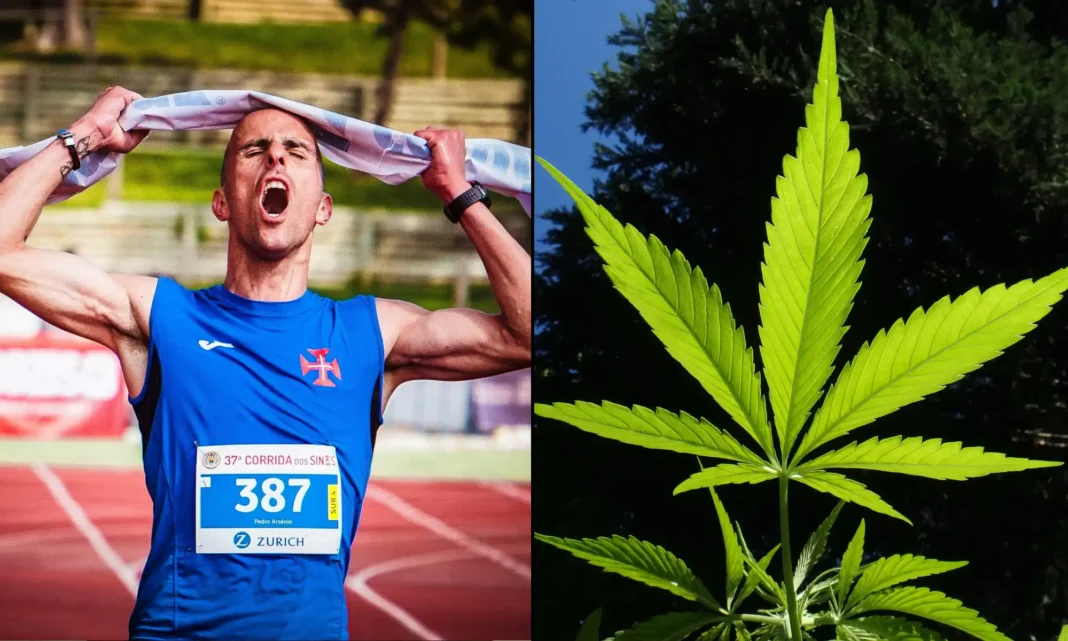

The non-intoxicating marijuana component CBD holds “potentially performance-enhancing properties” for athletes and may serve as an effective post-exercise recovery tool, according to a new scientific review.
This study examined 70 peer reviewed studies that looked at the therapeutic effectiveness of cannabidiol in order to see if it could benefit athletes.
Researchers at Universidad Nacional in Costa Rica said the research they reviewed—which included studies involving athletes, people with epilepsy and mice—found that “CBD appears to have anti-inflammatory, neuroprotective, analgesic, anxiolytic, and potentially performance-enhancing properties in athletes.”
Researchers said that more evidence was “necessary” to confirm this effect. They also noted the fact that the lack of clinical studies is partly due to restrictions placed by national and international governments on cannabinoids (including CBD) and their strict use in research.
A review of scientific literature indicates that cannabidiol consumption is linked to improvements in both “physiological and cognitive functions.”
As an example, CBD has been shown to treat both central and peripheral neuropathy pain, while also having “antidepressant, anxiety-reducing and cognitive effects, as well as positive evidence of anti-inflammatory and functional symptoms.
CBD may be useful for recovery in sports.
A study published in MHSalud found that CBD consumption could result in structural and functional improvements of the muscles. This suggests muscular recovery.
CBD can also improve athletic performance, and regulate body weight.
According to the study, CBD is used by many team athletes for pain relief, sleep and recovery. Its consumption also increases as they age. Cannabidiol research and its effects on sleep are also “promising for sport.”
The authors stated that “confirmatory analysis using randomized, placebo-controlled studies to test acute and chronic effects” of various dosing regimes is needed.
The studies conducted should take into consideration the various biological and environmental conditions which contribute to athlete fatigue. Also, they must examine the differences between sports disciplines, how athletes react to CBD and other nutritional and physical aids.
The study found that “given the common usage of CBD and cannabis among athletes, it is clear there is a need to improve the scientific understanding of CBD’s effects on recovery and performance,” concluded the report. More scientific advancements are required, including the implementation of experimental trials that allow a better understanding of positive and negative results, ultimately benefiting athlete performance and recovery.
CBD is a neuroprotective compound with anti-inflammatory properties.
In a study funded by NFL, it was found that the interest of athletes in cannabis for medical purposes is increasing as more states become legal. But many felt they weren’t receiving adequate information from health officials at their teams and leagues due to the ongoing stigma associated with the drug.
In a recent paper by Canadian researchers from University of Saskatchewan, University of Regina and the University of Saskatchewan, it was noted that many major sporting leagues in Canada have altered their policies to eliminate strict penalties for marijuana use.
In 2024 the researchers who conducted the research published previous findings that highlighted how medical marijuana is becoming more acceptable in sports and the challenges to cannabis research due to federal prohibition.
The NFL, along with the players union of that league, has focused in recent years on funding cannabis research for athletes.
In 2022, for example, they authorized $1 million in grants for a pair of studies looking into the efficacy of marijuana and its components in managing football players’ pain and providing neuroprotection from concussions.
The league and the players union also awarded funding to support research on the therapeutic benefits of CBD as a pain treatment alternative to opioids for players with concussions.
The NFL reached an agreement with its players union in 2024 to further reform its marijuana policies, significantly reducing fines for positive tests while increasing the allowable THC threshold for players. About four years after NFL ended the practice of suspending players over cannabis or other drugs as part of a collective bargaining agreement, the league again revised its Substances of Abuse Policy and Performance Enhancing Substances Policy.
NBA, for its part, removed marijuana from the banned substances list for players in 2023, and it also freed them up to invest in and promote cannabis companies.
Most recently, for example, the Women’s National Basketball Association (WNBA) this year removed marijuana from its prohibited substances list while also laying out rules for how players can invest in and promote cannabis companies.
The National Collegiate Athletic Association (NCAA) in 2024 voted to remove marijuana from its banned substances list for Division I players.
The reform builds on a 2022 change that increased the allowable THC threshold for college athletes, aligning NCAA’s rules with those of the World Anti-Doping Agency (WADA).
The head of the U.S. Anti-Doping Agency (USADA) blasted the “unfair” ban on marijuana for athletes competing in international sport events, including the Olympics that were underway in Paris at the time of the comments.
USADA CEO Travis Tygart has said that it is “disappointing,” WADA’s continued prohibition of cannabis based on a justification he considers to be misguided.
WADA did carry out a review into its marijuana policy at the request of USADA and the White House Office of National Drug Control Policy (ONDCP) following the controversial suspension of U.S. runner Sha’Carri Richardson, who was barred from participating in the Olympics in 2021 after she tested positive for THC. Richardson claimed she used marijuana to deal with her recent mother’s death.
While UFC announced in late 2023 that it was formally removing marijuana from its modified banned substances list for athletes, the league notified participants that the reform didn’t apply under California State Athletic Commission (CSAC) rules. UFC informed fighters they would be fined $100 by the California State Athletic Commission (CSAC) if their tests showed more than 150 nanograms per milliliter of THC. The UFC 298 fight took place on February.
Sponsored Content
This informative article is brought to you by NUBO CBD →