







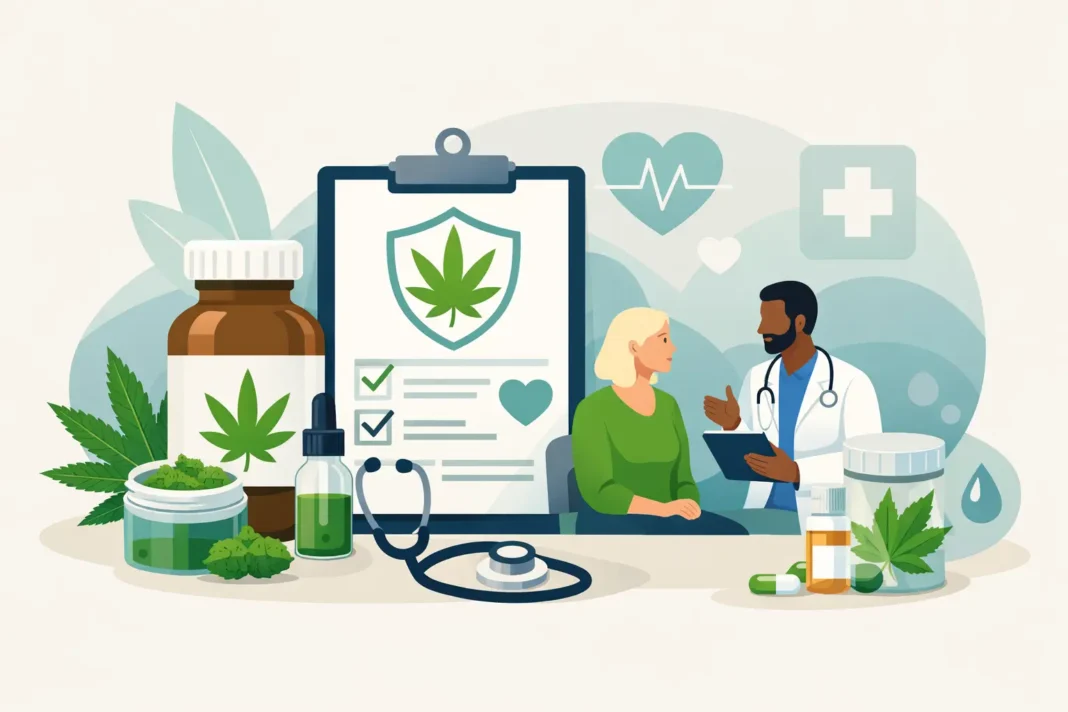

The decision-making process does not end with a prescription. Useful Medical cannabis patient guide Let’s start with the practical realities: two different patients can be affected by the same drug in very different ways, and the laws governing driving, working, travel, etc. can differ across national borders. Patients in Europe and the UK can benefit from informed treatments by keeping their eyes on the symptom management and on the safety of the patient, the documentation, and local law.
Medical marijuana should be monitored like other medicines. This means having a clearly defined treatment goal, having an open discussion about the risks, and conducting regular reviews, rather than making assumptions based solely on claims made by marketing or another patient.
The treatment is the first thing to consider, and not the product.
It is important to define the goal of the treatment. What is the most important thing? Is it fewer flare-ups of pain, better sleep, reduced spasticity or nausea, a more functional day, or less pain and improved sleep consistency? It is difficult to determine if a medication helps when the goal of “feeling good” is vague.
This helps you to determine what treatments have already been attempted, what dosage, how long, and what results they had. This wider history of treatment is often the basis for specialist prescribing in the UK. In Europe, access routes, reimbursement rules, and clinical expectations are all different. Therefore, patients shouldn’t use an online account from another country to judge their own eligibility.
The consultation should also cover any previous history or current medication, as well as cardiovascular problems, planned pregnancy, alcohol and substance abuse disorders. They are important questions. The answers to these questions will determine whether cannabis is the right treatment, how it is administered, and even what form of medication is used.
Labels can tell you a lot about a product.
The medical cannabis product is not a single medicine. The cannabinoid composition, the formulation, the route of administration, and even batch characteristics vary between products. THC, the most common cannabinoid associated with impairment and intoxication; CBD does not cause impairment or intoxication but it can have side effects. CBD can also interact with other medications. Ratio is important, but not everything.
Many patients find that capsules and oils offer better consistency in dosing, a longer lasting effect, even though they take longer. Although inhaled medications can work faster, and are easier to dose around symptoms that arise suddenly, some patients may not be able to tolerate them. The duration of oral sprays, lozenges and similar preparations is different.
Indica, hybrid, and sativa are still common terms in the market but do not provide a reliable shorthand to predict effects. It is better to record the THC, CBD, dosage, timing, route, and response of patients. You can use a if terpene information If context is given, this may help, but not as a promise of an outcome.
Start low and review early
Cannabis prescriptions often follow a titration-based approach. Start with a lower dose and increase slowly if you are instructed. If adverse effects begin to appear, you can pause the medication or back off. It depends on the age of the patient, their medical history, and whether they have previously used cannabis. It is not always better to go faster.
You can ask the prescribing physician what improvements are expected and when they will appear. Also, what constitutes a good reason for stopping? This conversation can be especially valuable when the available evidence is mixed or limited. Patients can still experience meaningful benefits without having to claim that cannabis is the cure.
Track effects that support clinical decisions
The symptom log can help you to turn your first month of uncertainty into reliable evidence. Notate the product name, time and date taken. Also note the symptoms both before and after. Do not just focus on the symptom scores, but also include sleep quality and daily functions.
As an example: reduced pain If it’s accompanied by anxiety or difficulty in concentrating, then the benefit may be diminished. In contrast, even a small reduction in symptoms could be beneficial if it allowed someone to participate in physiotherapy or sleep all night. This is an individual decision but should also be made visible.
If you experience anxiety or paranoia or are experiencing confusion, nausea, vomiting or chest pains, contact your pharmacist or prescriber immediately. If there’s a danger of harming oneself, causing psychosis, or putting others in danger, it is important to seek immediate support. In these circumstances, do not wait to have a routine assessment.
The interaction between impairment and interactions requires active attention
Cannabis may enhance the effects of other drugs and medicines, such as alcohol, sleeping pills, antihistamines, benzodiazepines or opioids. CBD may also alter the way that prescribed medications are processed by the body. The pharmacist or clinician needs to have a full list of all medications, which includes over-the counter treatments, CBD products purchased outside the system, and supplements.
Don’t adjust any other medicines because marijuana appears to help. Unplanned changes in pain medication, antidepressants and anti-seizure medications or sleep treatment can have their own dangers. Sometimes a planned reduction is appropriate. However, it must be clinically monitored.
Patients can be prone to making costly assumptions when it comes to driving. A valid prescription in the UK does not grant a person a right to drive after taking a THC containing medication. The law on drug driving remains in force. Patients are not allowed to drive when impaired. Cycling, using machinery, climbing ladders, and other activities that could be dangerous if a person’s reaction time is lowered, are all examples of situations where caution should be exercised.
Some employers may have their own drug or alcohol policy, particularly in sectors that are safety critical. It isn’t always easy to disclose, but patients should be aware of their obligations and keep all prescriptions on hand. They can also seek occupational advice prior to a workplace incident or test.
This guide is for medical marijuana patients who are traveling and storing their cannabis.
A legal prescription in your home country can be a problem when you travel across borders. The European laws are not uniform: the countries differ on allowed products, thresholds for THC, paperwork required to import, quantities, and whether or not medical cannabis is recognized. The same is true even in the Schengen region.
Before departing, patients should confirm the official requirements of each country, including any transit countries. These documents may not be enough to allow importation. A letter from the clinic, a prescription and medicine packaged in their original packaging are all required. Do not transfer medicines into non-labelled containers or post them ahead. Also, do not rely verbally on a transporter.
Store medications safely at home and away from pets, children, and visitors. Do not give it to anyone else. Keep the original packaging. Shared cannabis products are not harmless: they remove medical supervision and can expose the two people involved to legal penalties.
Noise is not evidence
Social media, retail marketing, and advocacy groups make confident claims about the rapid growth of medical cannabis. Others may point out genuine research, while others turn early findings into empty promises. It isn’t important to ask whether cannabis can be used, but rather whether the product, dosage and route are relevant for the patients condition.
The evidence is more compelling for some conditions and symptoms than others. And product-specific information can be limited. Observational research can provide useful information, but it cannot address every issue, whether that is about the cause of a condition, its safety, or even the long-term benefits. Randomised studies are useful, but may not include all the patients who see a doctor in a routine setting.
The patient’s experience is not irrelevant because of this uncertainty. This means that personal experiences should be recorded and discussed with best evidence. MEDCAN24’s readers will understand the broader message: Regulation, research, and commercial availability may move at different rates, leaving patients with incomplete information.
Preparation is key for all review appointments
Bring the current medicine list, the symptom journal and ask direct questions. If the prescribed dose does not match the desired treatment outcome, ask whether any side effects can be tolerated, or if a different formulation with fewer adverse reactions is available. Also, inquire if prescribing the medication continues to make sense. Ask about the expected review periods and how much the consultation, prescription, and dispensing costs will be.
Take the medicine as prescribed, note any changes that occur, and alert your doctor early if you have concerns. This gives both the clinician and patient something more useful than fear or optimism – it provides a basis on which to make the next decisions.