







Germany is on a short list of countries that have adopted a national adult-use cannabis legalization measure. Starting on April 1st, 2024, adults in Germany can cultivate, possess, and consume personal amounts of cannabis. Those adult consumers’ recreational cannabis does not have a THC content limit.
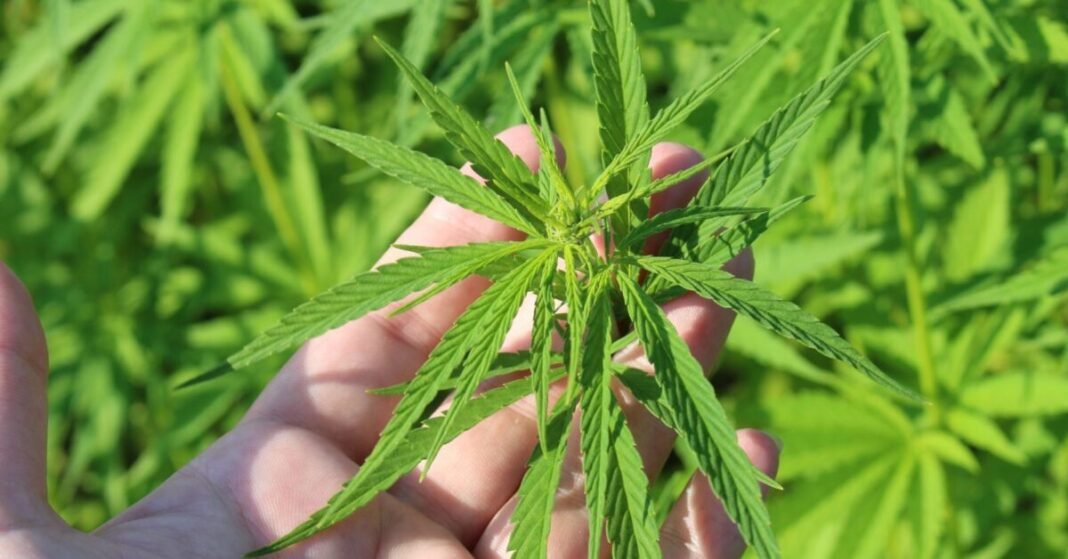
With that in mind, it is illogical for Germany’s government to continue to cling to its arbitrary low-THC limit for industrial hemp. Germany has permitted industrial hemp cultivation since 1996. The THC threshold for industrial hemp in Germany is 0.3%.
Germany’s Committee on Agriculture, Food, and Home Affairs recently held a public hearing on a draft bill submitted by the Alliance 90/The Greens parliamentary group that, if approved, would amend the Consumer Cannabis Act. The measure seeks to reduce bureaucratic and legal obstacles for cultivating industrial hemp. Key components of the measure include:
- Removing the “intoxication” or “abuse” clause (§ 1 No. 9 KCanG)
- Raising the national THC limit for industrial hemp from 0.3 to 1.0 percent
- Allowing indoor hemp cultivation independent of weather conditions
Expert Felix Drewes (Industrial Hemp Network e.V.), Prof. Simone Graeff-Hönninger (University of Hohenheim), Katharina Geiger (German Farmers’ Association), and the German Cannabis Business Association (BvCW) issued a statement leading up to the public hearing and emphasized that the intoxication/abuse clause places farmers and processors at unnecessary risk.
“The industry association *Cannabiswirtschaft e. V.* (BvCW) explicitly supports the draft legislation proposed by the parliamentary group BÜNDNIS 90/DIE GRÜNEN (Bundestag Printed Paper 21/2116) in its entirety. It represents a significant and appropriate step toward deregulation and the restoration of legal certainty for the German industrial hemp sector.” the statement wrote (translated from German to English).
“The planned abolition of the so-called “intoxication clause” (or “misuse clause”) in Section 1, No. 9 of the *Cannabisgesetz* (KCanG) would put an end to years of legal uncertainty and prevent the criminalization of the trade and processing of commercial industrial hemp products.” the statement continued. “Increasing the THC limit for industrial hemp and its derivatives from 0.3% to 1.0% would provide reliable planning security for agriculture and processing, help prevent harvest losses caused by weather conditions, and offset competitive disadvantages relative to European neighbors (e.g., the Czech Republic and Switzerland).”
“Permitting protected (indoor) cultivation would enable technology-driven, year-round control of active ingredient levels (particularly for CBD) and remove unnecessary bureaucratic hurdles.” the statement added.
Germany’s Federal Office for Agriculture and Food (BLE) recently published data on industrial hemp cultivation in Germany for 2026, finding that 438 farms are cultivating 5,785 hectares of legal industrial hemp.
“The parliamentary group’s draft bill on the liberalization of industrial hemp is balanced, practical, and long overdue from a regulatory policy perspective. It removes obstacles that have persisted for decades, hindering a sustainable, bio-based growth market.” the BvCW concluded in the public statement. “The BvCW strongly urges the Committee on Food and Agriculture, as well as the relevant legislative bodies, to adopt this draft bill promptly and without amendments, in order to provide the affected businesses with full legal certainty well before the upcoming cultivation season.”
Sponsored Content
This informative article is brought to you by NUBO CBD →