







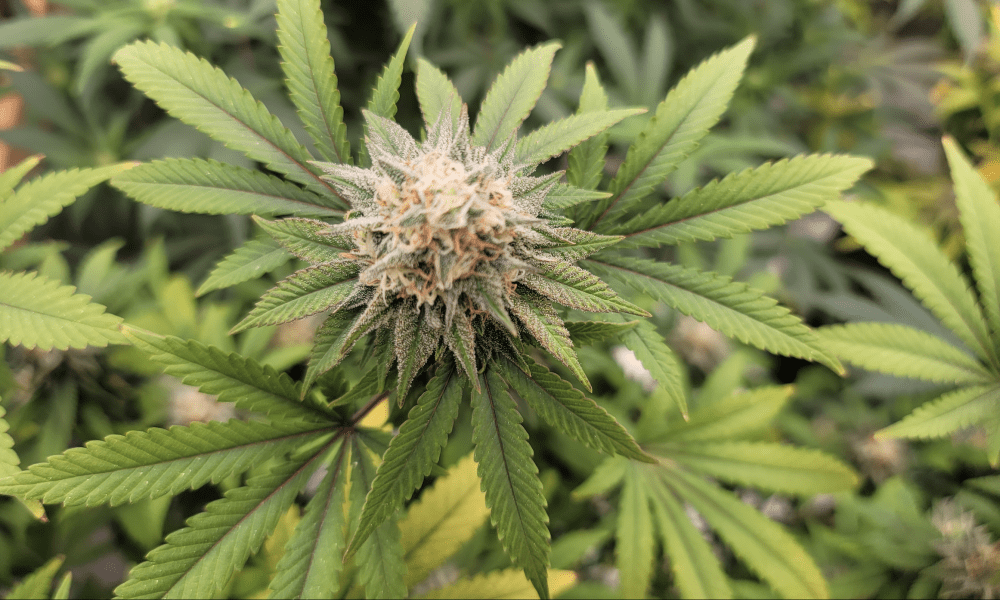

Patients, consumers and workers will pay the high price of the market being sold off to six large companies.
By Brianna Hill, Spotlight Delaware
The recent announcement that Delaware would launch its long-awaited recreational marijuana industry in August has sparked tensions over who gets to participate in that initial launch—and how that will affect the industry over the long term.
Last week the Office of the Marijuana Commissioner announced the official start of the adult market on August 1st. The only shops that will be allowed to accept recreational users on August 1 are those that were previously medical marijuana dispensaries.
The state will not allow any new marijuana retail shops to open until all the regulatory approvals have been met, like shop inspections.
While two micro-cultivation companies that are not part of the medical cannabis system will start on August 1, their products won’t be available until several weeks, or possibly months.
The medical marijuana industry and some licensees claim that this is the only option to kick-start the much delayed recreational market. But other advocates and licensees believe the state fails to create a competitive and equitable market.
Morgan Fox, the political director of the National Organization for the Reform of Marijuana Laws’ (NORML) said he was confused as to why local entrepreneurs have not been allowed to operate despite being granted conditional licences.
Fox stated that the state was given more than ample time to implement this program.
Long wait
In the past year, the Office of the Marijuana Commissioner has awarded 125 marijuana licenses via a lottery to individuals who want to take part in the emerging industry of marijuana growers, testers or manufacturers.
Of the 47 licensees selected, 47 went to applicants with social equity or past convictions for marijuana or from regions with high levels of marijuana enforcement.
Delaware’s six medical marijuana retailers, active since 2015 in Delaware, have also obtained conversion licenses in order to participate in the recreational market. They received their licenses last year after paying hefty conversion fees—$100,000 for retail or manufacturing licenses and $200,000 for cultivation. Businesses had to obtain a separate license for every location they operated, which could be up to three.
The fees collected were used for a $4.5 million grant in support of social equity licensees.
After the State delayed the April date originally planned due to regulatory issues, operators have been awaiting guidance since March from the Office of the Marijuana Commissioner on the legal start of sales.
A key holdup stemmed from the state’s failure to secure FBI approval to conduct background checks on license applicants—a requirement for issuing conditional licenses. The issue didn’t get resolved until May. That further slowed down the process of new operators who wanted to enter the market.
Despite the fact that August 1 is a more precise date, marijuana retailers still face major challenges, including local and regional zoning regulations and difficulties finding investors.
Many shops still have to wait for licenses.
62 operators had completed background checks according to the Commissioner’s office. 33 operators received conditional licensing.
The state regulators also reported that four licenses for manufacturers and one cultivator were returned voluntarily to the government.
The promise of Fairness
Both sides of the debate agree that the state is moving too slowly.
Delaware could have collected more tax revenue and attracted investments if it had fixed its regulatory problems and opened up its adult market earlier.
James Brobyn is the president of Delaware Cannabis Industry Association, and owns Field Supply Medical Dispensary. He said that marijuana industry representatives warned state officials years ago about obstacles such as land use restrictions if they did not take immediate action.
He said, “The State waited for this long without any reason whatsoever.”
Some have questioned whether Delaware’s marijuana rollout is truly fair and equitable, considering the ongoing challenges faced by operators and what many claim to be an unfair advantage for medical marijuana businesses.
Joshua Sanderlin – Delaware’s Marijuana commissioner who took up his position at the start of this month – described Delaware’s current marijuana rollout process as being “an old-fashioned path.”
In the next two weeks, he plans to issue licenses to all operators.
The licensees also struggled to find private investors and capital in a new industry.
Sanderlin, Spotlight Delaware, said that it was important for them to show the stigma of the industry and that they are dedicated to this industry.
He said that the legalization of marijuana for recreational use would also help to combat the negative voices of those in the State “who are against the industry.”
‘The big six’
Each medical marijuana business has been granted a vertical license, which allows them to grow, manufacture, and sell cannabis-based products.
This makes legacy medical shops different from the new licensees who were required to apply for each piece of industry.
Medical cannabis companies are the only ones with the necessary infrastructure for launching and supporting the market.
Some argue, however, that by allowing the medical cannabis operators to start first they will have an unfair advantage and their dominant position in Delaware’s legal recreational marijuana market.
“If the ‘Big Six’ start sales before new businesses, then patients, consumers, industry workers and new and small equity businesses will all pay the price for having the fledgling market sold out to six companies that don’t want to have to play by the same rules as everybody else,” said Zoe Patchell, president of the Delaware Cannabis Advocacy Network, who helped pass the state’s legalization law.
Patchell said that because the six operators of medical marijuana will be able to set their own prices, consumers may have longer waits. Both of these factors might cause consumers to buy marijuana illegally or from states nearby.
In 2021, high prices became a source of controversy when Delaware residents complained about the low supply of certain cannabis strains in medical dispensaries. This led to inflated pricing.
The medical operators opposed the marijuana legalization legislation that year. They said the bill, which would initially have required them to undergo the same licensing processes as new operators, might cause an excess of marijuana and drive them out of the business.
Some worry today that Delaware’s medical population of 28,000 will be under-supplied due to the launch of the recreation industry.
The medical marijuana program was launched in New Castle County in 1996. At the time there were not enough dispensaries. Nicole Chick received both a Micro Manufacturing License in Sussex County as well as the Social Equity Manufacturing license.
Officials from New Jersey’s medical and recreation sectors experienced a similar shortage in New Jersey. While mature industries are now able to sell their products in a walk-in liquor store, newer industries operate by appointment only.
Delaware Medical operators claim that they will be well-equipped to manage the industry.
Emily Wilkins is the vice president at First State Compassion. She and other operators are ready for anticipated demand. Delaware law requires that operators have an inventory plan which includes a requirement to reserve products for patients.
First State Compassion is reserving 20% of its inventory to medical card holders
She said, “We have been preparing for this moment since a long time.”
Some licensees claim that the demand for marijuana recreational may not be as high as people believe.
Urvesh patel is getting ready to start his operation and plant his plants in his New Castle County facility.
Patel believes it will be hard for Delaware’s dozens of marijuana licensees, many who have owned retail shops in New Jersey, to maintain a clientele with the state’s 15 percent marijuana sales tax. He claimed that surrounding states offer their marijuana at lower prices than what he anticipates in Delaware.
“It’s an overkill.” “I hope that everyone makes it through and nobody loses money in the process,” said he.
Patel said medical operators could be hard to compete against. When he first launched his New Jersey business, he noted it was hard to gain customers, and that medical companies often refused certain products, because they saw new operators as competitors.
Some medical operators have actively helped licensees set up their business, while others say they just want them to succeed.
Wilkins from First State Compassion said that she also wants to stock recreational products.
Support for launch date increases
Some people, including advocates and licensing agencies, are concerned about the launch in August. However others view it as a chance to build a viable market and industry for Delaware.
One social equity licensee, Tracee Southerland, said she received phone calls from two investors on July 1—the day that the state announced the cannabis market’s August launch. Southerland had not been able find investors for her cannabis business before the announcement.
Southerland stated that “having a date and knowing where we were was an enormous relief to me.”
Many other licensees are also of the opinion that even if all stores opened at once, most new businesses still wouldn’t have the necessary equipment to run because harvests for marijuana would be about two or three more months off.
Patel, a New Castle County farmer, still said he expected to have his harvest by the end summer.
Sanderlin believes that as the industry moves on, it will become more competitive.
Cannabis in the recreational market differs from cannabis on the medical market. He said that if you offer products of better quality at lower prices, and are more accessible, then you will attract customers.
All stakeholders appear to be aiming for the same result.
It sounds as if we are all in disagreement. “They all want to have safe access, but they say it differently. “I don’t care about any of it,” I said. Patrick Galloway is a new licensed grower.
Spotlight Delaware published this article first.
Mike Latimer provided the photo.
Sponsored Content
This informative article is brought to you by Gen-Europa →