







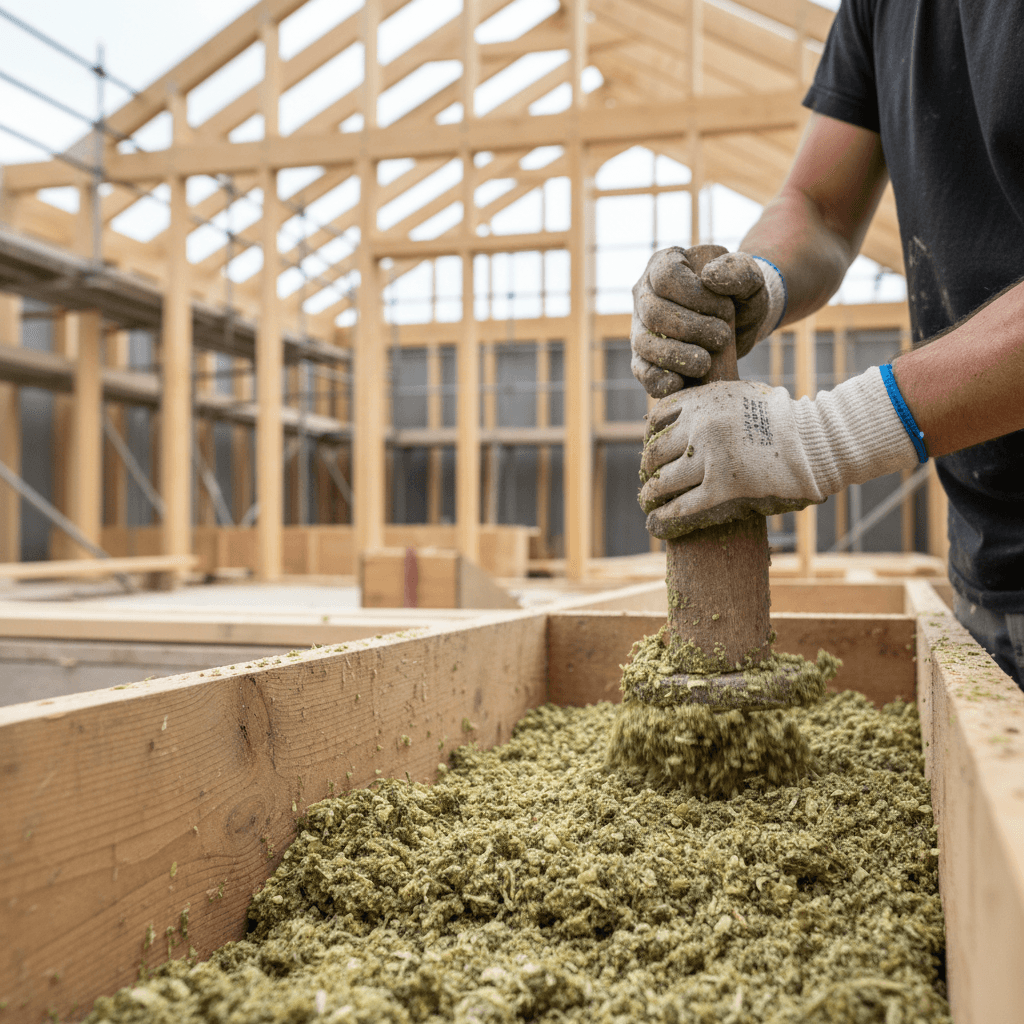

The International Code Council has officially approved hemp-lime construction For integration into the International Residential Code of 2024. The new regulation allows residential builders to use industrial hemp materials without having to request custom engineering variations in many US States. This decision is a major development in the industrial hemp industry, which had been restricted by federal laws for almost a century because they did not distinguish industrial hemp from cannabis.
This material is often called hempcrete and combines the inner woody core of hemp with a binder based on lime to produce non-structural walls infills. It is the culmination of a multiyear campaign by US Hemp Building Association, which included submitting testing data as well as architectural standards to code administrators.
Hemp-Lime Construction: A Regulatory Framework
Before this update in regulation, contractors were faced with administrative and legal obstacles when trying to use hemp materials for construction. This path was changed by the 2018 Farm Bill, which legally separated industrial hemp and marijuana on a federal level. This change in legislation laid the groundwork for subsequent attempts to incorporate industrial hemp into existing building codes.
This approval is specific to two and three-family houses. As specified in the new annex, builders must follow the precise ratios of blending and parameters for thickness when mixing hemp with lime. The formal inclusion of this information streamlines the building and architectural process by eliminating the need to make individual adjustments that were previously required.
Environmental Benefits and Physical Properties
Hemp-lime mixes have distinct properties which contribute to the thermal performance and moisture control of buildings. The inner core (hurd) of the stalk is processed, and then mixed with lime hydrated and water. The lime binder is then applied to the hemp hurds and forms a light matrix. As the lime reacts over time with carbon dioxide from the atmosphere, it undergoes carbonation and gradually transforms into calcium carbonate.
- Thermal Insulation Thermal insulation is 15 times more effective in the composite than it would be with standard concrete. The property reduces heat transfer from exterior walls, stabilizing indoor temperatures.
- Moisture Regulation: This material has a hygroscopic property, which means that its porous structure allows it to absorb moisture vapor in high humidities and then release it once the air becomes dry. This allows for moisture to be released from wall assemblies.
- Mold and Pest Resistant: This chemical binder has a pH that is high enough to resist mold growth.
Industrial hemp is a great carbon sink. It absorbs carbon dioxide during the growth phase. This is because the amount of carbon dioxide that the plant tissues store and capture often surpasses the overall emissions produced by the harvesting, processing and transportation.
The challenges of the supply chain and processing
The sector continues to face infrastructure challenges within the regional supply chain, despite the new building codes. Many parts of North America are still lacking in specialized equipment, such as industrial decorticators that separate the woody fibers from raw hemp stalks. The scarcity of machinery forces the harvesting of stalks and their transportation to facilities that process them. This can make regional projects more difficult financially.
In the past, hempcrete was made from hurds imported from European countries. Industrial hemp cultivation in these countries was legal for most of the 20th Century. Investing in agriculture manufacturing centers is slowly increasing the domestic processing capacity. Local contractors can expect to see a rise in the cost and availability of materials made from hemp-lime as these processing centers grow. Architectural firms also explore pre-fabricated blocks of hemp and spray application techniques to reduce manual labor, time, and effort required by traditional on-site installations, such as hand-tamping mixtures onto temporary wooden forms.
Disclaimer: The information contained in this article is not intended to be a substitute for medical advice. Hemp Gazette is not a medical provider and does not offer diagnoses or treatment plans. Consult a healthcare professional before you make any decision regarding your health. The Therapeutic Goods Administration in Australia (TGA) has not evaluated any statements regarding the therapeutic use of cannabis or hemp-derived products. TGA regulations allow Australians to access medical cannabis through prescription.
Sponsored Content
This informative article is brought to you by NUBO CBD →