





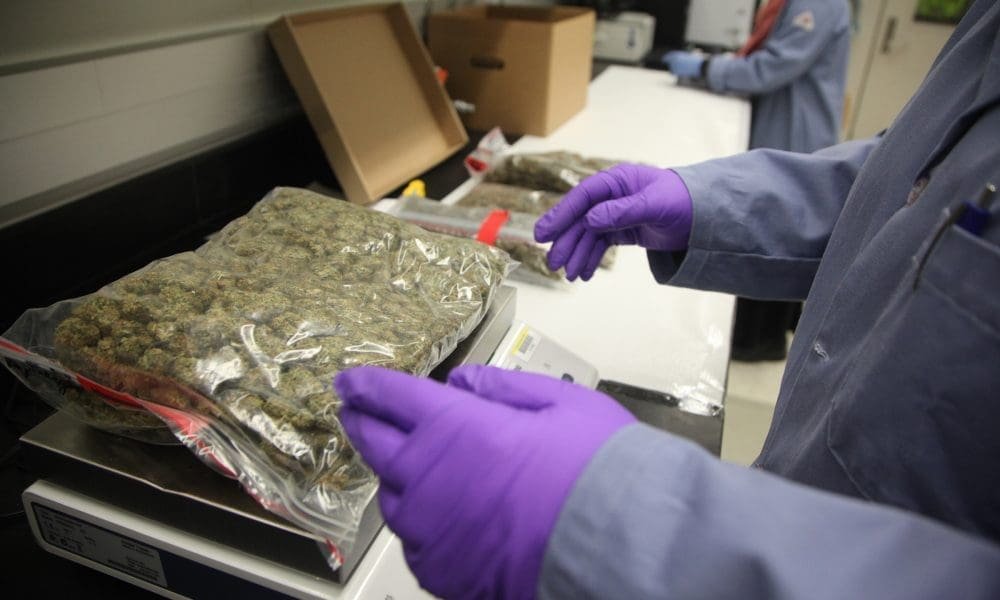

The Department of Government Efficiency of the Trump Administration (DOGE) has issued a directive to reduce costs. This is what officials at the National Institute on Drug Abuse, or NIDA, say led them to stop their long-standing order of marijuana for research from the University of Mississippi.
NIDA stated that it is not expected to disrupt the supply of cannabis used for approved government research.
A recent executive order—titled “Implementing the President’s ‘Department of Government Efficiency’ Cost Efficiency Initiative”—led to the Department of Health and Human Services conducting “a comprehensive review of all existing contracts to identify opportunities for cost reduction,” NIDA representatives said in an email to MEDCAN24.
The email states that “as a consequence of this initiative no new task order for cannabis cultivation has been issued.” This is not to say that the NIDA Drug Supply Program doesn’t have a stock of cannabis or cannabis-derived products available for research.
The email from NIDA also stated that, while it hasn’t issued any new orders to research cannabis, the “contract between the University of Mississippi and NIDA for the cultivation of cannabis for research purposes remains in effect” until 2028.
It confirmed this in an email.
The contract for marijuana cultivation supported by NIDA is with only the University of Mississippi, it stated.
While the University of Mississippi for decades held a monopoly on the production of research cannabis, there are now seven Drug Enforcement Administration (DEA)-approved “bulk manufacturer marihuana growers.” DEA in recent years has slowly expanded the pool of institutions eligible to produce and provide marijuana for research purposes amid calls by politicians and public health experts to more intensively study the drug.
NIDA, however, contracted Ole Miss as its exclusive provider of marijuana for the Drug Supply Program. The program provides cannabis to researchers who are working on studies approved by federal authorities.
Cannabis Wire was the first to report on NIDA’s decision, which led some other DEA approved cultivators to warn that future marijuana research may be in danger.
In a Wednesday press release, Maridose, based in Maine, said that the NIDA cancellation had “created uncertainty about the future of marijuana research.”
The company stated that “the existing product produced through this program will support urgent research needs until the end of the year 2025. However, it is not guaranteed that there will be additional products available after these supplies have been exhausted.” This disruption may jeopardize clinical and preclinical research, as well as halt progress in critical cannabis research throughout the United States.
Cannabis can be obtained by researchers conducting federally-approved studies from any of the DEA approved cultivators. However, the materials will cost more than if they used the Drug Supply Program.
Farmers like Maridose claim they are prepared to fulfill any unmet demands.
Richard Shain, the founder of Maridose said that his team was committed to working closely with researchers in order to guarantee uninterrupted access for current and future research. The loss of University of Mississippi may cause short-term problems, but Maridose will fill in that gap.
Other people, on the contrary, believe that NIDA’s action is not likely to impact research. A lack of funding and regulatory hurdles as the result of cannabis’s Schedule I status—not a scarcity of research marijuana—are what’s holding back clinical studies, they said.
Sue Sisley said the NIDA’s termination of its contract with Ole Miss does not affect Scottsdale Research Institute.
In an email, she said: “We use it for our FDA-approved marijuana.” We use it to make our FDA [Food and Drug Administration] Study and grow other studies. It is not relevant to stop new orders of cannabis.
Sisley said that “barely any marijuana research is happening” and the funding available for research was “miniscule in comparison to other areas.”
The demand for cannabis research is therefore minimal, she said.
Sisley was a fan of Ole Miss and cheered its end.
She wrote: “This is an excellent move from the Trump administration.” I applaud the Trump administration for finally having enough courage to acknowledge that it was not necessary to only have one supplier who was federally approved and received millions of dollars in government funds annually.
“The bottom line is that we are growing our own cannabis and it’s ten times better than anything that’s grown at the University of Mississippi,” the researcher added, noting that SRI “just supplied 400 bottles of low-THC cannabis tincture…for a phase 1 trial examining cannabis oil treating autism.”
Sisley, among others, have in the past complained about the University of Mississippi’s quality of cannabis and the samples it supplied to NIDA. They claimed that the provided samples would not pass the basic standards of testing in states with legal cannabis markets. Nonetheless, researchers from Ole Miss claimed in late 2013 that the quality of cannabis grown by their university was very similar to what is sold legally on state’s markets.
Justin Abril of Royal Emerald Pharmaceuticals (a DEA licensed cultivator) told MEDCAN24 that the pause in research between NIDA, Ole Miss, and other institutions highlights something many researchers have been aware of for years. There’s been a limited demand for NIDA-supplied cannabis because of well-documented fears about consistency and quality.
Abril said that the fact NIDA reported having surplus material speaks for itself. The fact that several DEA-licensed producers are now online as well as the news of the rescheduling is a big plus for researchers.
Sisley at SRI said it’s time to give other growers—who haven’t had government subsidies—an opportunity to fill the demand for research marijuana.
She said that “these other 10 DEA-licensed growers should be given a chance” to begin growing cannabis for research and take over the funding of University Mississippi, which is suddenly no longer available. SRI has never enjoyed government funds flowing every month.
Maridose’s leadership, who had warned NIDA of its potential to threaten research in the future, believes that the University of Mississippi cancelling the order could ultimately improve the supply of marijuana used in clinical studies.
Richard Shain stated in an email: “The cancellation will have a positive affect on the quality research, because cannabis purchased from other DEA-manufacturers is more similar to that sold to consumers.” The cancellation of DSP by DOGE makes good business sense, he said. “Demand was declining and there are other sources available that don’t come from the government.”
Shain also stated that the NIDA announcement did not reflect the skepticism of the Trump administration towards marijuana research.
The grant to establish the Resource Center for Cannabis and Cannabinoids was not affected, said he. This facility is another federally funded cannabis operation located in Ole Miss. This seems to show that the government is supporting cannabis research.
Mahmoud ElSohly—who has long helmed the University of Mississippi cannabis cultivation and research division, contracted as part of NIDA’s drug supply program—declined to offer additional reaction last week on the order cancellation. He has previously disputed the claim that cannabis produced by the university is low-quality in comments made to MEDCAN24.
Ole Miss’ spokesperson confirmed to MEDCAN24 in the meantime that “NIDA decided not to give the University of Mississippi a task order for the cannabis production this year.”
Jacob Batte said the school’s director of media and news relations was ready to take advantage of its more than 50 years of experience with cannabis to further the cannabis field and help NIDA meet its future requirements.
NIDA’s cancellation of the Ole Miss order comes on the heels of the Trump administration’s Department of Government Efficiency (DOGE) ending a contract in May with the University of Mississippi through which the school monitored cannabinoid content such as THC and CBD in cannabis confiscated by law enforcement.
ElSohly who is also the head of that program said that his laboratory’s work might still lag behind until federal funding resumes. He said that if the samples to his Mississippi lab stop coming, decades of THC measurements in illegal U.S. supply cannabis will come to an abrupt end.
The earlier contract cancellation came about two months after DOGE separately promoted the end of a separate grant meant to fund a study examining cannabis use risks among LGBTQ+ individuals, non-binary people and heterosexual women.
Despite cuts in some programs, this is not the end of the University of Mississippi’s (UM’s) involvement with marijuana research.
Batte told MEDCAN24 that the UM School of Pharmacy would continue to be a leader in research, discovery and innovation in cannabis through its National Center for Natural Products Research and Education and Resource Center for Cannabis and Cannabinoid Research.
The National Institutes of Health’s (NIH) Resource Center for Cannabis and Cannabinoid Research (R3CR), hosted at Ole Miss, launched earlier this year.
The university partnered up with Washington State University and United States Pharmacopoeia for this project. This was made possible by a grant from the National Center for Complementary and Integrative Health under NIH. Ole Miss leads the project’s core regulatory guidance while WSU handles research support and USP focuses on research standards.
The National Center for Natural Products Research of Ole Miss is home to the NIH’s resource center. This will “provide cannabis information through interactive websites, webinars and seed funding” as well as conferences to help researchers “generate science-backed evidence”, it stated in a release.
Meanwhile, the Drug Enforcement Administration has ramped up recruitment—recently urging people to join them on the frontlines of the “war on drugs,” even if they currently work as a “coffee barista” or otherwise have a non-law enforcement background.
It was also recently revealed that “marijuana” is one of nearly two dozen “controversial or high-profile topics” that staff and researchers at the National Cancer Institute (NCI) are required to clear with higher-ups before writing about, according to a leaked memo from within the federal agency.
Researchers involved in federally-funded clinical trials around marijuana have written in an article published in the American Journal of Medicine, that more study of the substance was of “critical importance”, given that millions of people in states where it is legal use the drug. However, they warn that restrictions by the government “stifle the scientific exploration of the potential and risk.”
The authors of the University of Maryland’s (UMD) medical and nursing schools said that classifying cannabis under Schedule I “traps researches in a paradox”: to prove its medicinal value, studies must be conducted, but they are severely restricted.
They added that “reforms are essential to meet the needs of society, as legalization is outpacing science.”
National Institute of Standards and Technology.
Sponsored Content
This informative article is brought to you by NUBO CBD →