







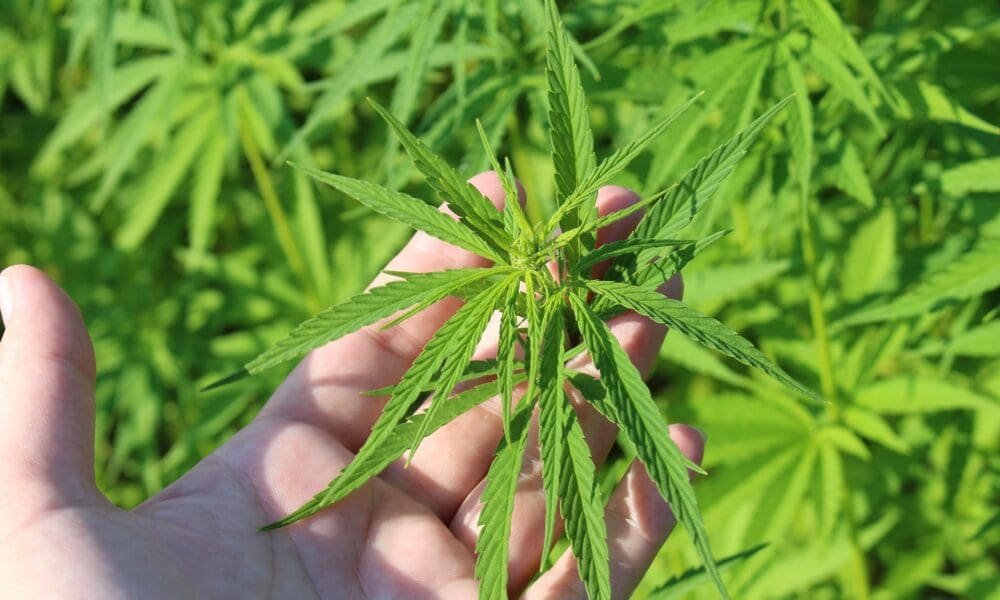

A key Senate committee has included a variety of marijuana and psychedelics-related provisions in a report attached to a pair of spending bills—including calls to allow U.S. Department of Veterans Affairs (VA) doctors to recommend medical cannabis if the federal government reschedules it, exploring the possibility of “reducing opioid use through medical marijuana” and cracking down on illicit grow operations.
According to the Senate Appropriations Committee’s report on Military Construction, Veterans Affairs, and Related Agencies, DOJ, then under President Joe Biden, had “concurred”, with HHS recommendation that marijuana be moved from Schedule I into Schedule III of Controlled Substances Act.
The report states that if rescheduling occurs, “VA doctors and other VHA personnel should be allowed to provide guidance to allow them to recommend and facilitate the access to medical cannabis in States where state legal medical marijuana programs exist, to the extent permitted by Federal law,” it says.
“Medical Marijuana.—The Committee recognizes that the Department of Justice’s Drug Enforcement Agency has concurred with the Department of Health and Human Services’ 2023 recommendation to reschedule cannabis in the Controlled Substances Act from its current placement in Schedule I to the less restrictive Schedule III. VA may consider issuing guidelines to allow VHA doctors to talk about, recommend, or facilitate access to Medical Marijuana in States where state-legal medical cannabis programs are available.
The VA is urged to investigate “the link between the treatment programs using medical marijuana approved by States and veterans accessing such programs.” This section also discusses how cannabis could be used to treat veterans.
“Reducing Opioid Use Through Medical Marijuana.—The Committee encourages VA to conduct a study on the relationship between treatment programs involving medical marijuana that are approved by States, the access of veterans to such programs, and a reduction in opioid use and abuse among veterans, as data is available to do so. Results should be reported to both Houses of Congress’ Committee on Appropriations within a year of the enactment of Act.
Additionally, a section of the report for MilConVA addresses psychedelics-assisted therapy, noting that members understand “VA and other relevant Federal agencies are undertaking research to evaluate the efficacy of psychedelic-assisted therapies in treating PTSD, major depressive disorder, and other conditions.”
The committee mandates that VA submit a report detailing the current research on the subject to Congress within 180 days after the bill is passed. It further directs that the VA “launch a longitudinal analysis of veterans undergoing such therapies, tracking outcomes for a period up to five years.”
“Psychedelic-Assisted Therapy.—The Committee understands that VA and other relevant Federal agencies are undertaking research to evaluate the efficacy of psychedelic-assisted therapies in treating PTSD, major depressive disorder, and other conditions. The Committee instructs the Secretary of the Department to provide a detailed report to both Houses’ Appropriations Committees no later than one hundred eighty days following the enactment this Act, on the current research, activities, costs, staffing and training requirements, facilities, equipment and any other need to increase the use of such treatments. The Department of Veterans Affairs is also directed to conduct a 5-year longitudinal study on veterans who have participated in these therapies. The study must include information on: how many veterans received treatment with psychedelics in the previous year, their disability rating, gender, number who stopped treatment and average treatment dosage, percentage who saw a significant improvement in symptoms and number who had a return of diagnosis. “The Department of Defense is required to provide an annual report on the status of the project and to submit a summary report on the results of the program to the Committees on Appropriations of Congress in both Houses.”
Report discusses GI Bill and cannabis benefits. “VA policy decisions have limited veterans’ access to their earned benefits including GI Bill Benefits,” the report states.
A 2022 VA policy advisory stipulated that GI benefits can’t be used for studies that ‘‘have the objective to prepare someone to participate in the cultivation, sale, or distribution of marijuana.” The committee has directed VA to provide a 90-day report “regarding” the number of affected veterans.
“Availability of GI Bill Benefits.—The Committee notes that VA policy determinations have restricted the ability of veterans to access their earned benefits, including GI Bill Benefits. In particular, the Committee is aware of the VA Policy Advisory, dated September 2, 2022 and entitled ‘‘State-Legalized Cannabis Training and GI Bill Benefits and Related Addendum,” which changed VA policy to no longer allow the use of GI Bill Benefits for courses of study determined to ‘‘have the objective to prepare someone to participate in the cultivation, sale, or distribution of marijuana.” This Advisory was issued despite States that allow marijuana to be used for medicinal or recreational purposes. The Committee requires VA to report on how many veterans were affected by this law to the Committees on Appropriations of Congress in both Houses no later than ninety days following the passage of this Act.
Members of the CJS committee, in a separate bill report, included language that directed federal agencies to submit a report on “the proliferation of illegal marijuana-growing operations associated with alien nationals” within 90 days after the bill was passed.
“Illegal Growing Operations.—The Committee directs the Department to submit a report, within 90 days of the enactment of this act, assessing the proliferation of illegal marijuana growing operations associated with foreign nationals. The FBI, DEA, Executive Office of United States attorneys, will coordinate the report. It is to assess (1) the extent of growing operations that are illegal in the United States and that involve foreign nationals. (2) Any connections or links with Chinese transnational criminal groups and/or government of People’s Republic of China. (3) Federal resources which can be used to support state, local and tribal law enforcement. Reports may be sent through classified channels if necessary. “The Committee directs that the Department work in conjunction with Federal partners to support State, Local, and Tribal Law Enforcement Agencies in this matter.”
The Senate Appropriations Committee approved Thursday the reports, as well as CJS’s spending bill. This would maintain state protections with respect to medical marijuana, but omit a proposal that was included in the House version for the annual appropriations law, which would have prevented the Justice Department rescheduling of cannabis.
The panel approved both the MilConVA and an amendment that allows VA doctors to prescribe medical cannabis in states with legalized marijuana to military veterans.
The House’s language, which would prevent the DOJ from reclassifying cannabis, is still a concern for advocates. However, the fact that this was not included in the Senate CJS base legislation, likely reduces the likelihood that the House version will be adopted when the package is finally delivered to President Obama.
Meanwhile, the Drug Enforcement Administration (DEA) recently notified an agency judge that the marijuana rescheduling process remains stalled under the Trump administration.
John Mulrooney, DEA Administrative Law judge (ALJ), temporarily halted hearings in June on a proposed move to schedule III of cannabis. In a report submitted to the judge earlier this month by DEA lawyers and rescheduling advocates, they said that there is still no agreement.
The Senate is poised to take an initial step toward confirming President Donald Trump pick to lead DEA on Monday—a development that many cannabis industry observers believe is necessary for the stalled marijuana rescheduling process to proceed.
Notably, while the nominee, Terrance Cole, has said that examining the rescheduling proposal would be “one of my first priorities” if he’s confirmed for the role, he has refused to say what he wants the result to be and has in the past made comments expressing concerns about the health effects of cannabis.
Sponsored Content
This informative article is brought to you by NUBO CBD →