






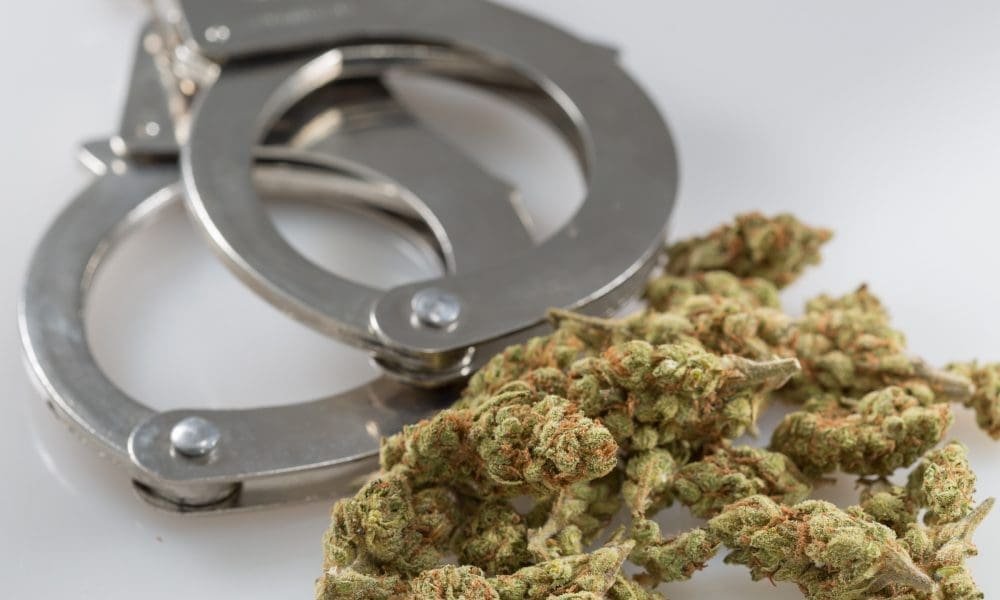

Marijuana prohibition has been a fraud from the beginning—often propagated by politicians and bureaucrats who were in on the sham.
By Paul Armentano, NORML
The Marihuana Tax Act was signed on August 2, 1926, and it is the first federal prohibition of marijuana.
Since its inception, the criminalization of the marijuana plant and the stigmatization of those who consume it has been predicated almost entirely upon the promotion of gross exaggerations, racial stereotypes and outright lies.
In a farcical article from the New York Times titled “Mexican Family Goes Insane”, published on July 6,1927, it was claimed that “a widow and four of her children were driven mad by the consumption of marihuana plants, according to the doctors who said there was no chance of saving their lives, and that the mothers would be insane throughout the remainder of her life.”
In 1933, an academic article titled Marijuana in The Journal of Law and Criminology made similar claims about marijuana’s dangers. They wrote: “The inevitable outcome [of consuming cannabis] Insanity can be described as a disease that is incurable and will always end in death.
In 1937, Harry J. Anslinger—America’s first “drug czar”—lobbied Congress to ban cannabis nationwide. Harry J. Anslinger did this despite the American Medical Association’s (AMA) strong objections. AMA disputed government false claims that marijuana use was always associated with violence, mania and death.
Anslinger was undeterred by the AMA opposition and relied on racist rhetoric almost exclusively to convince lawmakers. There are about 100,000 marijuana users living in the United States, with most of them being Negroes. Hispanics. Filipinos. And entertainers. He claimed that marijuana was the cause of their Satanic jazz, swing and other music. This marijuana makes white women want to have sexual relationships with blacks, entertainers and others.
Now, fast forward to 1971. Nixon’s administration declared “public enemy No. 1” drug abuse. The lynchpin of this campaign was stamping out the use of marijuana, which Congress had just classified as a Schedule I controlled substance—the strictest federal category available. Nixon admitted in private that cannabis wasn’t “especially dangerous” and he was upset by the harsh penalties for those who were arrested.
The administration redoubled its efforts to create a mythical threat of marijuana for political reasons. John Ehrlichman later admitted that “we couldn’t make being against marijuana illegal.” [Vietnam] We could “associate the public with Blacks and marijuana, but not with war or Black”
Ehrlichman said that “by criminalizing them both heavily, we could disrupt these communities.” Their leaders could be arrested, their homes raided, their meetings disrupted, or they can even have their meeting dissolved. We would then continue to vilify these people on the news night after night.
Did we know that we were lying? “Did we know that you were lying about the drugs?” he said. “Of course we did.”
Fifty-plus years and nearly 30 million marijuana-related arrests later, cannabis remains categorized as a Schedule I controlled substance—the same classification as heroin—and many politicians and prohibitionists continue to reiterate many of these same myths. Yet, despite their claims, mounting evidence affirms that cannabis is not a ‘gateway drug,’ it doesn’t sap users’ motivation, it doesn’t make consumers violent and it doesn’t make them crazy.
Slowly, but surely the public learns and accepts the truth.
Pew Research Center survey data shows that only 1/10 Americans are in favor of federal criminalizing marijuana. Gallup reports that 70% of U.S. Adults believe marijuana use should be legal.
This is a 19-point increase since Colorado and Washington were the first two states to legalize cannabis for adult use in 2014. Twenty-four states have now done so—and no state has ever repealed marijuana legalization. The more people are familiarized with the legalization of marijuana through personal experience, they will like it more. The less they believe in long-standing prohibitionist propaganda and lies, the more likely it is that people will accept legalization.
The truth is now clear after nearly a hundred years of anti-cannabis prejudice. Marijuana prohibition has been a fraud from the beginning—often propagated by politicians and bureaucrats who were in on the sham. The time has come to end the marijuana prohibition.
Paul Armentano, the deputy director at The NORML.
Sponsored Content
This informative article is brought to you by NUBO CBD →