







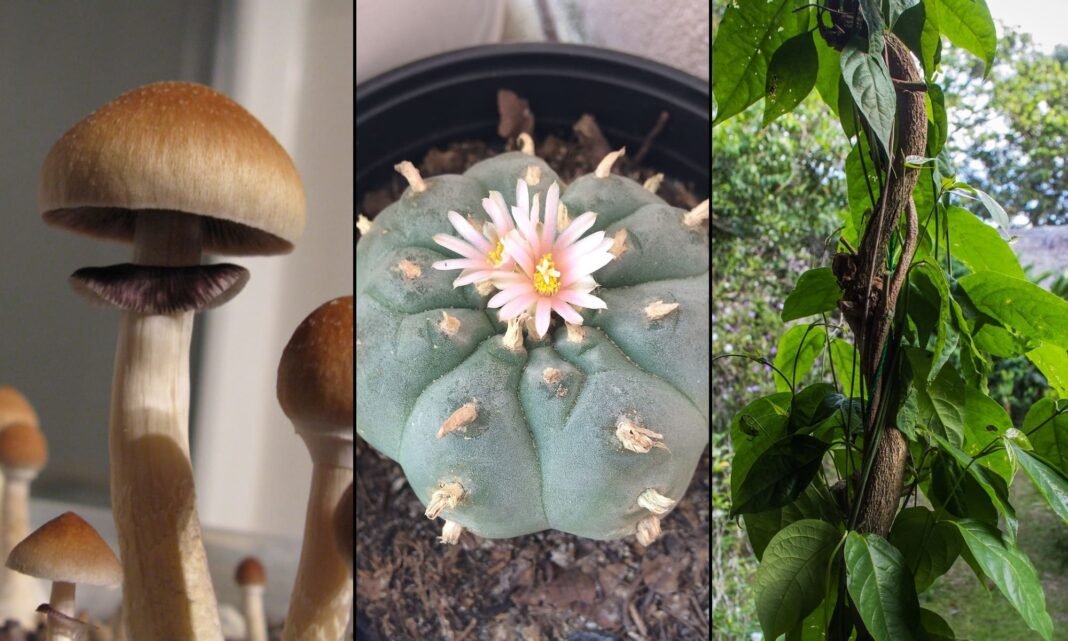

The Michigan Court upheld the constitutional rights of an advocacy group that held an event at the University of Michigan celebrating psychedelics this weekend.
Student Association for Psychedelic Studies, or SAPS, requested a permit for this Sunday’s Entheofest 2025 on campus Diag earlier in the year. The university, however, denied the request last month, stating that the event promotes illegal drugs and would present a “safety” risk for participants.
On Thursday, a Michigan Court of Claims Judge rejected the justification given for the denial of the permit and granted SAPS’s application for a preliminary order against the University on the basis that prohibiting this event was a violation of U.S. Constitution protections for free speech.
Irony is not absent from the First Amendment. In an opinion, Chief Judge Brock Swartzle stated that plaintiffs wanted to celebrate the decriminalization of the psilocybin at the University of Michigan Diag where hundreds of thousands of listeners (though not always sympathetic ones) have heard thousands of speakers. This local decriminalization has, according to plaintiffs, undermined the University’s capacity to maintain the peace.
“Although sympathetic to the University’s position, the Court concludes that denying use of the Diag for ‘Entheofest 2025′ is not reasonable in light of the purposes of that limited public forum,” he said, adding that the university’s attempt to prevent the event because of security issues experienced at a separate rally centers around cannabis reform and culture are unfounded.
The opinion states that “while both events promote the cultivation and use of illegal substances, their scale is at least ten times greater when compared to Entheofest.” The University is equipped to provide a safe, lawful Entheofest. As a result of this, the plaintiffs have a right to an injunction protecting their First Amendment rights.
The Diag was created to give people a place to meet, to express themselves and to engage in public discussion. These are the fundamental constitutional rights that we all enjoy: free expression and freedom of assembly. This forum is not just beneficial to the listeners and speakers, but it also benefits the University as the core mission, which is the education of good citizens, can be promoted. This forum is more than just a cost to the University.
In the end, the court granted a student group’s request for an injunction.
Swartzle stated that the university would “approve plaintiffs’ request for a Diag Reservation Permit to host Entheofest in 2025, on September 21st 2025.” The parties must work together to create and implement adequate security measures in order to guarantee a lawful and safe event.
But the case still isn’t closed, because there are “pending claims” about collaboration between SAP and university.
—
MEDCAN24 has been tracking the hundreds of bills relating to cannabis, psychedelics or drug policies that have passed through state legislatures as well as Congress in this past year. Patreon subscribers who donate at least $25/month have access to the interactive maps and charts as well as our hearing calendar.
Discover more about the marijuana bills tracker. Become a patron on Patreon and you will have access.
—
Michigan Senate Democrats, meanwhile, are moving to implement a significant tax increase on marijuana which was proposed previously by Governor. Gretchen Whitmer.
While no legislation to effectuate the policy change has been filed yet, the plan is to impose a 32 percent wholesale excise tax on cannabis—which would be in addition to the existing 16 percent in taxes that are placed on marijuana at the retail level.
Officials separately announced in February that they’re disbursing nearly $100 million in marijuana tax revenue to over 300 cities and tribes across the state thanks to the state’s adult-use legalization law. The $331m in taxes that Michigan has distributed to various projects is made up of this $100 million.
The tax revenue supporting these disbursements is the result of a record year for marijuana sales in Michigan, with over $10 billion in adult-use cannabis products sold in 2024.
State officials said in late 2023 that tax revenue from legal marijuana grew by 49 percent compared to 2022, surpassing the amount of revenue made from alcohol sales. Marijuana sales incur a 10 percent excise tax—among the lowest rates in the nation—as well as a 6 percent state sales tax.
Also, lawmakers recently introduced legislation that would exempt adults with PTSD from state laws against the possession, cultivation and use of psilocybin and psilocin, the two primary active components of psychedelic mushrooms.
Carlosemmaskype, Apollo and other photographers provided the images.
MEDCAN24 would not be possible without the support of readers. Consider pledging a monthly Patreon if our marijuana advocacy journalism is what you use to keep informed.

Sponsored Content
This informative article is brought to you by NUBO CBD →