






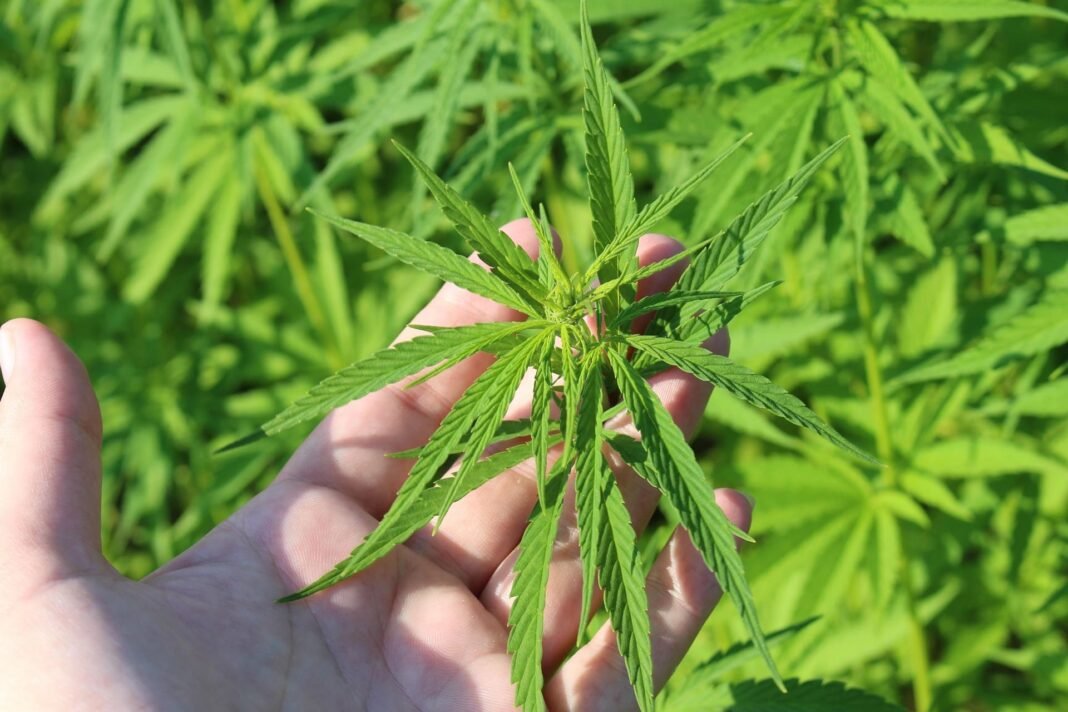

The senior U.S. Senator from Kentucky is being urged by dozens of Kentucky hemp farmers to stop his efforts to criminalize certain products derived from the crops.
Mitch McConnell, R-KY, who championed federal hemp legalization through the 2018 Farm Bill has worked this year to reverse that policy, by banning hemp derivatives that contain a “quantifiable” amount of THC. He claims that he did not intend to create a market of intoxicating cannabis goods.
Both the House of Representatives and the Senate have advanced the recriminalization bill this year. However, Rand Paul, McConnell’s Kentucky-born colleague, was able to remove the provision from the Senate’s final version before it passed. Paul has cautioned, however, that prohibitionist forces are working to include the ban in other legislative vehicles—which he said could potentially be enacted within weeks.
McConnell received a letter from 58 farmers on Monday stating that “if Congress decides to eliminate end markets which make our crop viable we will suffer immediate, catastrophic consequences.” The farmers have contracts to sell the hemp they harvested in this harvest season. The farmers wrote to McConnell on Monday: “We’ve taken out loans, hired necessary help, planted our crop, and entered into contracts with the processors or brands.” Any legislative change that pulls the rug out from under this market—especially mid-season—is a direct blow to our farms, families, and rural communities.”
The farmers, who are requesting an in-person meeting with McConnell, wrote that “hemp is the foundation of our diversified, sustainable farm operations that helps us weather tough commodity cycles, diversify away from tobacco and empower profit in an uncertain economy”—adding that its federal legalization in 2018 gave them a new crop with “real economic opportunity” for the “first time in decades.”
While the letter signatories do not support a ban along the lines of what McConnell has pushed in Congress this year—which they say would “empower the illicit market and destroy American farm income in the process”—they do back “responsible regulation” for the crop.
We support the age restriction, uniform testing and labeling requirements as well as Kentucky’s laws and regulations. “But outright prohibition will not solve the problem, nor make anybody safer,” wrote they.
“We’re proud of our crops.” The cannabinoid industry is enabling us to build a supply chain in the United States for an American crop. We respectfully, but strongly ask you to refrain from criminalizing our harvest. Protect our farms. Kentucky hemp’s market must be safe and legal. “Let us once more prove that Kentucky’s leadership will stop bad actors from bringing unsafe products to market by strengthening and enforcing robust regulations which have made Kentucky stand out and above all other states.”
Jonathan Miller, General Counsel at the U.S. Hemp Roundtable told MEDCAN24 Wednesday that his organization was “grateful” to the hard-working farmers who spoke truth to power.
He said that the current wording would eliminate hemp cannabinoid agriculture in Kentucky. This includes 87 percent all of Kentucky’s hemp. “We are very hopeful that Senator McConnell will listen to these farmers—who are relying on the language he inserted in the 2018 Farm Bill for their livelihoods.”
Paul warned that cannabis policy has “swung heavily on the prohibitionists side,” amid ongoing discussions over hemp-based intoxicants. He is concerned that the hemp industry could collapse “within two weeks” if the situation does not improve.
Asked about recent conversations with McConnell and Rep. Andy Harris (R-MD), a prohibitionist championing a hemp ban on the House side, Paul said “we’ve been working diligently” with the staff “trying to reach a compromise.”
The conversations were mostly constructive. They say, at least on the surface, they’re not trying to eliminate it—but I think we are, in some ways, talking past each other,” he said.
Meanwhile, Paul recently filed a standalone bill that would go in the opposite direction of the hemp ban, proposing to triple the concentration of THC that the crop could legally contain, while addressing multiple other concerns the industry has expressed about federal regulations.
He introduced legislation in June entitled the Hemp Economic Mobilization Plan Act. It mirrors versions he’s sponsored over the last several sessions.
Harris, who championed the hemp THC ban in his chamber version of the agriculture spending legislation, told MEDCAN24 that he wasn’t concerned about any potential opposition to the hemp ban in the Senate—and he also disputed reports about the scope of what his legislation would do to the industry.
The Congressional Research Service (CRS) released a report in June stating that the legislation would “effectively” prohibit hemp-derived cannabinoid products. The CRS originally stated that a similar ban would also prevent the sale CBD, but for unknown reasons the report has been updated to remove that specific language.
The hemp language is largely consistent with appropriations and agriculture legislation that was introduced, but not ultimately enacted, under the last Congress.
Hemp stakeholders protested this proposal. An earlier version was included last year in the base legislation from the subcommittee. It’s virtually identical to a provision of the 2024 Farm Bill that was attached by a separate committee last May via an amendment from Rep. Mary Miller (R-IL), which was also not enacted into law.
—
MEDCAN24 has been tracking the hundreds of bills relating to cannabis, psychedelics or drug policies that have passed through state legislatures as well as Congress in this past year. Patreon subscribers who donate at least $25/month have access to the interactive maps and charts as well as our hearing calendar.
Discover more about the marijuana bills tracker. Become a patron on Patreon for access.
—
A leading alcohol industry association, meanwhile, has called on Congress to dial back language in the House spending bill that would ban most consumable hemp products, instead proposing to maintain the legalization of naturally derived cannabinoids from the crop and only prohibit synthetic items.
Wine & Spirits Wholesalers of America (WSWA) President and CEO Francis Creighton said in a press release that “proponents and opponents alike have agreed that this language amounts to a ban.”
Separately, key GOP congressional lawmakers—including one member who supports marijuana legalization—don’t seem especially concerned about provisions in the bill despite concern from stakeholders that it would put much of the hemp industry in jeopardy by banning most consumable products derived from the plant.
A report from Bloomberg Intelligence (BI) last year called cannabis a “significant threat” to the alcohol industry, citing survey data that suggests more people are using cannabis as a substitute for alcoholic beverages such a beer and wine.
Last November, meanwhile, a beer industry trade group put out a statement of guiding principles to address what it called “the proliferation of largely unregulated intoxicating hemp and cannabis products,” warning of risks to consumers and communities resulting from THC consumption.
Click here to read the entire letter sent by hemp farmers to McConnell:
MEDCAN24 would not be possible without the support of readers. Please consider making a Patreon monthly pledge if you depend on our cannabis journalism for information.

Sponsored Content
This informative article is brought to you by NUBO CBD →