







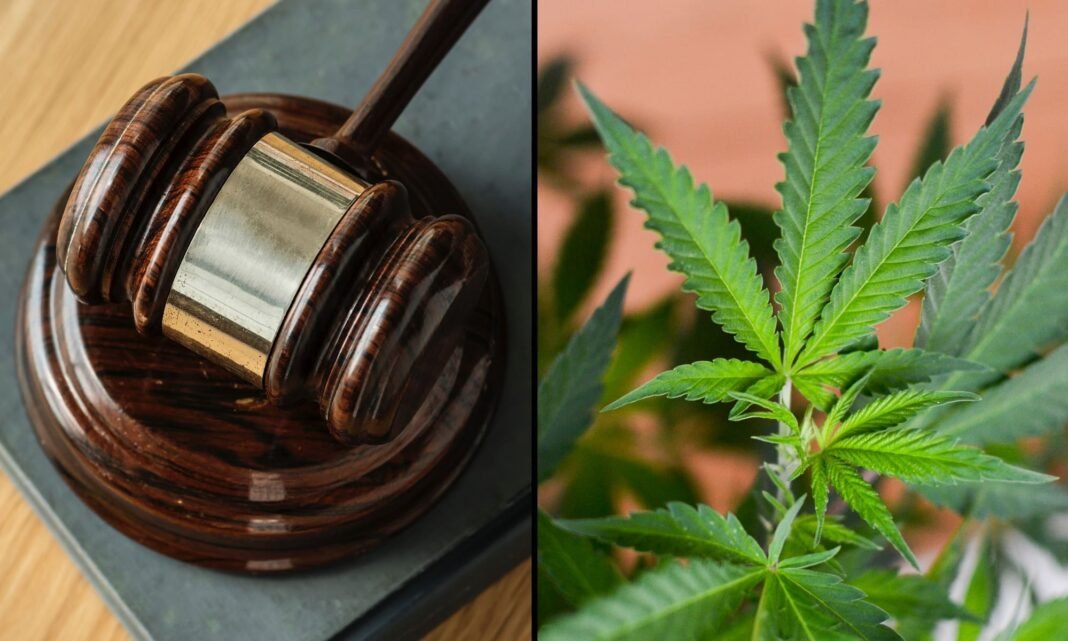

The Department of Justice is agreeing to delay a further case that challenges the administrative processes behind the proposed rescheduling of marijuana by the Trump Administration.
David Heldreth, CEO and founder of Panacea Plant Sciences, and the DOJ filed a joint document with the U.S. District Court for Western District Washington. They stated that the administrative litigation should be continued until the end of this year, as there hasn’t yet been any progress in the larger rescheduling question.
This does not reflect the current status of Trump’s process of rescheduling. It is a direct response to litigation regarding the way federal officials handle scheduling. Last month, the president announced that he was going to make a major decision in the next few weeks regarding the overall proposal of moving marijuana into Schedule III.
Because the administrative process is still in limbo, DOJ & PPS both told the Court that the stay would be maintained until January 27th, 2026. This will coincide with the due date for a joint report by the parties.
The court had previously approved the request of a stay in January for the exact same reason. After that, in June the parties sought another stay which was granted. The report must be filed by Monday. This is the latest version of the case.
The document states: “Because of the pause in the administrative proceeding, the parties respectfully submit the continued warrant for the stay.” To avoid conflict around holidays, parties propose to further submit a joint status report by January 27th 2026 on whether or not the stay is still warranted.
Heldreth, a PPS attorney, filed the lawsuit last year that laid out several accusations against DEA. He said this warranted judicial interference in hearings held by the agency on DOJ’s proposed move of cannabis from Schedule I into Schedule III.
That followed now-retired DEA Administrative Law Judge (ALJ) John Mulrooney’s prior denial of Panacea’s request to postpone rescheduling hearing over the agency’s alleged “improper blocking” of witnesses.
Heldreth argued, in his original lawsuit, that the now-postponed agency hearing should not proceed for four major reasons. This included alleged violation of a Clinton era executive order requiring the federal body to consult with tribes on decisions that affect them.
Rescheduling’s fate remains indefinite. Trump had endorsed this reform during his campaign for his second term. However, in his recent remarks about an imminent announcement he was unable to provide any specificity or concrete evidence that he still supports the policy.
The weekend was a rousing one for industry stakeholders, as the President shared on Sunday a video of the Commonwealth Project, a pro-rescheduling group, promoting the benefits that hemp-derived CBD can provide, especially to seniors, who could use it in place of traditional drugs.
Meanwhile, a new poll shows that a majority of Americans don’t consider marijuana dangerous, though most do think consuming cannabis increases the likelihood that people will transition to using more dangerous drugs.
As Trump evaluates his rescheduling plan, the poll provides the latest indication of American opinion on drug policy.
And while a leading prohibitionist group, Smart Approaches to Marijuana (SAM), recently claimed a poll they commissioned demonstrated majority opposition to rescheduling, a policy change that Trump endorsed on the campaign trail, the result flies in the face of multiple other national surveys showing support for reform that goes beyond rescheduling.
—
MEDCAN24 has been tracking the hundreds of bills relating to cannabis, psychedelics or drug policies that have passed through state legislatures as well as Congress in this past year. Patreon members who pledge at least $25/month gain access to interactive maps, charts, and the hearing calendar.
Find out more about our marijuana law tracker. To gain access, become a Patreon supporter.
—
Another recent survey from the Coalition for Cannabis Policy, Education, and Regulation (CPEAR), which was conducted by the firm Forbes Tate Partners, showed that seven in 10 American voters want to see the end of federal marijuana prohibition—and nearly half say they’d view the Trump administration more favorably if it took action on the issue.
A poll released in June that MEDCAN24 partnered on with the cannabis telehealth platform NuggMD showed that a majority of marijuana consumers disapprove of the Trump administration’s actions on cannabis policy to date, but there’s also a significant willingness among users to shift their position if the federal government opts to reschedule or legalize marijuana.
Earlier this year, meanwhile, a firm associated with Trump—Fabrizio, Lee & Associates—also polled Americans on a series of broader marijuana policy issues. Notably, it found that a majority of Republicans back cannabis rescheduling—and, notably, they’re even more supportive of allowing states to legalize marijuana without federal interference compared to the average voter.
Below you can read the most recent filings in the DOJ lawsuit regarding the rescheduling of process.
Images courtesy of Rawpixel and Philip Steffan.
MEDCAN24 would not be possible without the support of readers. Consider a Patreon subscription if our marijuana advocacy journalism is what you use to keep informed.

Sponsored Content
This informative article is brought to you by NUBO CBD →