





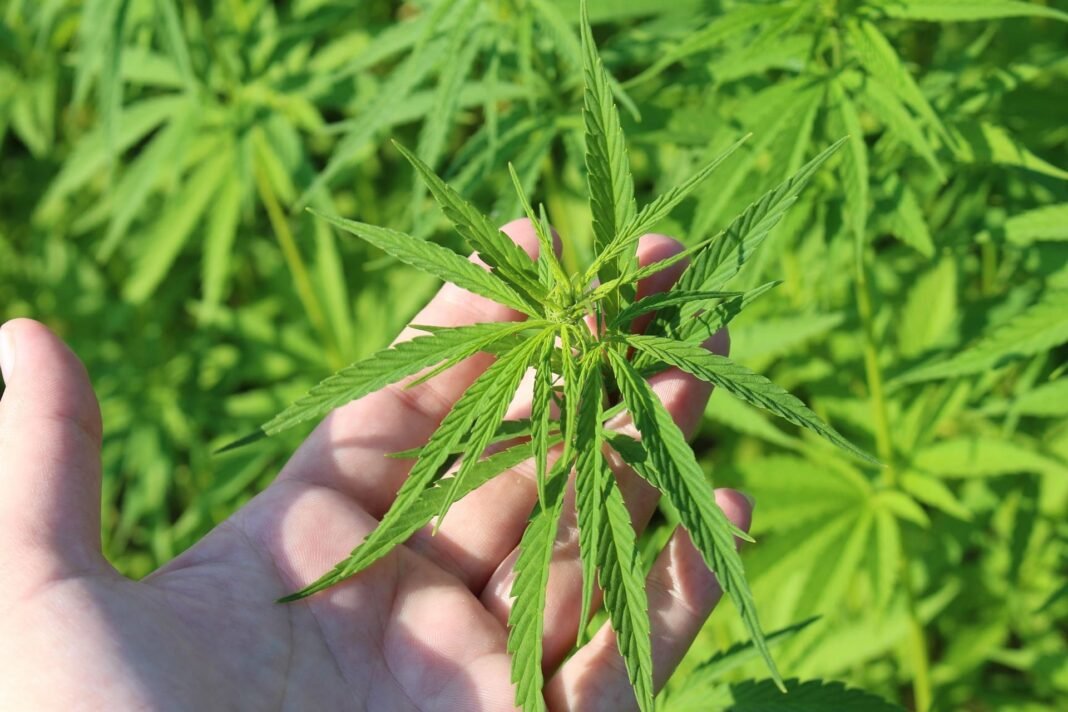

According to a recent poll, American voters from all political parties are in favor of legalizing hemp-based products and adopting certain regulations that will ensure the safety of consumers and keep youth away.
The survey from McLaughlin & Associates, which was commissioned by the Hemp Industry & Farmers of America (HIFA), comes amid increased debate in Congress and state legislatures around the country about how to navigate laws around consumable hemp products, which were federally legalized under the 2018 Farm Bill that President Donald Trump signed in his first term.
72 percent said that they wanted hemp to remain legal under federal law along with new safety and licensing requirements. Republicans, with 77 percent support, were the most enthusiastic, followed by Democrats (71%), and Independents (68%).
It’s not clear what percentage of voters support the current status quo, or are affected by possible new regulations. This question was asked to voters: “Would your support or opposition to a new federal law continue to allow for the sale and possession hemp-based goods with additional safety and licensing rules to protect adult and child consumers? These regulations would include age restrictions and school free zones as well as increased transparency such a clear warning and health labels.
As these policies are usually popular, it is not as surprising to find that bipartisan support exists for legalizing the cannabis plant.
When asked about specific proposals, 87 per cent said that they wanted child-proof packaging. 86 per cent said sales should only be limited to those 21 years and older. 81percent said marketing restrictions were needed to avoid appealing to children.
A polling memo states that the survey shows “a large support for passing federal legislation which would continue to permit consumption hemp products to be sold and owned with common sense safety regulations.”
The poll also found that 55% of respondents were more inclined to vote for a candidate who supported hemp’s legal status with stronger regulations. One-half of Republicans and Democrats, as well as 48 percent independents, voted in favor of maintaining hemp’s legal status with enhanced regulations.
In a recent press release, HIFA’s Executive Director Brian Swensen stated that “Hemp prohibition was a harmful government overreach.” “The desire to ban or regulate out of existence farmers and small business owners puts hundreds of thousands of jobs at risk—and Americans across a wide political spectrum.”
He said that changing rules after nearly a decade would be “a slap on the face” to law-abiding businesses and farmers who have invested in this industry. The Congress should reconsider and instead work with hemp producers who support common sense regulations, rather than passing retroactive prohibitions which punish operators.
A poll conducted in the United States found that almost half (47%) have either purchased hemp-based products for themselves, or they know of someone else who has.
Townhall reported the results of a survey conducted with 1,000 voters likely to vote between October 1 and 5, with a margin error of +/-3,1 percentage points.
A leading hemp organization sent Trump a letter last week, thanking him for legalizing hemp during his first tenure and urging him to stop Congress from “reversing the reform” by banning any hemp product containing THC.
U.S. Hemp Roundtable: “We are thankful and still hopeful for your help in saving the $28,4 Billion hemp industry you made possible.” It was very important to raise awareness about the benefits of American-grown hemp and its products.
This was in reference to a recent video that the President shared on social media from The Commonwealth Project, which praised the benefits of CBD derived from hemp for seniors.
The article stated that “Congress was close to passing an hemp ban and reversing your work in 2018 for making hemp bloom.” A proposed definition of hemp that is being promoted as a means to protect Americans would eliminate 95 percent of your uniquely American business.
—
MEDCAN24 has been tracking the hundreds of bills relating to cannabis, psychedelics or drug policies that have passed through state legislatures as well as Congress in this past year. Patreon members who pledge at least $25/month gain access to interactive maps, charts, and hearing schedules so that they do not miss anything.
Find out more about the tracker of marijuana legislation and support us on Patreon for access.
—
Members of Congress from both parties have expressed similar concerns. A recent letter was sent to House speaker Mike Johnson (R – LA) to protest against efforts to ban hemp THC. The members argued that such a policy reversal would “deal a fatal blow” to the industry and, as currently included in a spending bill, violates congressional rules. The members claim that plans are in place to implement an alternative regulation measure.
At the federal level, while the Senate ultimately stripped hemp THC ban language from its version of the agriculture spending measure following a procedural protest from Sen. Rand Paul (R-KY), there’s still concern among stakeholders that it could wind up in the final package delivered to the president following bicameral negotiations.
Meanwhile, Democratic senators also sent a letter to leadership last month that warned of the major upheaval that would happen in the hemp market if products containing any amount of THC were banned.
Dozens of hemp farmers from Kentucky also recently urged their state’s senior U.S. senator, McConnell, to back off from his push to recriminalize some products that are derived from their crops.
Paul, for his part, recently cautioned that the cannabis policy movement has “swung hard on the prohibitionist side” amid the ongoing debate over intoxicating hemp products. He is concerned that the hemp industry could collapse “within two weeks” if the situation does not improve.
Asked about recent conversations with McConnell and Rep. Andy Harris (R-MD), Paul said “we’ve been working diligently” with the staff “trying to reach a compromise.”
They say, at least on the surface, they’re not trying to eliminate it–but I think we are talking past each other in some ways,” he said. They say, at least on the surface, they’re not trying to eliminate it—but I think we are, in some ways, talking past each other,” he said.
Meanwhile, Paul recently filed a standalone bill that would go in the opposite direction of the hemp ban, proposing to triple the concentration of THC that the crop could legally contain, while addressing multiple other concerns the industry has expressed about federal regulations.
He introduced legislation in June entitled the Hemp Economic Mobilization Plan Act. It mirrors versions he’s sponsored over the last several sessions.
Harris, who championed the hemp THC ban in his chamber version of the agriculture spending legislation, told MEDCAN24 that he wasn’t concerned about any potential opposition to the hemp ban in the Senate—and he also disputed reports about the scope of what his legislation would do to the industry.
The Congressional Research Service (CRS) released a report in June stating that the legislation would “effectively” prohibit hemp-derived cannabinoid products. The CRS originally stated that a similar ban would also prevent the sale CBD, but for unknown reasons the report has been updated to remove that specific language.
The hemp language is largely consistent with appropriations and agriculture legislation that was introduced, but not ultimately enacted, under the last Congress.
Hemp industry participants rallied to oppose that proposal. A previous version of it was included in last year’s base bill by the subcommittee. It’s virtually identical to a provision of the 2024 Farm Bill that was attached by a separate committee last May via an amendment from Rep. Mary Miller (R-IL), which was also not enacted into law.
Target, a retail giant in Minnesota, recently began selling THC-infused drinks at selected stores. This is further proof of the industry’s normalization.
Meanwhile, Veterans of Foreign Wars (VFW) of the United States recently entered a first-of-its-kind partnership with a hemp THC beverage company, with a licensing branding deal that will support a variety of veterans services and promote cannabis drinks as a potential alcohol alternative with the drinks being available at VFW posts across the country.
You can read the complete hemp polling message below.
MEDCAN24 could not exist without readers’ support. Please consider making a Patreon monthly pledge if you depend on our cannabis journalism for information.

Sponsored Content
This informative article is brought to you by NUBO CBD →