








The three main mayoral candidates in New York City were asked a rather surprising question on Thursday during a heated debate. Each candidate was asked if they had “ever bought anything from a marijuana shop.”
Both Democratic mayoral candidate Zohran Mamdani, and Republican Curtis Sliwa confirmed that they had purchased marijuana from licensed stores.
Former Gov. Andrew Cuomo, who lost the Democratic Primary earlier in this year and is now running as an Independent, responded with a “no” despite having signed legalization into law back in 2021, before quitting amid a separate controversy that same year.
Mamdani, in a debate on NBC 4, said: “I bought marijuana from a legal cannabis store.”
Sliwa (the GOP candidate for mayor) answered the question about cannabis by saying that he used medical marijuana after being shot five times in an incident from 1992 and to treat Crohn’s disease symptoms.
Mamdani and Sliwa did not respond to the question of the moderator about the specific products that they bought.
Mamdani was a member in the State Assembly when he voted to legalize.
“I’m proud to be here today to debate the adult use of marijuana—also known as loud, Sour D, herb, Mary Jane, kush, green, pot, weed, zaza, a jazz cigarette and marijuana,” he said on the floor ahead of the vote. He said: “I’ve heard our colleagues across the aisle talk about how smoking marijuana or ingesting it is a bad sign, and that the quality of your life will deteriorate. You become lazy, and you are a burden on society. This drug serves as an entryway.”
He added: “Among this fiction and frankly, coded language, I’d like to also present a reality. Smoking or ingesting pot can also result in you becoming an official,” said he. “I am very happy to vote for this bill.”
Cuomo for his part, called legalization a “priority”, leading to passage of the Adult-Use Bill, even though the Governor’s Office and the Legislature disagreed about how the regulatory structure should be.
Some supporters criticized Cuomo’s legalization plan, particularly the provisions relating to equity and regulatory controls. They also questioned whether home cultivation would continue to be prohibited. It also did not include license categories for the delivery service and consumption on site.
The candidates’ answers to this question were not very informative, as marijuana is already legalized in New York.
Last month, New York’s officials celebrated a milestone in marijuana sales. The state has now sold more than $2 billion worth of cannabis since its launch. One billion dollars of these purchases were made by 2025.
—
MEDCAN24 tracks hundreds of marijuana, psychedelics, and drug policy legislation in state legislatures this year. Patreon subscribers who donate at least $25/month have access to the interactive maps and charts as well as our hearing calendar.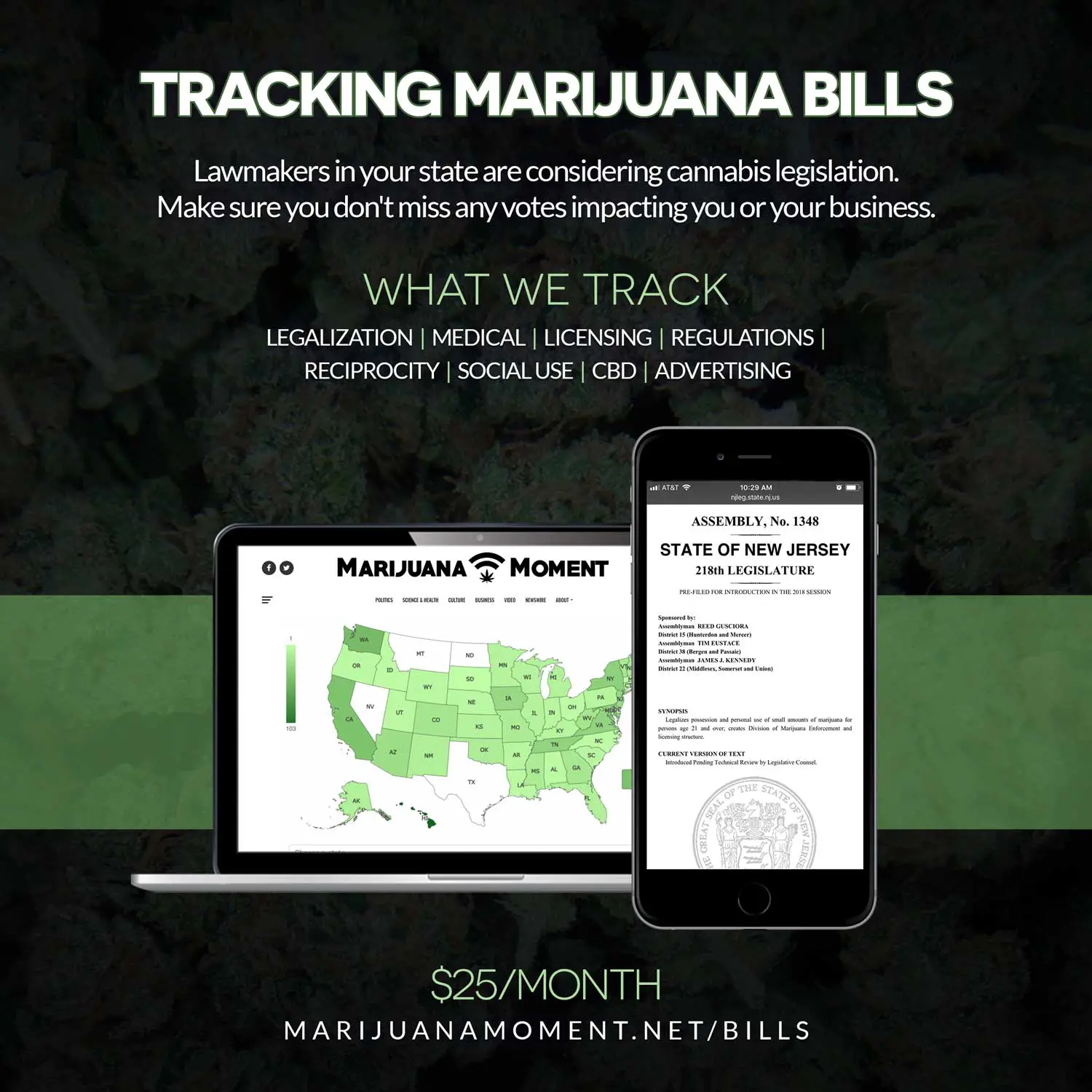
Find out more about our marijuana law tracker. To gain access, become a Patreon supporter.
—
In the meantime, in light of confusion on the market regarding timelines for temporary licenses, Cannabis Control Board (CCB), recently stated that it will extend the deadline to renew conditional adult use until December 31, 2020.
OCM explained that the extension would give licensees an extra year to move towards full licensure and secure viable sites. It will apply to all provisional licences that were issued between December 30th, 2025 and September 9th, 2025. This ensures clarity for licensees.
Part of the uncertainty surrounding provisional licensees concerns a recently identified zoning issue impacting more than 100 cannabis businesses that are apparently located too close to public schools or places of worship than is allowed under current statute. Gov. Kathy Hochul (D), who is the governor of the state, said she would push for the amendment to the marijuana law in order to tackle the issue.
In July, meanwhile, New York officials announced the first round of grants under a $5 million program to help retail marijuana businesses owned by justice-involved people cover startup costs.
About three months after opening up applications for the Conditional Adult-Use Retail Dispensary (CAURD) Grant Program, the Office of Cannabis Management (OCM) and Empire State Development (ESD) announced in March that they awarded 52 licensed dispensaries up to $30,000 each in funds meant for startup and operational costs such as rent, renovations, inventory tracking and security systems.
To qualify for the program, applicants need to have been “justice involved”—in other words, impacted by a marijuana-related conviction—and have some experience running a profitable business.
OCM also recently launched a new online map that’s meant to help adults locate licensed marijuana retailers—one of their latest efforts to encourage consumers to buy their cannabis from the regulated market.
As a safety and health imperative, after a rough roll-out of the legalization laws in the state led to the proliferation of illegal marijuana shops the Governor and regulatory agencies have focused on educating the general public to only purchase products at licensed dispensaries.
New York’s broader campaign also included digital ads, educational materials, and graphics featuring cannabis-licensed business owners, and messages about the advantages of being part of the regulated industry.
OCM advises also that “continued enforce against the illicit markets is crucial to build a health-regulated market.” It points to what they describe as successful enforcement in 2024. Last spring, for example, officials in New York City launched Operation Padlock, an enforcement initiative meant to shutter illegal storefronts. According to a survey by OCM, within months of the start of Operation Padlock, sales at licensed stores that had been open prior to its launch grew 105 percent.
Regulators are also moving forward with new proposed regulations around the state’s so-called “cannabis showcase” program, which allows licensed businesses to sell to consumers at pop-up, farmers market-like events.
As originally authorized, the showcase events were largely in response to the slow rollout of New York’s adult-use marijuana program, which faced multiple delays in implementation amid litigation and other matters.
Separately Hochul signed state budget legislation that did not include a controversial earlier provision that would have allowed police to use the smell of marijuana as probable cause that a driver is impaired and then force them to take a drug test.
Amendments made in the legislature removed the provision, which a coalition of 60 reform groups had argued in a letter to Hochul and top lawmakers would “repeat some of the worst harms of the War on Drugs” and allow law enforcement to “restart unconstitutional racial profiling of drivers.”
In April, New York cannabis regulators and labor officials announced the launch of a workforce training program aimed at “providing comprehensive safety education to workers” in the state’s legal marijuana industry.
Separately, OCM’s press secretary indicated the office is working on plans to expand permitting and licensing rules that could allow adults to buy and consume marijuana at movie theaters. New York will be a leader in the legalization of marijuana by allowing sales at movie theaters.
Earlier this year, a collective of businesses licensed under the CAURD program called on Hochul to forgive tens of millions of dollars in high-cost loans issued under a governor-created social equity loan fund.
A state lawmaker said in December that there’s a need to extend financial aid to CAURD license holders, many of whom are struggling under the high-cost loans.
Critics—including the NAACP New York State Conference, Black Cannabis Industry Association, Minority Cannabis Business Association, Service Disabled Veterans in Cannabis Association, Drug Policy Alliance, NYC NORML and VOCAL-NY—wrote to the governor earlier that month to express dismay at what they described as marijuana regulators’ “efforts in service of big corporations at the expense of small business and equity outcomes.”
Mike Latimer provided the photo.
MEDCAN24 could not exist without readers’ support. Please consider making a Patreon monthly pledge if you depend on our cannabis journalism for information.

Sponsored Content
This informative article is brought to you by NUBO CBD →