








Ohio House legislators approved on Tuesday an amended Senate bill which would have made significant changes to Ohio’s voters-approved marijuana law. It also included a number of hemp-related regulations to help align both sectors of the cannabis sector.
Before bringing the bill to other panels for a vote expected on Wednesday, members of the House Judiciary Committee accepted changes from Senator Stephen Huffman. Despite the fact that certain controversial aspects of the Senate’s bill have been scaled back to some extent, this would not change the major marijuana laws approved by the voters in 2023.
It will be sent back to Finance Committee after being passed by the Rules Committee.
“We have had many years of testimony.” We’ve heard from marijuana advocates, hemp advocates, public health advocates and everyone in between,” Rep. Brian Stewart (R) said. “We are generally going to take the feedback from the hemp industry, which said, ‘Treat us like marijuana,” he said. They will be subject to the same limitations on potency, advertising, quantities, serving sizes, and their operation.
Rep. Jamie Callender, who led the House’s marijuana policy debate in recent years, stated that the new bill will be “very targeted and thoughtful” before the vote. He said at the hearing that it isn’t perfect or exactly what he would draft.
The bill will allow us to implement Issue 2 and clarify some points still outstanding. The bill also clarifies and clings to a number of gains over the past few years, including: sharing, home growth, no new criminal prosecutions [and] The local governments receive the revenues from the taxes.”
There’s more work for us to do. The work is not over.
The amended law would allow stores and breweries to sell THC-derived hemp beverages. However, there will be new restrictions on advertising to avoid appealing to children. The maximum THC content of products for consumption on site would be 5mg, while adults can purchase drinks with up to 10mg.
Stewart stated that the new bill would create a $1.20 per gallon tax on hemp drinks, which will “create an avenue for licensed, legal hemp dispensaries”.
“Nobody has ever voted to allow functionally equivalent products to marijuana—hemp products—to be sold in 6,000 plus gas stations and grocery stores around the state,” he said. We would like to say, with this bill that intoxicating hemp can be purchased in authorized hemp dispensaries. Intoxicating hemp will be unavailable in any establishment that allows people under 21 to enter.
The Senate’s bill left other marijuana provisions intact, which remain a concern for advocates. The Senate bill does not include the anti-discrimination provisions in the existing voter-approved cannabis laws. It also recriminalizes the possession of marijuana that comes from sources outside of state licensed dispensaries.
Karen O’Keefe (Director of States Policies at Marijuana Policy Project, MPP) told MEDCAN24: “It’s deeply disappointing that the House Judiciary Committee is advancing legislation to rollback the cannabis freedoms” and protections Ohioans overwhelmingly approved. The “committee substitute” would criminalize any cannabis, whether it was grown by the consumer or bought from an Ohio retailer. This could result in harassment and questioning of consumers. The committee substitute would remove the protections to prevent cannabis users from being harmed by losing their jobs, children or even their life because of cannabis.
It also prohibits vaping cannabis in rented properties.
O’Keefe wrote to members of the Judiciary Committee ahead of the hearing on Tuesday that the proposal, in short “continues gutting the law enacted by the voters.”
She added that the amended law “will cause interrogations regarding the cannabis source and arrests concerning conduct that voters approved.”
“The bill also allows families to be ripped apart, professions lost, and lives destroyed for responsible cannabis use—by repealing voter-enacted protections to prevent such suffering,” she said. Please remove any language that amends Issue 2 or slow down the process. Before a law is gutted, voters and stakeholders have the right to examine language.
Contrary to the Senate’s version, the House alternative will pay local governments tax revenues on cannabis sales.
Rep. Desiree Timothy (D), at an hearing, said that she has concerns about “the criminal justice implications” in the bill’s substitute. She asked the sponsor about any expungement clauses.
“My number one fear is that we are in the process of legalizing something where a select few will become very, very wealthy, while people continue to suffer from past activities–whether recreational or otherwise—utilizing the very same products that we are allowing people to make a profit off,” she said.
Stewart noted that the bill includes a way for individuals with prior convictions of cannabis possession to get their records expunged by proactively contacting the courts. The process is “accelerated,” but it’s not automatic, as in other legal marijuana-producing states.
Separately, members of committee approved an amendement from Rep. Josh Williams(R) revising the expungement procedure for eligible past crimes by requiring the state actively to defend any decisions to deny the request of a individual to seal their records.
Stewart said that Republican lawmakers are comfortable with the higher penalties for hemp intoxicating and marijuana.
He said that the Ohioans would have to get used to this new environment. Rightly or incorrectly, there’s still a perception that Miller Lite is more important than selling weed to kids.
DeWine had issued emergency regulations weeks earlier, prohibiting for 90 days the sale of products containing intoxicating hemp. He also instructed the legislature to look at permanent regulations. Last week, however, a county judge enjoined the state from enforcing that policy in response to a legal challenge.
In an interview published this week, Mike DeWine (R) said: “Frankly the Legislature had not taken any action.” Mike DeWine, (R), said this in an article published last week. “I am still optimistic that the legislator will take actual action.”
House Speaker Matt Huffman commented recently about the relative lack progress made in passing marijuana and hemp legislation after voters approved it in ballots 2023.
He said that there are people who “believe that marijuana should not be legalized, but rather regulated,” and others who “believe that hemp products are equal to everything in the introduced statute.” “There are also prohibitionists like myself who do not think that it should ever be legalized, and that it shouldn’t be used at all,” he added.
I’d say prohibitionists lost the discussion in large part.
—
MEDCAN24 tracks hundreds of marijuana, psychedelics, and drug policy legislation in state legislatures this year. Patreon members who pledge at least $25/month gain access to interactive maps, charts, and the hearing calendar.
Find out more about our marijuana law tracker. To get access, become a Patreon supporter.
—
Meanwhile, last month, the Ohio Department of Cannabis Control (DCC) filed new proposed rules to build upon the state’s marijuana legalization law, laying out plans to update regulations on labeling and packaging requirements.
The proposal came weeks after Ohio medical and adult-use marijuana sales officially crossed $3 billion, data from the state Department of Commerce (DOC) shows.
The state sold about $703 million in recreational cannabis in the law’s first year of implementation, according to DCC data.
In March, a survey of 38 municipalities by the Ohio State University’s (OSU) Moritz College of Law found that local leaders were “unequivocally opposed” to earlier proposals that would have stripped the planned funding.
Meanwhile in Ohio, adults as of June are able to buy more than double the amount of marijuana than they were under previous limits, with state officials determining that the market can sustainably supply both medical cannabis patients and adult consumers.
The governor in March separately announced his desire to reallocate marijuana tax revenue to support police training, local jails and behavioral health services. He stated that he would fund police training, regardless of whether it was included in the 2023 ballot measure.
Ohio’s Senate president has also pushed back against criticism of the Senate bill, claiming the legislation does not disrespect the will of the electorate and would have little impact on products available in stores.
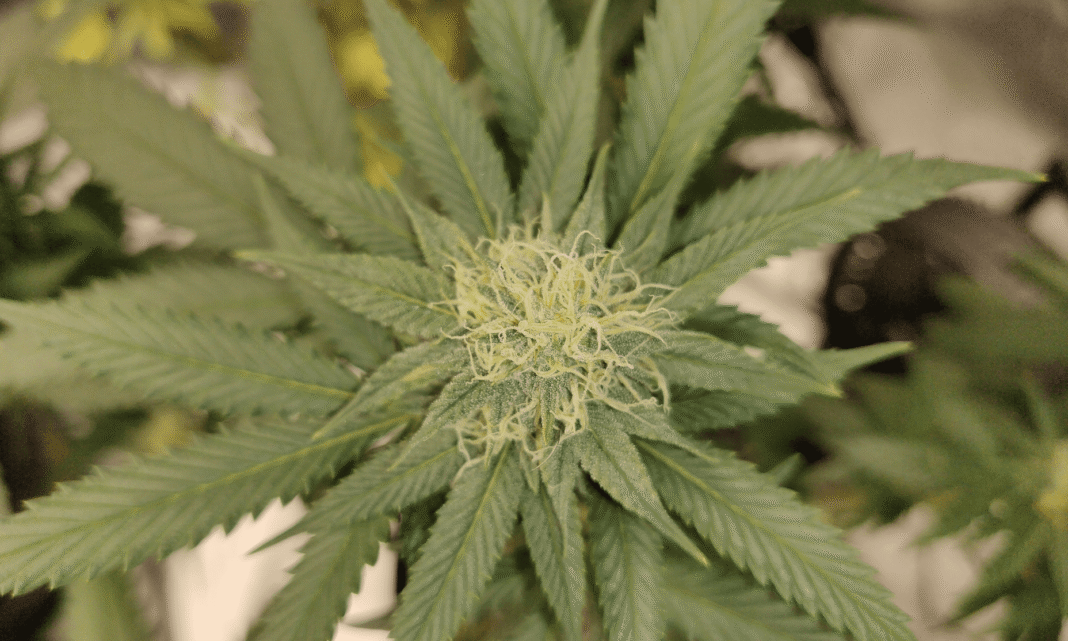
Mike Latimer provided the photo.
MEDCAN24 would not be possible without the support of readers. Consider a Patreon subscription if our marijuana advocacy journalism is what you use to keep informed.

Sponsored Content
This informative article is brought to you by NUBO CBD →