







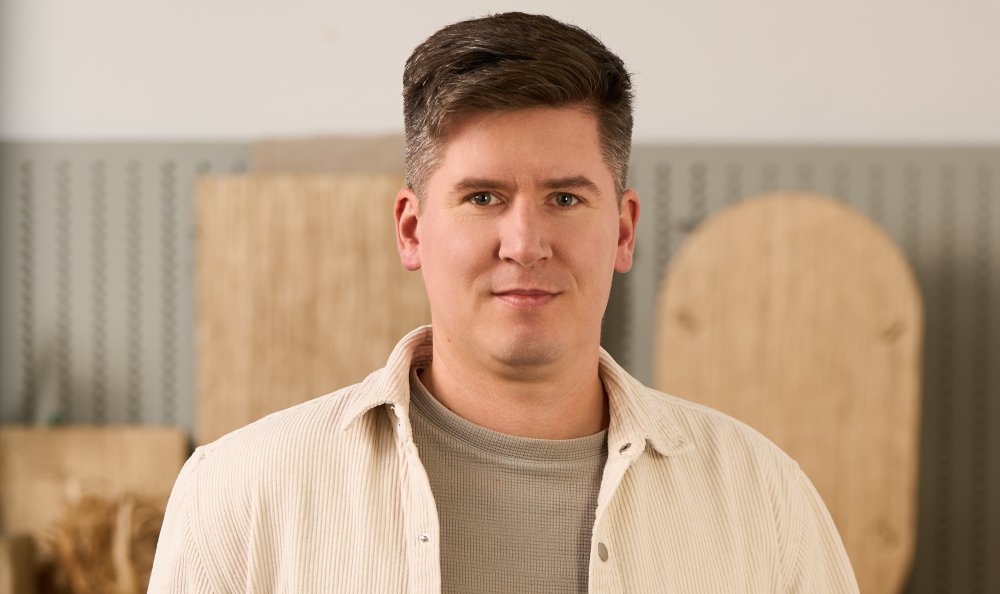
. He is vice president of Green Lanes SA, a publicly listed)
Jacek Kramarz, a vice president at Green Lanes SA in Poland was named the new President of EIHA (European Industrial Hemp Association). He’s vice president for Green Lanes SA – a publically listed European company based in Poland that develops new hemp products. He began his hemp career as a co-founder of HemPoland, helping build one of Europe’s early CBD companies from R&D to international scale. He worked previously in investment banking, strategic consulting and UniCredit Group. Kramarz is a licensed securities broker with experience in M&A, compliance, and regulated markets.
HempToday: After the CBD boom, hemp in Europe grew rapidly and contracted. What can EIHA take from the CBD boom?
Jacek Kramarz: EIHA has a key role to play in defending this so-called whole plant approach. Hemp is an extraordinary and highly versatile crop with the potential to transform multiple industries — from nutraceuticals and cosmetics to textiles, construction, and advanced materials. The CBD boom played a key role, despite the excesses. Hemp had never before seen such a surge in attention, talent and capital. Now, all those resources are being utilized to expand the hemp industry past CBD. Investors and entrepreneurs are shifting their focus to building and textile materials. The increased interest in industrial uses will result in an increase in grain and flowers, which in turn creates new applications.
HT: How would you describe your strategic goals as president of EIHA for the next 2 to 3 years?
JK: EIHA, a pan-European organization representing over 130 members from different countries with diverse interests in the hemp industry. Our whole-plant approach guides us in our efforts to represent all these interests. My goal as president is to maintain continuity in regulatory work and provide clarity on the food and cannabinoid market, while strengthening our influence in industrial applications like construction materials and textiles.
The first priority should be the continuation and successful completion of EIHA Novel Food Consortium. Legal certainty is essential for cannabinoids and hemp-derived ingredients in food, especially to secure investment and protect businesses.
EIHA’s second goal is to gradually shift away from its regulatory defensive role and toward a more active facilitation of business development. It will also support members to scale up hemp solutions for construction, textiles and composites. In leveraging the EU Bioeconomy Strategy framework and Green Deal, we see hemp as having a huge opportunity to position industrial hemp strategically. EIHA’s alignment of hemp with EU goals on rural development, climate and circular economy can lead to innovation and funding.
Finaly, it is important to engage partners and stakeholders outside of the hemp industry. We must engage non-hemp organizations, big industrial players, architectural firms, construction companies and chemical manufacturers to fully scale up hemp applications. EIHA is a link between hemp and other industries, providing them with technical expertise, regulatory clarity and reliable supply chains. We can increase market demand and accelerate adoption by integrating hemp into commercial and industrial models.
Together, these priority areas will help ensure continuity and stability as well as a smooth transition to a competitive and sustainable European Hemp Industry.
HT: How can Europe balance its focus on fiber, food and industrial applications with respect to the use of cannabinoids?
JK: Answering this question is a complex matter. We ask this question daily, along with Francesco Mirizzi our managing director. It will be central to our strategies in the future. EIHA, in the last few years has been laying the foundation for a clear regulatory framework on cannabinoids. Although the work isn’t done, we believe that most of it has been accomplished. It is important to continue on our current course, and to put pressure onto regulators in order to complete the process. Our focus will gradually be shifted to bioeconomy, and hemp will become the new material.
HT: What role does EIHA have in helping to restore investor trust after recent market volatility?
JK: EIHA was and is governed by a meritocracy. Our communications are conservative, and they will continue to be so. Our public statements are only made when evidence is available and we can be certain. Science-based approaches are critical for our long-term credibilty. Confidence — especially among investors and markets — is earned through integrity, clarity, and consistency. As an industry and an association, I believe that trust will come back if we adhere to these principles. This is already happening, with more funding being provided for industrial projects in Europe.
HT: The fragmentation of regulation in Europe continues. What areas do you think need the most harmonization urgently?
JK: In flowers and cannabinoids, for sure. Since at least 7 years, we have been urging regulators to take action. The most significant of these milestones is the introduction of limits on THC in foods. However, the struggle still continues. Through the EIHA Novel Food Consortium we have produced scientific evidence that CBD is safe as a supplement. However, regulators in Europe still need to be able to accept this.
HT: How can EIHA work with EU institutions so that hemp is treated more as an agricultural, industrial and food crop than as a drug or narcotic?
JK: We have achieved this with the EU institutions, I think. Francesco, and the team at our Brussels office have worked tirelessly over the years. EIHA has been recognized by the European Commission, and it is regularly consulted about all hemp-related topics. We have direct personal contacts with all relevant stakeholders at the EU level and are recognized for what we are — a pan-European association representing farmers and entrepreneurs trading hemp, a key crop central to the EU Bioeconomy Strategy.
We continue our efforts to improve the level of competence in each member state.
HT: What can EIHA do to better assist smaller farmers and processors across the member states?
JK: EIHA is an international center of expertise in European hemp. All business sectors are covered by our entire value chain. Our members are, for example, farmers, processors and manufacturers of agricultural equipment, machinery, seeds, fibers and stalks; traders and sellers of hemp products. EIHA is able to provide assistance for any business needs a hemp processor might have. EIHA’s members and EIHA are still not maximizing this value. I strongly encourage all to join EIHA. Its unique expertise and its ability to connect you to partners who are verified in the hemp industry is a great value.
HT: What experience from your HemPoland days has most influenced your current leadership style?
JK: HemPoland has been a significant experience in my career. My company HemPoland was founded when I turned 29. The leaders of my organization were all around the same age. Our ambition, motivation, and ignorance were matched by our arrogance. Our ignorance was a factor in our success. Our ignorance helped us to make more bold decisions, and we outperformed our competitors in the short-term. Our peak was around 80 people and it took us a lot of effort to keep that level.
Though we were not aware of it, our ignorance caught us up. The consequences of previous organizational errors were catching up with us. What would have happened had we faced them head-on? The company was sold in 2018, and we boasted of our success. Although I am proud of what we have achieved in retrospect, it is not something that can be sustained. It was never meant to be.
After this experience, I have a different approach to things. I am more balanced in my work and how I approach things. My work and approach are more balanced. Ich am less anxious, more confident and better able to assess my risk and chances. Now, when I take bold decisions, I can understand the rationale behind them.
HT: Your transition from banking and finance to hemp entrepreneurship has influenced your approach in this role.
JK: The way I tackle new challenges is heavily influenced by the experiences that I have had in the past. Reflective and philosophical is my tendency. I learned a lot from my early banking experience. Structure and communication are taught by corporate work. Working directly with the boards and executives of one of Europe’s largest banks gave me the chance to learn about structure and communication. Data, narratives and information were prepared for the highest-level decision making. The decisions made had to have a clear structure, a good motivation, and be explained clearly. My role included helping achieve alignment between the sometimes conflicting interests among different executives.
Experience is a great asset in working with associations. Together, we make our decisions and align ourselves with the members of the board. It is important for an organization that depends on collaborative efforts to be able to make decisions based on the best data and explain them in a clear way.
The annual EIHA June summit has been confirmed to be held in Poland. What information will be shared with international guests about Poland during this event?
JK: I am very excited to host the EIHA annual conference in Poland together with the Institute of Natural Fibers in Poznań. It will be a unique event thanks to the Institute, which has its own research and production facilities. Our EIHA Conference promise is meritocracy-based, with speakers and panels that are packed full of data, facts, insights, and opinions from members.
In separate rooms we will host sessions devoted to specific business verticals. This encourages a more detailed discussion, and fosters cooperation between companies that work in similar fields. This year, our visitors will also have the chance to visit the research labs of the institute. A field trip is also planned to a spinning factory in the area. We expect the Ministry of Agriculture to be well represented at this institute, which is an official government institution.
Sponsored Content
This informative article is brought to you by NUBO CBD →