







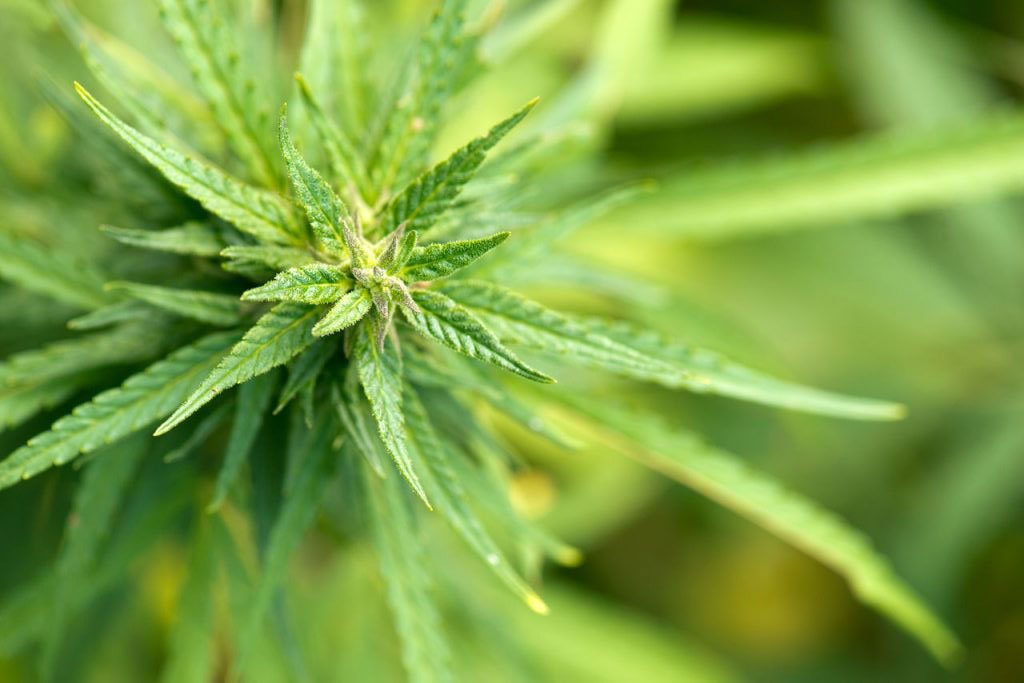

The European Industrial Hemp Association (EIHA) is calling for a historic change in how the European Union defines industrial hemp, urging regulators to raise the legal THC ceiling to 1.0% — more than triple the current 0.3% limit.
The shift in EU hemp regulations would be one of the biggest changes for decades. It will have major impacts on farmers, grain and fiber producers, as well as seed developers.
EIHA makes a call for change in a newly released position paper that is tied to the Common Agricultural Policy. This policy, which governs the EU’s major framework of farm assistance and rural support, will be implemented by the EU’s next Common Agricultural Policy. The next version, covering the period 2028–2032, will determine which crops qualify for subsidies and how agricultural markets are regulated across member states.
Under today’s 0.3% EU THC limit – which applies to crops in the field – hemp farmers can plant certified industrial varieties and still face compliance problems if natural conditions push THC slightly higher. EIHA claims that heat and sun can influence THC levels in the field and create legal and financial uncertainties, even when growers act in good faith. According to the group, a higher limit would decrease the likelihood of unintentional violations which could lead crop losses, penalty for subsidies, or disruptions in contracts.
Breeding prohibited
EIHA says that the current threshold also has a narrowed Europe’s breeding and seeds pipeline. The low THC requirements of many EU varieties have limited genetic diversity and potential yield. By raising the limit from 0.9% to 1.0%, breeders would have more space to create better-performing seed and fiber varieties. They could also expand the EU’s varietal catalogue and address the shortage of certified seeds as hemp farming spreads to warmer climates.
The position paper doesn’t directly mention it but the changes would boost CBD producers because CBD is more abundant in hemp plants than THC and thus increases production efficiency.
According to the group, hemp grown with a THC content of less than 1.0% is not intoxicating. Its levels are far below those associated with marijuana.
THC History
Over the past 40 years, THC limits for hemp products in Europe have been re-evaluated.
Europe first set the THC limit at 0,5% in the 1980s. This was then reduced to 0,3% and finally to 0.2% to tighten the regulatory environment for farmers and breeders.
These limits were lower than the previous ones, and this had a ripple effect up and down in value chains. The restrictions reduced the number of legal varieties and discouraged genetic research to increase yields.
The EU’s current threshold is 0.3%. However, the question of whether this figure was too low has been raised as hemp cultivation expands outside its traditional areas.
Changes in policy
The European Parliament has already discussed moving to a 0.5% THC limit – which could prove to be a compromise. EIHA argues that 1.0% is a more clear and competitive benchmark and would align the EU to several other international and European jurisdictions who already operate above 0.3%. In Europe, both the Czech Republic (and Switzerland) set the THC threshold at 1.0%. Australia, New Zealand, Uruguay, are also countries who set that limit.
EIHA points out that climate variability is also a driver of change. Hemp that is grown in hotter regions will naturally contain higher THC, even if the farmers use certified seeds.
Market standards
EIHA’s second proposal may be more technical, but it could also have significant commercial implications: explicitly including hemp in the EU’s marketing standards for common market regulation.
It would be easier for the European Commission, in simple terms, to establish EU-wide regulations on hemp product labeling, quality and market transparency.
Other agricultural industries already use marketing standards to help prevent fraud and promote fair competition on the Single Market. EIHA says that as hemp markets become more diverse and large, the EU will need similar tools to regulate hemp-derived products. This is especially true with cross-border trading growing.
The Industry Relevance
EIHA has made two separate requests, but together they point towards a larger strategy. Raising the cultivation level to encourage farming and breeding is one part, while strengthening market oversight at the end to ensure product integrity.
Even so, this proposal does raise important questions, such as how soon member states might accept a THC maximum that is higher, considering the fact that the majority of drug control remains at a state level, despite EU agriculture rules.
Hemp whole plant
In a recent press release, EIHA stated that “the CAP Review offers a timely chance to modernize EU hemp in a way which is balanced and evidence-based.”
The European Commission last year proposed a landmark change that would formally recognize the entire hemp plant — including flowers — as an agricultural product under EU law, a shift that could bring greater legal clarity and wider market access across the bloc by treating hemp more like other standard crops.
Francesco Mirizzi said, “We are very pleased with the Commission’s proposal to recognize the whole plant. We call upon legislators and lawmakers to add a 1% threshold for THC that is realistic in the face of the realities of agriculture.”
Sponsored Content
This informative article is brought to you by NUBO CBD →