




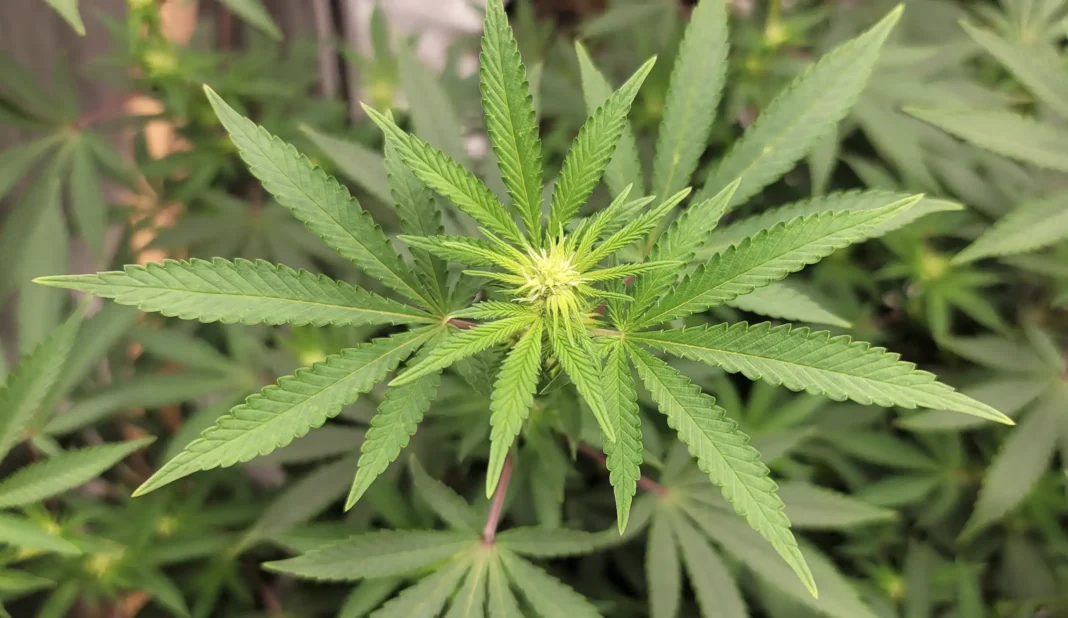

Another study has found evidence of an “entourage effect” where marijuana compounds work together to achieve results that are more robust than the sum of their parts—but it also says that the effect may be more nuanced than earlier research has indicated.
The Open University of Israel researchers found that terpenes are not just additives to THC. This depends on both the terpenes used and the receptors for cannabinoids that are being targeted.
Synergy is possible when certain interactions occur. That’s the case when terpenes such as borneol, limonene, sabinene, terpineol, α-pinene and ocimene interact with CB1 receptors and when β-caryophyllene and linalool interacts with CB2 receptors.
In other words, the pre-proof study set to be published in the journal Biochemical Pharmacology suggests the entourage effect is more complicated than it’s commonly understood to be.
“Terpene mixtures displayed dose-dependent CB1It found that “R activation and several combinations synergistically increased THC responses.” Our findings indicate that terpenes from cannabis may be both orthosteric and allosteric modulators of CB.1R and CB2R.”
“These findings refute early, overly broad interpretations of a generalized ‘entourage effect,’ replacing them with terpene-specific mechanistically based framework.”
“These results provide a mechanistic framework for cannabinoid–terpene synergy and highlight the importance of receptor specificity and of formulation design in shaping terpene mediated activation,” the researchers wrote. These findings highlight the importance of selecting terpenes for specific formulations tailored to medicinal needs.
Although the study results need to be confirmed by further studies, authors stated that terpenes, which are widely recognized as safe substances, may have regulatory and safety benefits over cannabinoid receptor modulators.
The study states that future work could elaborate on the mechanisms of terpenes-mediated modulation cannabinoids’ activity using structural modeling and allosteric sites mapping. In vivo and clinical studies are essential for validating whether synergistic interactions at receptor levels translate to enhanced neuroprotective, analgesic or anti-inflammatory effects.
“Our findings support a shift from non-specific ‘full-spectrum’/ ‘whole-plant’ preparations, toward rationally designed, cannabinoid products enriched with selected terpenes. Such formulations may potentially leverage specific terpene–THC interactions, either synergistic or additive, to target distinct therapeutic needs.”
Overall, we have provided a mechanism for understanding the role of terpenes in human health. [endocannabinoid system] This study concluded that the findings of the research could be useful in developing safer, more efficient cannabis-based drugs.
The entourage effect of marijuana has been gaining in popularity over the past few years.
A review of 2024 research on the synergistic effect of chemical components of cannabis revealed that the terpenes that are popularly associated with the modulation of cannabis’ experience may in fact be “influencers of therapeutic benefits from cannabinoids.” However, this influence is “unproven” at the moment.
In a separate article published in that same year’s International Journal of Molecular Sciences, it was stated that “the complex interaction between phytocannabinoids (cannabinoids) and biological systems offer hope for novel treatments approaches,” possibly laying the foundation for a whole new era of cannabis-based medicine innovation.
The plant Cannabis exhibits an effect called the ‘entourage effect’, in which the combined actions of terpenes and phytocannabinoids results in effects that exceed the sum of their separate contributions,” that study found. This synergy highlights the importance of considering the whole plant, rather than just individual cannabinoids when using cannabinoids as a medicine.
In 2024, however, an independent study funded by the federal government found that Terpenes were “potential therapeutics” for chronic neuropathy pain. The researchers also discovered that when administered in a small dose, they produced “roughly equivalent” pain reduction markers to those of morphine. When combined with morphine, terpenes appeared to increase the effectiveness of this drug.
However, unlike with morphine no terpenes were found to produce a significant reward response. The researchers concluded that “terpenes may be useful analgesics without any rewarding or dysphoric symptoms.”
One study, published the same year, looked at “collaborative relationships” among cannabinoids (the active compounds in cannabis), terpenes (which are the secondary components), flavonoids (the plant’s antioxidants) and other molecules. It concluded that “a deeper understanding of these chemical interactions is crucial to unlocking the therapeutic potential of cannabis.”
Other recent research funded by the National Institute on Drug Abuse (NIDA) found that a citrusy-smelling terpene in marijuana, D-limonene, could help ease anxiety and paranoia associated with THC. Researchers said this discovery may help maximize the therapeutic value of THC.
A separate study in 2023 found that cannabis products with a more diverse array of natural cannabinoids produced stronger psychoactive experiences in adults, which also lasted longer than the high generated by pure THC.
And a 2018 study found that patients suffering from epilepsy experience better health outcomes—with fewer adverse side effects—when they use plant-based CBD extracts compared to “purified” CBD products.
Scientist last year also discovered “previously unidentified cannabis compounds” called flavorants that they believe are responsible for the unique aromas of different varieties of marijuana. Before, most people thought that only terpenes could produce the different scents of marijuana.
Similar phenomena can also be observed around psychedelic fungi or plants. In March, for example, researchers published findings showing that use of full-spectrum psychedelic mushroom extract had a more powerful effect than chemically synthesized psilocybin alone. The researchers said that the results imply mushrooms have an entourage-effect, similar to cannabis.
Sponsored Content
This informative article is brought to you by NUBO CBD →