








Raul Molina didn’t initially enter the cannabis industry for the plant itself; his background was in retail. It turns out that this difference made a big difference. The co-founder of Mint Cannabis and its COO believes that the staff behind the counter is what defines a good dispensary. For Molina, this means a customer-first approach that has helped Mint become the MSO leader it is today. This philosophy has shaped each step of Mint’s growth.
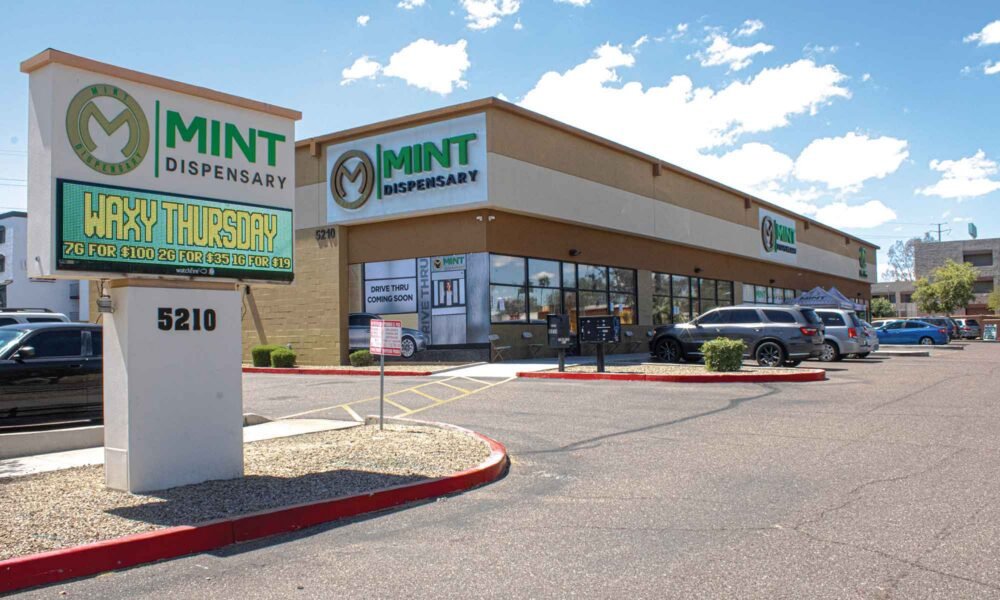
Mint’s first store opened in Guadalupe in March 2017. It is a small town of one square mile located inside Phoenix. Today, the company operates 38 dispensaries across Arizona, Florida, Michigan, Illinois, Missouri and Nevada, with licenses in nine states and 72 more locations in development. By the close of 2027, Molina expects that footprint to reach around 150 stores expanding into additional markets, including Delaware and Minnesota, where Mint has already secured licenses.
This kind of scale in cannabis is very rare. What’s more rare is doing it without outside investment. “We haven’t taken on any partners. We haven’t borrowed any money,” he says. Mint’s growth has come from revenue sources coming out of Arizona. The last store or market funds every new one.
This growth is made possible by more than just a clever licensing strategy. It’s about keeping the company’s culture intact as it crosses state lines. And it’s a topic Molina thinks about constantly.
“I want customers to walk into any of our stores and have the same feeling,” he says. I want to make them feel welcomed. The uniforms, the display cases and the layout travel with the brand. It’s because of this that we have been able keep the same feel.
At the Tempe flagship in Guadalupe, AZ, that vibe goes further than anywhere else in the country. The 12,000-square foot store is one of the largest stores in The Grand Canyon State, and among the top ten in the US. One of its most popular features is a floor-to-ceiling grow window where customers can watch plants move from clone to harvest. Mint operates what it says is the only licensed cannabis kitchen in the country, where customers can order pizza, wings, burgers and tacos infused with actual THC. Since it opened, the kitchen has generated more than $80 million in earned media, with news crews arriving from South Korea, Singapore and dozens of American markets to cover the dispensary’s unique offering.
But the personalized approach is where Molina’s retail instincts and customer-first ethos are evident. Mint keeps notes on every transaction to ensure customers get the very best experience.
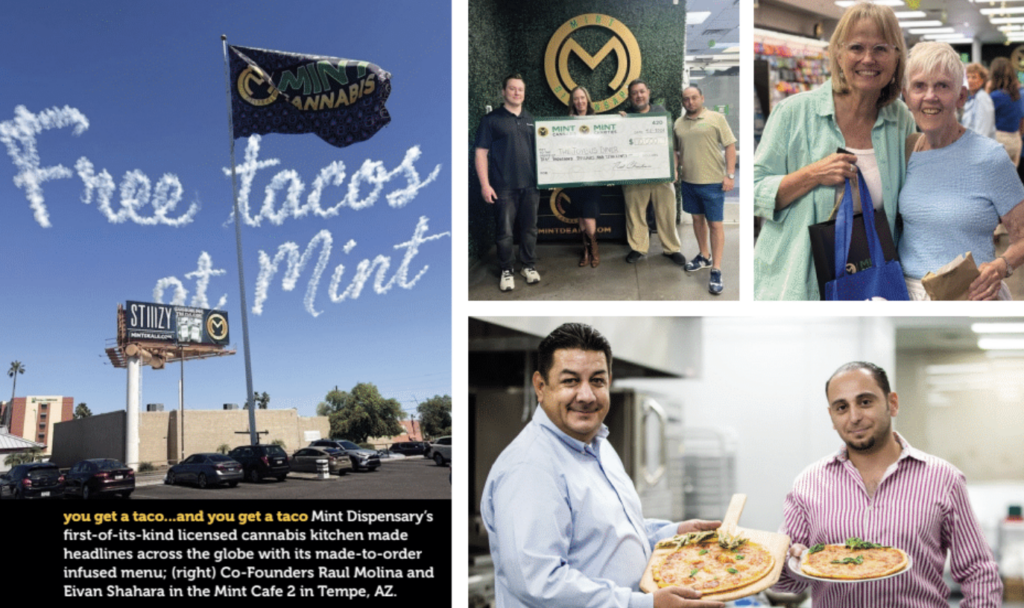
“If you come in because you had high anxiety and we recommend a product, when you come back, we’re going to ask you: How did that product make you feel?” He says. “If it didn’t quite do it, we’re going to figure out what’s going to help you get to where you want to be.” Molina’s commitment to putting the customer first can be seen in other areas as well. Visitors who are new to the store receive 30 coupons and a Buy-one, Get-One offer. Veterans receive a free pre-roll with no purchase required. Customers who can’t afford anything that day aren’t turned away empty-handed. The company would not want to see people denied the medicine they are using because of their financial situation.
The same spirit of humanitarianism extends far beyond the walls of the shop. In less than a decade, Mint has donated some $4 million to community causes, none of which is tax-deductible under current cannabis law. Each quarter, the mammogram buses visit each of Mint’s nine Arizona locations. Donors of blood receive a complimentary eighth in exchange for their efforts. The company also sponsors the local Little League team in Guadalupe, funds an after-school snack program, runs toy and food drives and hosts private events for cancer survivors. For five straight years, Mint has quietly sponsored a breakfast for a fallen law enforcement heroes association, putting the brand in rooms full of police chiefs, mayors and state officials without making any fanfare about it.
“I don’t post it on social media. I don’t post it anywhere,” Molina says. “I’d just go, shake a few hands, cater their breakfast and leave.” He was finally given the opportunity to speak at this event. “I got up on stage and I said, I can’t believe you guys invited me here. Back in the day, anyone of you could have easily arrested me. And here I am, one of the biggest ‘drug dealers’ in the state, speaking in front of the highest authorities.”
The personal journey behind these efforts highlights Molina’s evolving relationship with cannabis and how he sees his role in the industry. He immigrated to the US from Mexico at six years old, one of six children, and he went on to build his career across nine different businesses, including the automotive industry, before cannabis. It’s his experience in the latter that Molina credits with his retail acumen and with the success of his dispensaries.
When he started, he says, he shared many of the same doubts about the plant that others still carry. This changed with time and customer-by-customer. “I’ve learned to see a whole different side of the plant,” he says. He says, “to respect it.” Now, part of his mission is to remove the stigma surrounding the cannabis plant by replacing outdated perceptions with honest conversations.
“I want to be put in the middle of a group that’s mad—that thinks cannabis is bad—so I can have a real conversation,” he says.
Molina also feels an obligation to pay back the people that built the road in front of him. “I stand on the shoulders of the ones that came before me, who struggled, sacrificed and dealt with stuff I no longer have to,” he says. “I hope that someday I’ll be able to sit back and say, ‘We were part of that. “And now, look at what’s become of it.”
Originally published in Issue 53 of Cannabis Now Magazine.
Sponsored Content
This informative article is brought to you by NUBO CBD →