







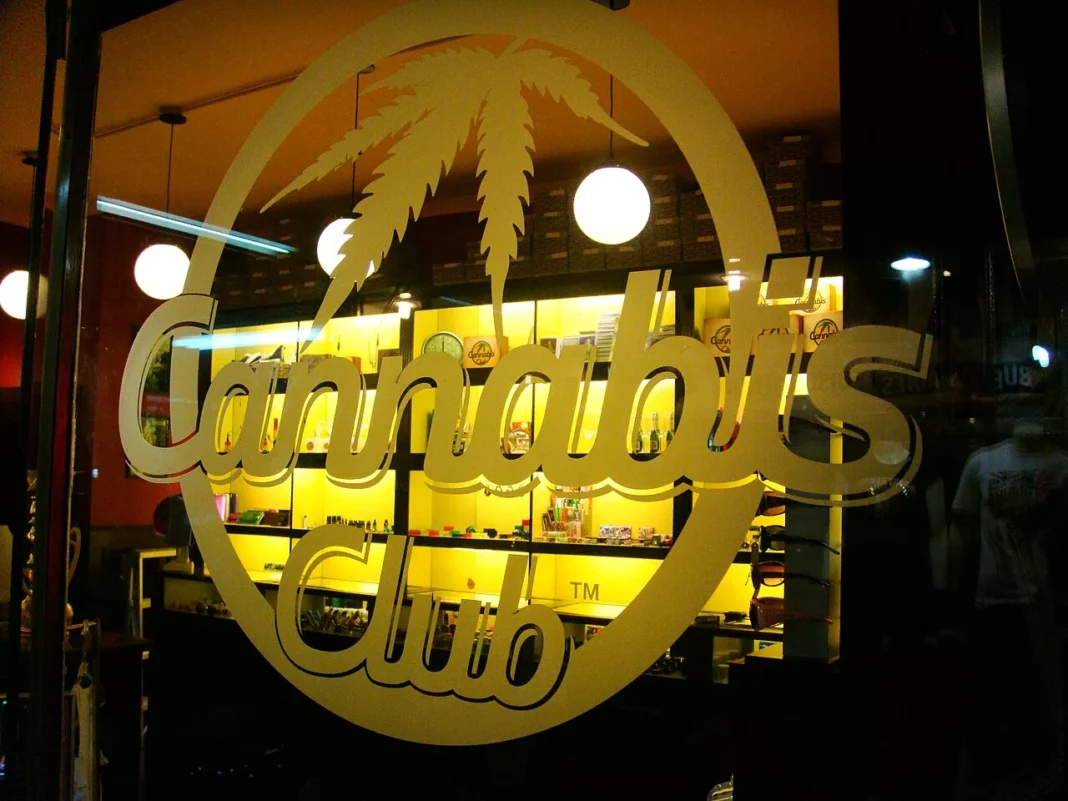

The government of Spain approved last week a draft law on tobacco that doesn’t mention marijuana at all but which could demolish the activities and social groups for cannabis in the country.
The Council of Ministers approved a new overhauling bill on July 21st, 2026. Law 28/2005The Congreso de los Diputados received the document, which regulates smoking laws.
Among provisions covering smoking and vaping in public areas like beaches and bar terraces, the text removes the private smokers’-club exemption that has long been used to justify on-site consumption, bringing so-called ‘herbal products for smoking’ under the same regime as tobacco.
According to figures cited by a recent report from cannabicultor.com, the cannabis sector reached its peak in Spain in late 2010, when there were 800-1,000 clubs. This was the largest social network of this kind in Europe.
The clubs are already operated on very narrow, and sometimes contested, legal grounds. To remove the covers they rely upon for consumption on site would undermine the reason why so many Spanish people join.
A hidden danger
Spain’s social cannabis clubs never had their very own dedicated legal framework. To protect themselves, the clubs have used a variety of legal provisions.
First is the criminal-law doctrine of ‘shared consumption’, under which a closed group of adults cultivating and sharing cannabis among themselves can fall outside trafficking law.
Tobacco legislation contains a second support, which is quieter. Law 28/2005. In a reform of 2010, it included a provision which exempts private smoking clubs that are legally formed from the indoor smoke ban. If It happens in their private facilities and there are only the members present.
This second provision is now completely removed. In its explanatory memorandum, the bill explicitly states the removal of ‘the special exemption that private smokers’ clubs have enjoyed’.
Beyond the removal of this exemption, the same bill extends the smoke-free rules and product controls to ‘herbal products used for smoking, vaping or inhaling’, a category that plainly captures cannabis without naming it directly.
READ MORE…
As such, not only is smoking inside a private cannabis club now banned, but ‘herbal products’ are now part of the same regime as tobacco, meaning the act of smoking in any shared indoor space falls under the smoke-free rules written for cigarettes, regardless of what the shared-consumption doctrine still says about growing and sharing.
Justifiably the government has focused its reform on public health. Health Minister Mónica García, who has championed Spain’s long-delayed medical cannabis framework since taking office, described smoking as ‘the leading avoidable risk factor’.
Presenting the bill, she noted that tobacco causes 50,000 deaths a year in Spain, and projected annual health savings of between €100m and €200m.
The main media and ministry briefings focused on headlines such as a smoking ban at beaches and terraces; a restriction on vaping sales to specialist stores and a prohibition on underage consumption. Media coverage of the ban on private-club smoking was one line, with sunbathers and electronic cigarettes dominating.
Enrique Dorta is the press officer for cannabicultor.com a publication in the cultivation sector that recently released a report about Spanish social clubs. MEDCAN24 the bill is ‘more important than the sector has so far publicly acknowledged’.
According to him, when he interviewed several owners of clubs, no one realised that the law applied at all. They thought most people were just reading it as a general rule against smoking in public.
Dorta stated that “the gap in knowledge is part of the issue.”
‘Structural incoherence’
Cannabicultor Report claims that the article 36.16. of Organic Law No. 4/2015, the citizen-security statute known as the ‘Ley Mordaza’.
Currently, consuming and growing cannabis within your home incurs no sanction, but under this act carrying even a small amount of cannabis in public can incur fines of €601 and €30,000.
He notes that this new tobacco bill mirrors the ‘same structural incoherence’ as above: “The tobacco bill risks further eroding the already fragile legal cover that clubs have used for collective consumption, while the 36.16 issue continues to punish the individual consumer on the street.”
According to the clubs’ confederation, ConFAC, drug users accounted for 74% of all ‘Ley Mordaza’ sanctions in 2023, generating more than €130m for the state, a figure that excludes Catalonia and Navarra.
A reform of Article 36.16 is already before Congress, agreed between EH Bildu and the governing partners, which would downgrade public possession to a minor infraction with a €100 minimum.
Building on unsteady ground
Crackdowns on cannabis clubs are not new to the Spanish community. A paper in the International Journal of Drug Policy In February 2026 researchers at the University of Granada track the rise and the decline of clubs through almost 300 court cases.
Legal issues in decentralized governance summarises the movement as ‘a temporary institutional compromise’, one shaped by court battles rather than top-down legislation.
Spain’s clubs have existed for a long time, unofficially. But the club model has grown rapidly since the beginning of the 2010s. Catalonia registered 72 new clubs in 2012 and 164 in 2013, by which point the region held 268 in total, more than 100 of them in Barcelona, with combined annual revenues estimated at around €60m. The number of registrations reached its peak the year after, and 227 more clubs were added in 2014.
It was inevitable that this would attract the attention from the government. From late 2015 the Supreme Court issued a run of restrictive rulings that narrowed ‘shared consumption’ almost out of existence. In 2017 and 2018, the Constitutional Court struck down regional efforts to legislate a path through in Navarra or Catalonia.
In the end, this shows that each and every existential threat against Spain’s legally contentious movement of social clubs has come from court rulings.
The bill on tobacco, however, will curtail their activities through the national law. This is a uniform statute with a set date that does not allow for the case by case ambiguity which has allowed clubs to operate over many years.
The Ministry of Health anticipates that the bill will be passed before the end of the legislative session, which means the law would come into effect 20 days following its publication. Boletín Oficial del EstadoSignage is allowed for two months.
Sponsored Content
This informative article is brought to you by NUBO CBD →
Last week the Spanish government approved a draft of a new tobacco law which does not even mention marijuana, yet it could demolish the activities that the cannabis clubs in Spain are known for.
In 2026, the Council of Ministers passed a law overhauling Law 28/2005The Congreso de los Diputados received the document, which regulates smoking laws.
Among provisions covering smoking and vaping in public areas like beaches and bar terraces, the text removes the private smokers’-club exemption that has long been used to justify on-site consumption, bringing so-called ‘herbal products for smoking’ under the same regime as tobacco.
According to a recent report by cannabicultor.com citing figures, the cannabis sector reached its peak in Spain in late 2010, when there were 800-1,000 clubs. This was the largest social club network in Europe.
The clubs are already operating under a very narrow, and sometimes disputed legal framework. To remove the covers they have used for consumption on site would undermine the reason why so many Spanish people join.
A hidden danger
Spain’s social cannabis clubs never had an independent legal framework. To protect themselves, the clubs have used a variety of legal provisions.
First is the criminal-law doctrine of ‘shared consumption’, under which a closed group of adults cultivating and sharing cannabis among themselves can fall outside trafficking law.
Tobacco legislation contains a second support, which is quieter. Law 28/2005. It was implemented in 2010 as part of a reform that includes a clause exempting legally formed private smokers clubs from the ban on indoor smoking You can also contact us if you have any questions. It happens in their private facilities and there are only the members present.
This second provision is now completely removed. In its explanatory memorandum, the bill explicitly states the removal of ‘the special exemption that private smokers’ clubs have enjoyed’.
Beyond the removal of this exemption, the same bill extends the smoke-free rules and product controls to ‘herbal products used for smoking, vaping or inhaling’, a category that plainly captures cannabis without naming it directly.
READ MORE…
As such, not only is smoking inside a private cannabis club now banned, but ‘herbal products’ are now part of the same regime as tobacco, meaning the act of smoking in any shared indoor space falls under the smoke-free rules written for cigarettes, regardless of what the shared-consumption doctrine still says about growing and sharing.
In a way that is justified, the government framed reform around public safety. Health Minister Mónica García, who has championed Spain’s long-delayed medical cannabis framework since taking office, described smoking as ‘the leading avoidable risk factor’.
Presenting the bill, she noted that tobacco causes 50,000 deaths a year in Spain, and projected annual health savings of between €100m and €200m.
Media coverage and briefings from the Ministry of Health focused almost exclusively on major changes. These included a complete ban on smoking at terraces or beaches, an age restriction for consumption and the sale of vapes in specialist stores. Media coverage of the ban on private-club smoking was one line, with sunbathers and electronic cigarettes dominating.
Enrique Dorta handles the press at cannabicultor.com. The outlet, which specializes in cultivation, has published a recent report about Spanish clubs. MEDCAN24 the bill is ‘more important than the sector has so far publicly acknowledged’.
According to him, when he interviewed several owners of clubs, they did not realize that the law applied to them. They thought it was a regulation about smoking in public.
Dorta stated that “the gap in knowledge is part of the issue.”
‘Structural incoherence’
Cannabicultor’s report claims that the article 36.16. Organic Law No. 4/2015, the citizen-security statute known as the ‘Ley Mordaza’.
Currently, consuming and growing cannabis within your home incurs no sanction, but under this act carrying even a small amount of cannabis in public can incur fines of €601 and €30,000.
He notes that this new tobacco bill mirrors the ‘same structural incoherence’ as above: “The tobacco bill risks further eroding the already fragile legal cover that clubs have used for collective consumption, while the 36.16 issue continues to punish the individual consumer on the street.”
According to the clubs’ confederation, ConFAC, drug users accounted for 74% of all ‘Ley Mordaza’ sanctions in 2023, generating more than €130m for the state, a figure that excludes Catalonia and Navarra.
A reform of Article 36.16 is already before Congress, agreed between EH Bildu and the governing partners, which would downgrade public possession to a minor infraction with a €100 minimum.
Building on unsteady ground
Crackdowns on cannabis clubs are not new to the Spanish community. A paper in the International Journal of Drug Policy In February 2026 researchers at the University of Granada track the rise and the decline of clubs through almost 300 court cases.
The Legality of Decentralized Governance summarises the movement as ‘a temporary institutional compromise’, one shaped by court battles rather than top-down legislation.
Spain’s clubs have existed for a long time, unofficially. But the club model has grown rapidly since the beginning of the 2010s. Catalonia registered 72 new clubs in 2012 and 164 in 2013, by which point the region held 268 in total, more than 100 of them in Barcelona, with combined annual revenues estimated at around €60m. In 2014, the number of clubs registered reached its highest point.
It was inevitable that this would attract the attention from the government. From late 2015 the Supreme Court issued a run of restrictive rulings that narrowed ‘shared consumption’ almost out of existence. In 2017 and 2018, the Constitutional Court struck down regional efforts to legislate a path through in Navarra or Catalonia.
In the end, this shows that each and every existential threat against Spain’s legally controversial social club movement has come from court decisions.
The bill on tobacco, however, will curtail their activities through the national law. This is a uniform statute with a set date that does not allow for the case by case ambiguity which has allowed clubs to operate over many years.
According to the Ministry of Health, the legislation is expected to be approved before the end of this legislative term. This means that it would become law 20 days after its publication. Boletín Oficial del EstadoSignage is allowed for two months.
Sponsored Content
This informative article is brought to you by NUBO CBD →
Cannabis Law Resources for Poland
Discover essential legal information about the cultivation of cannabis, its sale, and regulations governing medical products in Poland. These guides will help you understand the legal requirements, such as certifications and permissions.
-
Polish News Registration and Interests of Cannabis Businesses
-
Permissions for Cannabis Sales in Poland
-
Authorization for Importing or Manufacturing Medical Products
-
Permission for Manufacturing or Importing Medical Products
-
Certificate of Good Manufacturing Practices (GMP)
-
Registration of Medical Products in Poland