



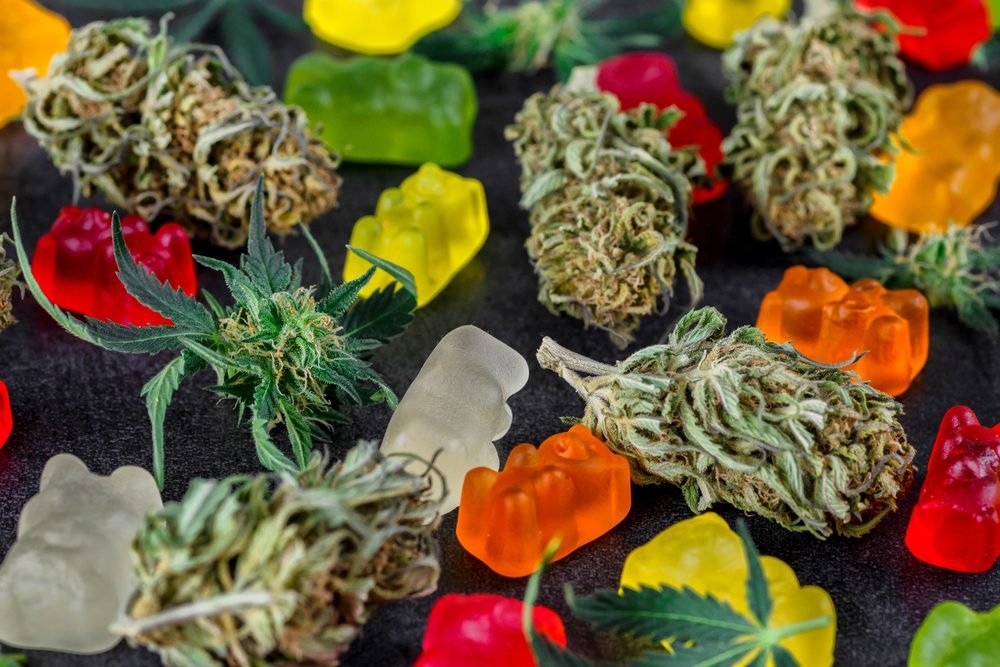

They have become one of Ireland’s fastest-growing wellness products — but behind the fruit flavours sits a serious question of evidence, dosing and regulation. Here is a clear-eyed look at what the research shows, what the law requires, and how to buy well.
Walk into a pharmacy or health-food shop in Dublin, Cork or Galway today, and you will almost certainly find a jar of CBD gummies on the shelf. Once a niche curiosity, cannabidiol edibles have become a mainstream fixture of the Irish wellness market, marketed for everything from stress and sleep to sore joints. The gummy format is a large part of that success: it is pre-dosed, portable, pleasant to take and free of the earthy taste that puts many people off CBD oil. But convenience has raced ahead of public understanding. What is CBD actually doing in the body? What does the clinical evidence support — and what remains hype? And where exactly does Irish and EU law stand? This article takes an evidence-first look.
What CBD is — and what it is not
Cannabidiol is one of more than a hundred cannabinoids found in the hemp plant (Cannabis sativa). Crucially, it is not intoxicating. Unlike tetrahydrocannabinol (THC), the compound responsible for the cannabis “high”, CBD does not produce euphoria or impairment. The World Health Organization’s Expert Committee on Drug Dependence reviewed the compound in 2018 and concluded that CBD “exhibits no effects indicative of any abuse or dependence potential” and is “generally well tolerated with a good safety profile.” That safety verdict is a big reason regulators treat CBD very differently from cannabis itself.
CBD is thought to work primarily through the endocannabinoid system — a network of receptors and signalling molecules that helps regulate mood, sleep, appetite, pain and stress responses. Rather than binding strongly to cannabinoid receptors the way THC does, CBD appears to modulate them indirectly and to interact with serotonin (5-HT1A) receptors, which may partly explain the anxiety-related effects reported in research. The pharmacological reality is well established at the extreme end: a purified CBD medicine, Epidiolex, has been approved by both the US Food and Drug Administration and the European Medicines Agency for rare, severe childhood epilepsies. CBD is demonstrably a biologically active molecule. The open question for consumer gummies is what it does at far lower, food-supplement doses.
The evidence on anxiety, sleep and pain
The most studied consumer use is anxiety. In a frequently cited 2011 trial published in Neuropsychopharmacology, Bergamaschi and colleagues gave people with social anxiety disorder a single 600 mg dose of CBD before a simulated public-speaking test. Those given CBD reported significantly less anxiety, cognitive impairment and discomfort than the placebo group — their responses moving closer to those of healthy controls. A broader body of experimental work has since reinforced a signal that CBD can dampen acute anxiety, though doses used in these studies are far higher than anything found in a gummy.
On sleep and everyday anxiety, the most-quoted real-world data is Shannon and colleagues’ 2019 case series in The Permanente Journal, which followed 72 adults presenting with anxiety or poor sleep at a psychiatric clinic. Within the first month, anxiety scores decreased in roughly 79% of patients and sleep scores improved in about 66%. The authors were careful, however, to flag the limits of the design: there was no placebo control, and sleep scores fluctuated over time. It is suggestive, not definitive.
For pain, the picture is more mixed. Systematic reviews consistently find that the strongest evidence sits with combined THC/CBD medicines for specific conditions such as multiple-sclerosis spasticity, while trials of CBD alone for chronic pain have produced inconsistent results. And the field as a whole carries an important asterisk: a number of controlled studies have found effects that are modest, or not clearly distinguishable from placebo. Reviews in journals including the JAMA network have cautioned that expectation and the placebo response play a meaningful role in perceived benefit — a nuance the marketing rarely mentions.
The dosing puzzle
Here is where consumers are most often confused. The doses that produced measurable effects in clinical research — often hundreds of milligrams — bear little resemblance to the doses in a typical gummy, which usually deliver between 10 mg and 25 mg. That gap does not mean low doses are useless; it means honesty is required about how much of the benefit at supplement doses may be genuine pharmacology, and how much is a wind-down ritual and expectation.
Regulators, meanwhile, have grown more conservative on daily intake — not because CBD is dangerous at typical doses, but because long-term safety data is still thin. In 2023 the UK’s Food Standards Agency cut its advisory limit for healthy adults from 70 mg to just 10 mg of CBD per day from food. In February 2026, the European Food Safety Authority went further, publishing a provisional safe intake level of around 0.0275 mg per kilogram of body weight per day — roughly 2 mg daily for a 70 kg adult — for high-purity CBD supplements, while stressing significant remaining data gaps around the liver, hormones and the nervous system, and stating it could not establish safety for under-25s, pregnant or breastfeeding women, or people on medication. The practical takeaway for consumers is not alarm but prudence: start low, do not exceed a product’s stated dose, and treat CBD as something to discuss with a pharmacist or GP, particularly if you take other medicines.
Drug interactions and who should be cautious
CBD is metabolised by the same liver enzymes (the cytochrome P450 system) that process many common prescription drugs. That is why researchers repeatedly flag interactions — most notably with blood thinners such as warfarin and with certain anti-epileptic and heart medicines. On patient forums, this surfaces constantly: people buy CBD, then discover it may clash with beta-blockers or other prescriptions. Anyone on regular medication, and anyone pregnant or breastfeeding, should seek professional advice before starting. This is not a reason to fear CBD; it is a reason to treat it as the active compound it is, rather than as a harmless sweet.
The quality problem — the real Irish consumer risk
If there is one message Irish buyers most need, it is this: the biggest risk with CBD gummies is not the CBD — it is not knowing what is actually in the jar. Independent testing has repeatedly found products whose contents do not match their labels. A widely reported analysis for BBC found that only a minority of tested CBD products contained the amount of CBD advertised, and some contained little or none at all despite premium prices. Others have been found to contain THC above legal limits. For a consumer, this is the difference between an underdosed product that “does nothing” and a genuinely tested one — and it is precisely why so many first-time users conclude, wrongly, that CBD simply does not work for them.
The defence is straightforward: buy only from companies that publish independent, third-party laboratory reports — Certificates of Analysis — confirming both the CBD content and the absence of THC, heavy metals and pesticides. A reputable brand makes these easy to find. If a seller cannot show you a current lab report for the batch you are buying, that is your answer.
Where the law stands in Ireland
This is the most misunderstood part of the whole category. CBD is sold openly across Ireland, yet its formal status is unresolved. Under EU rules, CBD extracts are classed as a “novel food” — a food without a significant history of consumption before 1997 — which means they require pre-market authorisation. The Food Safety Authority of Ireland (FSAI) states plainly that CBD is currently an “unauthorised novel food” and therefore cannot lawfully be placed on the market as, or in, food or food supplements until that authorisation is granted; multiple applications remain under EU assessment. Separately, THC is a controlled substance under the Misuse of Drugs Act, so any product must be free of THC or within strictly defined trace limits for hemp-derived foods.
For the shopper, two practical rules follow. First, because CBD is regulated as a food supplement and not a medicine, it is illegal for any seller to make medical or health claims about treating or curing conditions — if a brand promises to “cure anxiety” or “treat pain,” treat that as a red flag, not a reassurance. Second, buy from established, contactable Irish or EU businesses that take compliance, testing and labelling seriously, rather than anonymous overseas websites.
How to choose a CBD gummy in Ireland
- Look for published third-party lab reports (Certificates of Analysis) confirming CBD content and THC-free status for the actual batch.
- Check the CBD strength per gummy, not just the headline total — and start with the lowest effective dose.
- Choose a broad-spectrum, THC-free formulation if you want to avoid any THC entirely.
- Favour transparent, contactable Irish or EU brands with real reviews and a clear returns policy.
- Be sceptical of any medical claims — reputable sellers describe CBD as a food supplement, nothing more.
- If you take medication, are pregnant or breastfeeding, speak to a pharmacist or GP first.
A number of Irish suppliers now meet this bar. Waterford-based Dr. Hemp Me, for example, publishes independent lab results for every product, offers THC-free broad-spectrum gummies with a clearly stated per-gummy dose, and backs purchases with a money-back guarantee — the kind of transparency that separates a considered wellness purchase from a gamble. It is one example of a wider, welcome shift in the Irish market towards testing and traceability.
The bottom line
CBD gummies are neither miracle nor con. The science supports a plausible, modest role for cannabidiol in easing anxiety and supporting sleep for some people, alongside real uncertainty about optimal dosing and long-term safety — which is exactly why regulators are proceeding cautiously. For Irish consumers, the smartest approach is an evidence-based one: understand what CBD can and cannot do, respect the interactions, insist on tested and transparent products, and keep expectations realistic. Bought well and used sensibly, a CBD gummy can be a small, pleasant part of a wider wellbeing routine. Bought blind, it is simply an expensive sweet.
This article is for general information only and does not constitute medical advice. CBD is sold as a food supplement; consult a healthcare professional before use.
Key sources
Contributor Details

Recommended Related Articles
Sponsored Content
This informative article is brought to you by NUBO CBD →