





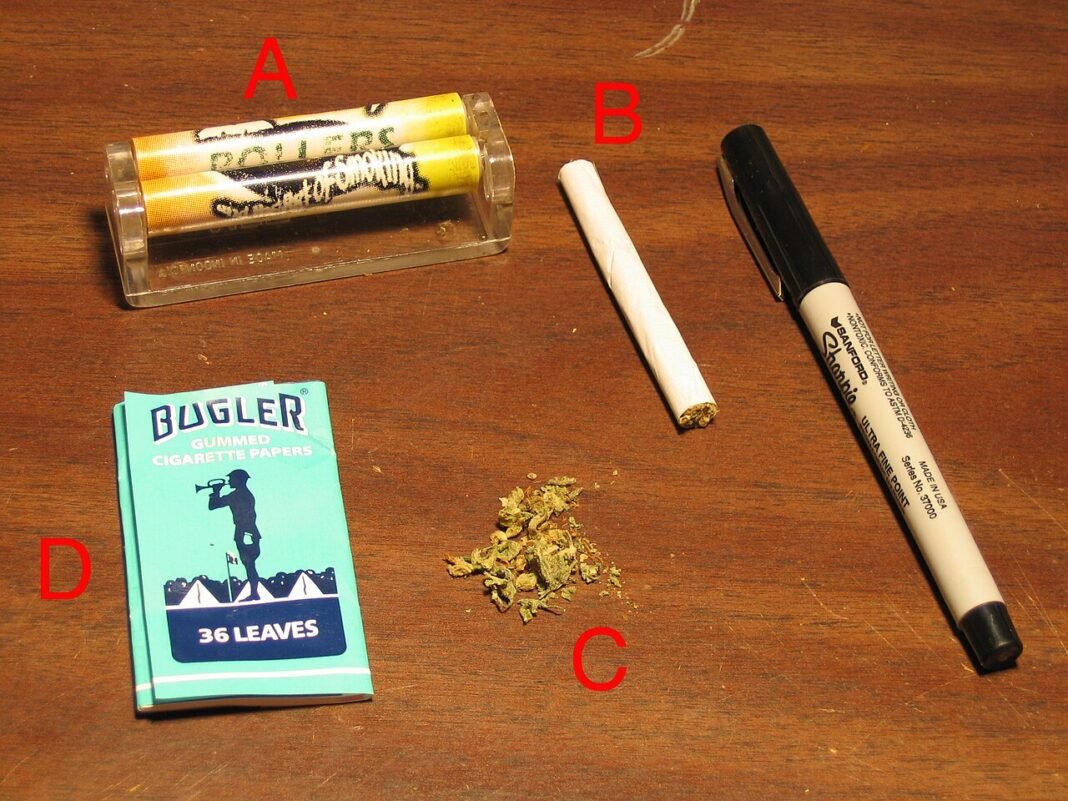

Here’s how to use a rolling machine: open the two rollers, spread ground flower evenly along the apron, close it and spin the rollers back and forth a few times to pack it, then slide in a paper with the glue strip facing you, roll forward until only the strip shows, lick it and finish the turn. Open the machine and your joint slides out. The trick is matching the machine to your paper size and not overfilling.
This 2026 guide covers machine sizes, a step-by-step method, fixes for the most common problems and a few safety notes. It’s for adults 21+ where cannabis is legal.
Key takeaways
- Match the machine to your papers: a 79 mm roller suits 1¼ papers, and a 110 mm roller suits king size.
- Pack it by spinning the closed rollers a few times before adding the paper.
- The glue strip goes in last, facing you, at the top edge.
- Overfilling is the number one reason a paper won’t wrap.
- A neat joint is still smoke. Keep it away from kids and anyone who doesn’t want secondhand smoke.
How a rolling machine works
A hand rolling machine is two small rollers joined by a flexible apron made of plastic or fabric. When the rollers are apart, the apron forms a trough you fill. When you close them and spin, the apron curls the filling into a tight cylinder and then wraps the paper around it. Because the machine sets the shape for you, every joint comes out the same width, which is why many people with shaky hands or arthritis prefer them.
Some rollers can make two widths. RAW says its 2-Way roller has a switch on the side to choose standard (skinnier) or wide (fatter) rolls (RAW). RAW also says its basic roller is made from a hemp composite plastic (RAW). Those are manufacturer claims, but they give you a sense of the options.
Rolling machine sizes
| Machine size | Paper to use | Good for |
|---|---|---|
| 70 mm | Single wide / short papers | Small, quick joints |
| 78 to 79 mm | 1¼ size papers | The everyday size most people start with |
| 100 mm | 100 mm papers | Longer, slim rolls |
| 110 mm | King size or king size slim | Larger joints or sharing |
RAW sells its rollers in 70, 79 and 110 mm sizes and describes its king size slim paper as 110 mm long (RAW; RAW). Zig-Zag sells 78 mm and 100 mm rollers (Zig-Zag). Using a 110 mm machine with 1¼ papers leaves you short of paper, so pick the pair before you start.
What you’ll need
| Item | Note |
|---|---|
| Rolling machine | Sized to your papers |
| Rolling papers | Same length as the machine |
| Ground flower | Medium grind, about the size of rice grains |
| Grinder | An even grind packs evenly |
| Filter tip or crutch (optional) | Stiff paper or a pre-made tip |
| Rolling tray (optional) | Catches spills |
| Poker or pen | Packs the end once rolled |
How to use a rolling machine: step by step
- Grind your flower. Aim for a medium, fluffy grind with stems removed. Too fine and it packs like dust; too coarse and it tears the paper. Our guide on how to use a weed grinder covers this.
- Open the machine. Pull the rollers apart so the apron forms a trough.
- Add a tip (optional). Lay a rolled filter tip at one end of the trough, sitting in the apron.
- Load the flower. Spread it evenly from end to end. Fill to about the top of the rollers, not heaped above them.
- Close and pack. Bring the rollers together and spin them toward you and back 4 to 6 times with your thumbs. This shapes and compresses the filling.
- Insert the paper. Hold the paper with the glue strip facing you at the top edge. Slide the non-glue edge into the gap between the rollers, in the back of the apron.
- Roll it in. Turn the rollers toward you so the paper feeds in, stopping when only the glue strip is showing.
- Seal it. Lightly lick or dampen the glue strip, then roll the rest of the way so it tucks in and sticks.
- Open and remove. Pull the rollers apart and take the joint out gently.
- Finish the end. Tap the tip end on the table, pack the open end with a pen or poker and twist it closed.

Zig-Zag’s own channel shows the basic roller motion:
Sell rolling gear or smoking accessories?
Adults looking for rolling tips read Hempland every week. Ask us about sponsored reviews, product features and advertising for your brand.

Advertise with us
Machine vs rolling by hand
| Rolling machine | By hand | |
|---|---|---|
| Learning curve | Minutes | Days to weeks of practice |
| Consistency | Same size every time | Varies with skill |
| Shape options | Straight cylinder only | Cones, tulips and other shapes |
| Portability | One more thing to carry | Just papers |
| Best for | Beginners, shaky hands, batch rolling | Custom shapes and cones |
If you want to learn the hand method too, see how to roll a joint. For wraps, our how to roll a blunt guide explains the difference.

Common mistakes
- Overfilling. The paper can’t wrap all the way around. Take some out and try again.
- Underfilling. You get a loose, floppy joint that burns unevenly (“canoeing”).
- Paper in backwards. If the glue strip faces away from you, it ends up inside the roll and won’t seal.
- Wrong size paper. A 1¼ paper in a 110 mm machine leaves the ends bare.
- Too much moisture on the glue. A soggy strip tears. A light touch is enough.
- Skipping the pack step. Spinning the closed rollers first is what makes a firm joint.
- A worn apron. Once it stretches or cracks, the rolls go loose. Aprons are cheap to replace on many machines.
RAW has short videos of its rollers in action on its RAW 101 page. And Paperguru shows a 110 mm king size machine here:
Safety notes
- Adults 21+ only, where legal. Store your flower and rolled joints locked and out of reach of kids and pets. See how to store weed.
- The American Lung Association says cannabis smoke contains many of the same toxins, irritants and carcinogens as tobacco smoke, and regular smoking can lead to chronic bronchitis (American Lung Association).
- The CDC says smoked cannabis, regardless of how it’s smoked, can harm lung tissue (CDC), and that THC can be passed to infants and children through secondhand smoke (CDC). Never smoke around kids.
- Don’t drive after smoking, and never leave a lit joint unattended.
- If you’re buying hemp-derived THC flower or pre-rolls, federal rules are changing. Public Law 119-37 limits hemp to 0.3% total THC, including THCA (GovInfo), and Congress delayed most of the new definition to December 11, 2026 (Congressional Research Service). Check for updates and your state’s rules.
Questions about rolling or gear?
Not sure which machine or paper size fits you? Send us a message and we’ll do our best to help.
Contact Hempland
FAQ
What size rolling machine do I need?
Match it to your papers. A 78 or 79 mm machine fits 1¼ papers, and a 110 mm machine fits king size papers.
Why won’t my rolling machine roll the paper?
It’s usually overfilled, or the paper went in with the glue strip facing the wrong way. Remove some flower and put the paper in glue-side toward you.
Can you use a rolling machine with a filter tip?
Yes. Lay the tip in the apron at one end before you add the flower, then roll as usual.
Can a rolling machine make cones?
Standard two-roller machines make straight joints. Cones need a cone filler or hand rolling.
How do I clean a rolling machine?
Brush out loose bits after each use and wipe the apron with a dry cloth. Resin builds up over time, and a sticky apron makes the paper grab.
Sources
- RAW Hemp Plastic Roller, RAW (manufacturer) (accessed November 2026)
- RAW 2-Way Hemp Plastic Roller, RAW (manufacturer) (accessed November 2026)
- RAW Organic Hemp Kingsize Slim, RAW (manufacturer) (accessed November 2026)
- RAW 101: Educational and Product Videos, RAW (manufacturer) (accessed November 2026)
- 78mm Cigarette Roller, Zig-Zag (manufacturer) (accessed November 2026)
- Marijuana and Lung Health, American Lung Association (accessed November 2026)
- Cannabis and Lung Health, Centers for Disease Control and Prevention (accessed November 2026)
- Cannabis and Secondhand Smoke, Centers for Disease Control and Prevention (accessed November 2026)
- Public Law 119-37 (H.R. 5371), Sec. 781, U.S. Government Publishing Office (accessed November 2026)
- Delay in Changes to Hemp Definition: Cannabinoids Not Capable of Being Naturally Produced by the Cannabis Plant, Congressional Research Service (accessed November 2026)
Image credits and disclaimer
Image disclaimer: Images in this post are displayed from their original sources (such as Amazon, Wikimedia Commons or Unsplash) and are not hosted on Hempland.net. Product images belong to their respective brands and retailers, and other images belong to their credited creators and are used under their stated licenses. Hempland.net claims no ownership of these images. About the images: because they are hotlinked from third-party sources, they may change or disappear, and they are for illustration only and may not show the exact product, plant or method described. If you own an image and would like it credited differently or removed, please contact us.
Medical and legal disclaimer: This article is for general information and educational purposes only and reflects details available as of November 2026. It is not medical, legal or financial advice. Cannabis laws vary by country and state and are changing in 2026, and cannabis products are intended only for adults 21+ where legal. Grow only where home cultivation is legal and follow local plant limits. Talk to a qualified healthcare professional before using cannabis, THC or CBD, especially if you are pregnant, breastfeeding, take medication or have a health condition. Do not drive or operate machinery after using THC. Any steps described are followed at your own risk. Mention of a company or product is not an endorsement. Hempland.net makes no warranties about the completeness or accuracy of this information and is not liable for any loss or damage arising from its use.

Hempland Editorial researches hemp products and the hemp industry from primary sources: USDA data, lab reports and manufacturer specs.
Sponsored Content
This informative article is brought to you by NUBO CBD →