



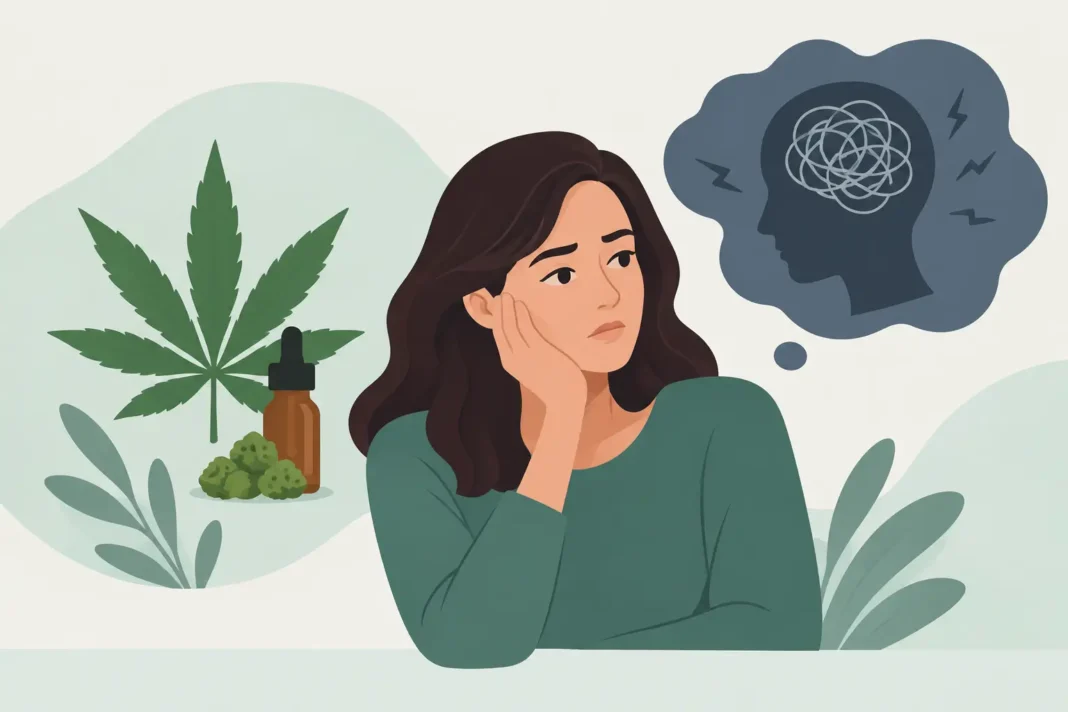

For some people, cannabis takes the edge off racing thoughts. For others, the same product can turn a manageable worry into a rapid heartbeat, paranoia, panic, or a trip to urgent care. So, can cannabis worsen anxiety? Yes – and the risk is shaped less by a simple cannabis-versus-no-cannabis question than by dose, cannabinoid profile, route of use, personal history and the setting.
That distinction matters as European medical markets expand and higher-potency products become more visible. Anxiety is among the most commonly cited reasons for cannabis use, yet it is also one of the most frequently reported unwanted effects of THC-rich products. For patients, prescribers, retailers and policy-makers, the gap between perceived benefit and clinical risk deserves a more precise conversation.
Can cannabis worsen anxiety? THC is often the key factor
THC, or delta-9-tetrahydrocannabinol, is the principal intoxicating compound in cannabis. At lower doses, some users report relaxation, improved mood or temporary relief from stress. But its effects are not linear. As the dose rises, THC is more likely to cause anxiety, fearfulness, suspicious thinking and panic-like symptoms in susceptible people.
Researchers often describe this as a biphasic effect: a low dose may feel calming while a higher dose becomes anxiogenic, meaning anxiety-producing. The point at which that shift occurs varies sharply between individuals. Someone with regular exposure may tolerate a dose that overwhelms an occasional user. A product that felt comfortable last month may also land differently after poor sleep, a stressful week, alcohol use or a change in medication.
High-potency flower, concentrates and vapes can make the problem harder to predict. Inhalation produces effects quickly, which can be useful for symptom control but also allows a person to consume more before recognising they are becoming uncomfortable. With edibles, the risk is different: delayed onset can lead to repeat dosing, followed by an unexpectedly strong and prolonged experience.
Why anxiety reactions happen
Cannabis affects the endocannabinoid system, a signalling network involved in stress response, mood, memory, sleep and pain. THC also influences brain pathways linked to threat detection and reward. In a relaxed environment, that altered state may be interpreted as pleasant. In a tense environment, the same physical changes – a faster pulse, dry mouth, altered perception or racing thoughts – may be read as danger.
This is one reason cannabis-related anxiety is not always about the plant alone. Context matters. Using a potent product in an unfamiliar place, around people one does not trust, or while already worried about work, health or legal exposure can amplify distress. So can consuming more than intended, especially where packaging or informal-market products give poor information about strength.
Genetics and mental-health history also matter. People with an existing anxiety disorder, a history of panic attacks, or a personal or family history of psychosis may face greater risks from THC-heavy cannabis. Cannabis does not affect every person in those groups in the same way, but the potential for harm should not be treated casually.
CBD is not simply the opposite of THC
CBD is often marketed as calming, and there is scientific interest in its possible role in anxiety. However, the evidence does not support a blanket claim that CBD products reliably treat anxiety in real-world consumer settings. Research has used different doses, preparations and clinical populations, while retail products vary widely in quality and actual cannabinoid content.
CBD is non-intoxicating and may moderate some effects of THC in certain circumstances, but it does not automatically make a high-THC product low risk. Ratios, total dose and timing all matter. A product containing CBD alongside a large amount of THC can still trigger anxiety.
There is also a medication issue. CBD can affect liver enzymes that process some prescription medicines. People taking antidepressants, anti-anxiety medication, antiepileptics, blood thinners or other regular treatments should discuss cannabis and CBD with an appropriate clinician or pharmacist rather than assuming a wellness product is consequence-free.
Short-term anxiety versus an anxiety disorder
A difficult cannabis experience can produce symptoms that resemble a panic attack: pounding heart, chest tightness, trembling, dizziness, nausea, derealisation and an intense fear that something is seriously wrong. These symptoms usually pass as intoxication wears off, though they can feel alarming in the moment.
That is different from proving cannabis has caused a long-term anxiety disorder. The relationship is complicated. Some people use cannabis to manage pre-existing anxiety, making it difficult to separate cause from self-medication. Frequent use can also become part of a cycle in which short-term relief is followed by rebound anxiety, disrupted sleep, reduced confidence in coping without cannabis, or withdrawal symptoms during breaks.
Withdrawal deserves more attention in commercial and public-health discussions. Regular users may experience irritability, restlessness, low mood, disturbed sleep and anxiety after reducing or stopping. Those symptoms can encourage renewed use, even when cannabis is contributing to the wider problem.
Who should be especially cautious?
Caution is sensible for anyone starting or changing cannabis use, but certain circumstances justify a higher threshold. This includes people who have had panic attacks after cannabis, those under significant stress, people with cardiovascular concerns who may be alarmed by THC-related increases in heart rate, and anyone with a personal or family history of psychosis or bipolar disorder.
Adolescents and young adults warrant particular care because brain development continues into the mid-twenties and early, frequent exposure has been associated with greater mental-health risks. Medical cannabis programmes are not a shortcut around this clinical judgement. A legal recommendation, prescription or product label does not mean a given formulation is appropriate for every symptom profile.
For operators, this is also a consumer-protection issue. Clear potency labelling, realistic serving guidance, staff training and responsible marketing are more meaningful than generic claims about relaxation. Products framed as solutions for stress should not obscure the possibility of THC-related anxiety.
Practical risk reduction for consumers and patients
If cannabis has previously triggered anxiety, the most dependable option is to avoid the product that caused it and seek clinical advice before trying again. People who still choose to use cannabis can reduce some avoidable risk by starting with very low THC exposure, avoiding rapid repeat dosing, and allowing enough time to assess effects – particularly with edibles.
It is prudent to avoid mixing cannabis with alcohol or other intoxicants, which can make judgement and anxiety symptoms less predictable. Choosing a familiar, calm setting and avoiding use during an acute period of stress may also reduce the chance of a bad experience, although neither approach eliminates risk.
When anxiety starts during intoxication, move to a quiet, safe space, slow breathing, sip water and ask a trusted sober person to stay nearby. Do not drive, cycle, operate machinery or take more cannabis in an attempt to correct the feeling. Emergency help is appropriate for chest pain, loss of consciousness, severe confusion, dangerous behaviour, or thoughts of self-harm.
What the evidence means for the cannabis sector
The question is not whether cannabis is universally good or bad for anxiety. It is whether the industry, healthcare systems and regulators can communicate a variable risk profile honestly. Medical access should be evidence-led, not built on an assumption that a plant-based product is inherently gentle. Equally, reports of anxiety should not erase the experiences of patients who find carefully selected, clinically supervised cannabinoid treatment useful.
The practical challenge is better matching: the right patient, product, cannabinoid balance, dose and follow-up. That requires more high-quality research, especially on commercially relevant formulations rather than isolated compounds alone. It also requires better data on potency, patterns of use and adverse events as national frameworks develop.
For readers tracking this market, anxiety is a reminder that cannabis policy is health policy as much as it is business policy. The next credible advance will not be a louder claim about calm. It will be clearer evidence, safer product information and conversations that give people room to say when cannabis is not helping.