



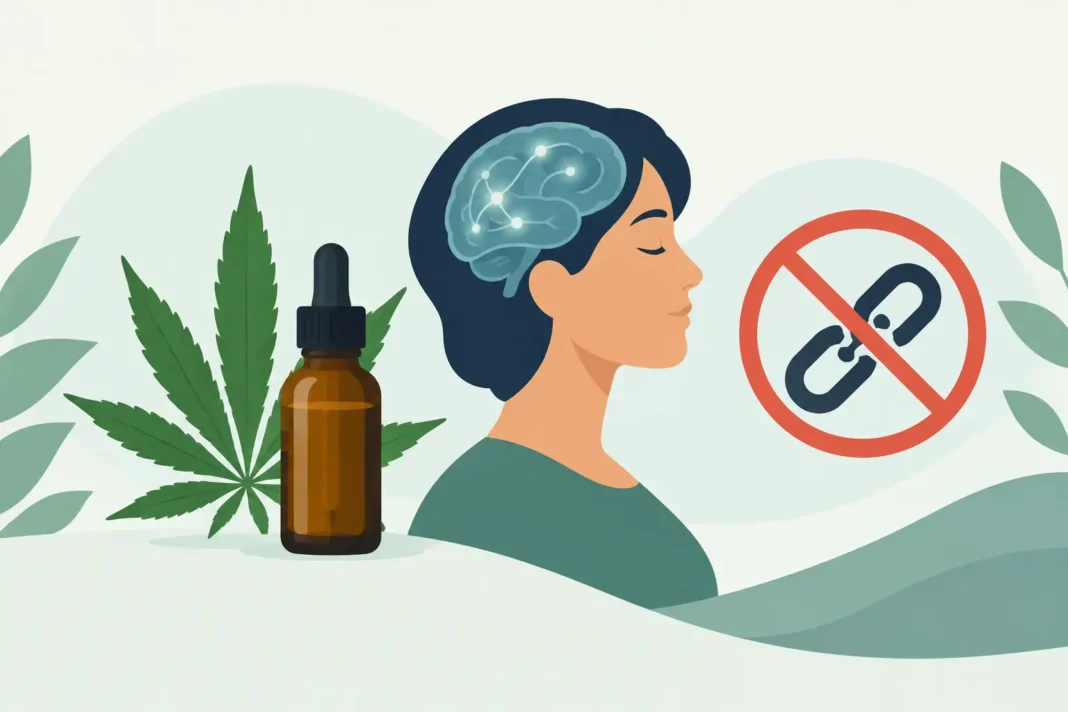

A CBD oil bottle can sit beside vitamins in a high-street health shop, while prescription cannabidiol is used in specialist epilepsy care. That split market helps explain why the question, is CBD addictive, still produces muddled answers. CBD is not THC, and most evidence indicates that cannabidiol itself has a low risk of abuse or dependence. But a low inherent risk is not the same as a blanket guarantee for every product, dose or consumer.
For patients, retailers and policymakers, the distinction matters. Claims about CBD addiction can shape prescribing decisions, consumer confidence and the regulatory treatment of a rapidly expanding hemp-derived products market.
Is CBD addictive in the clinical sense?
Addiction, also called substance use disorder, is more than using something regularly or finding it helpful. Clinicians look for patterns such as compulsive use, impaired control, continued use despite harm, craving, tolerance and withdrawal. A person who takes CBD each night because they believe it supports sleep is not automatically dependent on it.
The World Health Organization’s Expert Committee on Drug Dependence concluded in its 2018 review that CBD showed no indication of abuse potential or potential to produce dependence in humans. That assessment remains influential because CBD does not produce the intoxicating effects associated with THC, the principal psychoactive cannabinoid in cannabis.
CBD interacts with several systems in the body, but it does not activate cannabinoid receptor type 1 in the same direct, high-impact way as THC. That difference is central. THC can be reinforcing for some people and may lead to cannabis use disorder, particularly with frequent high-potency use. CBD’s pharmacology does not point to the same pattern.
Research to date has not established a typical CBD withdrawal syndrome. Stopping cannabidiol is not generally associated with the irritability, sleep disruption, appetite changes and cravings that can occur when frequent users stop THC-rich cannabis. Evidence is still developing, however, especially around the long-term use of high-dose consumer products outside clinical trials.
The key caveat: CBD products are not all the same
The headline finding should not obscure the main practical risk: the label may not tell the whole story. CBD products vary sharply by formulation, extraction method, cannabinoid content and quality assurance. In poorly regulated or illicit supply chains, a product sold as CBD may contain more THC than advertised, other cannabinoids or contaminants.
That matters most for people who use large volumes, are subject to workplace drug testing, have a history of problematic cannabis use, or assume that “hemp” means completely THC-free. In the UK and Europe, legal thresholds, enforcement and product rules differ by jurisdiction, but the consumer lesson is consistent: legality and accurate labelling are separate questions.
Full-spectrum extracts can contain trace amounts of THC. Broad-spectrum products are intended to remove it, while CBD isolate contains cannabidiol without the wider plant profile. None of those descriptions alone proves a product is accurately made. Independent batch testing and a clearly stated cannabinoid analysis are more meaningful than marketing language.
A positive drug test following CBD use is not proof that CBD itself is addictive. It may indicate THC exposure, potentially from a full-spectrum product or a mislabelled product. That distinction is especially relevant to employers, athletes and transport workers assessing risk.
Regular use versus problematic use
People can develop routines around almost any wellness product. If someone feels unable to sleep without CBD gummies, that may reflect an untreated sleep problem, anxiety about sleep, a behavioural habit or an expectation effect. It does not by itself establish pharmacological addiction.
Still, habitual use deserves an honest look. Consumers should ask whether CBD is replacing an assessment for persistent pain, insomnia, anxiety or another condition that requires medical attention. They should also review whether they are escalating the dose because the expected benefit is absent. Increasing use of an ineffective product can be costly and can delay appropriate care, even if it does not meet the definition of addiction.
For healthcare professionals, the more useful conversation is often about outcomes and medicines rather than dependence alone. What is the person taking CBD for? Which preparation are they using? How much do they actually consume? Are symptoms improving, stable or worsening?
Prescription CBD and shop-bought CBD are different categories
The strongest clinical evidence for cannabidiol concerns specific, standardised prescription medicines, notably for certain rare forms of epilepsy. These products are manufactured to pharmaceutical standards and used with medical supervision. Their doses can be far higher than those commonly found in oils, drinks or edibles.
Prescription use does not mean side effects are irrelevant. Cannabidiol can cause diarrhoea, reduced appetite, tiredness and changes in liver function in some patients. It can also interact with other medicines, including some anti-seizure treatments, because it affects the way the liver processes drugs. Dose adjustments and liver monitoring may be needed in clinical settings.
Those considerations carry over to the wider market. A consumer product may contain much less CBD, but people taking anticoagulants, anti-epileptic medicines, sedatives or other prescribed treatments should not assume an over-the-counter CBD product is risk-free. A pharmacist or clinician can assess potential interactions in the context of an individual’s medicines and health conditions.
The evidence base also differs. Marketing for CBD routinely extends to stress, sleep, pain and recovery, yet product claims often move faster than high-quality clinical research. Limited evidence for a particular benefit can create a cycle of repeated purchasing without providing the relief a consumer is seeking. That is a consumer-protection issue, not evidence that CBD is addictive.
What regulators and the sector should watch
For the cannabis industry, the question is not only whether CBD creates dependence. It is whether businesses can substantiate what is in the bottle, what it is intended to do and how it should be used safely. Clear dosage information, batch-specific testing and responsible claims are basic market infrastructure, not optional extras.
Regulators face a familiar balancing act. Overstating CBD’s risks can blur the distinction between cannabidiol and THC-rich cannabis, undermining public understanding and potentially limiting access to legitimate medicines. Understating quality, interaction and labelling concerns leaves consumers exposed to preventable harms.
The policy challenge is particularly visible in cross-border European trade, where cannabis and hemp rules remain fragmented. A product’s status can turn on its ingredients, intended use, extraction source, THC content and national food or medicines framework. Businesses entering new markets should treat addiction claims with precision rather than using broad assurances that could mislead consumers.
Practical signs that warrant a closer look
CBD dependence appears unlikely based on current evidence, but any substance can become part of an unhealthy pattern of coping. A closer conversation with a clinician may be sensible if a person is using CBD in place of prescribed care, spending beyond their means, concealing use, combining it with alcohol or sedatives, or repeatedly choosing products that cause unwanted effects.
The more immediate red flags are usually product-related: no clear ingredient list, no batch information, implausibly sweeping medical claims, or uncertainty about THC content. Pregnant or breastfeeding people, children outside specialist medical care, and people with significant liver disease should seek clinical advice before using CBD.
For readers tracking the cannabis market, the most accurate answer is neither alarmist nor promotional. CBD itself is not currently considered addictive in the way nicotine, alcohol, opioids or THC-rich cannabis can be. The real due diligence lies in separating cannabidiol from the product around it, and in treating persistent symptoms as a health question rather than a marketing opportunity.