





Hempland is reader-supported. Some links on this page are affiliate links: if you buy through them we may earn a commission, at no extra cost to you. As an Amazon Associate we earn from qualifying purchases. How we make money
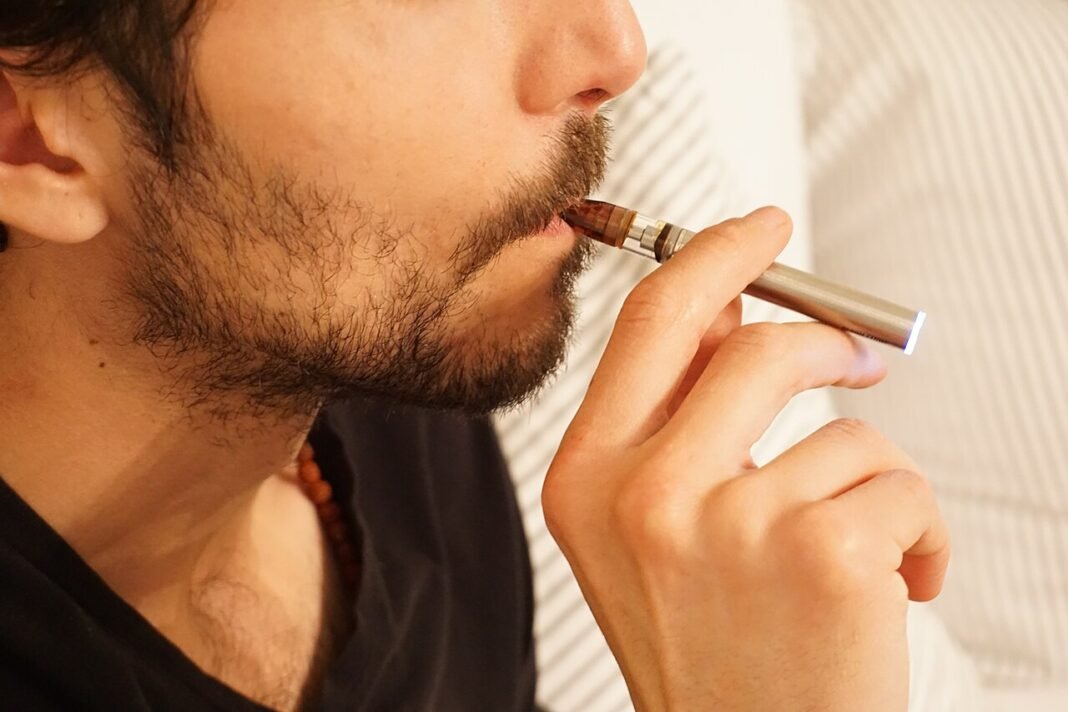
Here’s how to use a vape pen: charge the battery, screw a licensed, lab-tested 510 cartridge on gently, turn the pen on (often 5 quick clicks), set it to the lowest voltage, then take one small, slow puff and wait 10 to 15 minutes before taking another. That’s the whole routine for most cartridge pens, and starting low is what keeps the first try comfortable.
This 2026 guide covers the parts of a pen, numbered steps, voltage settings, troubleshooting, common mistakes and the safety facts every user should know, including why illicit carts are a real health risk. It’s for adults 21+ where cannabis is legal.
Key takeaways
- Most cannabis cartridges use a standard 510 thread, so they fit most pen batteries.
- Start at the lowest voltage. Lab data show toxic byproducts rise sharply as voltage goes up.
- Vaping can hit harder than smoking the same amount, so take one small puff and wait.
- Buy only from licensed stores. The CDC linked most EVALI lung injuries to THC vape products from informal sources.
- Never refill, modify or add anything to a cartridge.
- Charge on a hard, clear surface and keep the pen out of hot cars.
This guide contains affiliate links. If you buy through them, Hempland.net may earn a commission at no extra cost to you.
The parts of a vape pen
| Part | What it does |
|---|---|
| Battery | Rechargeable lithium-ion power source, usually with a button and voltage settings |
| 510 connection | The threaded tip where the cartridge screws on |
| Cartridge (cart) | Holds the cannabis oil, with a heating coil (atomizer) and a mouthpiece |
| Charger | Usually USB; use the one made for your battery |
| Indicator light | Shows power, voltage level or low battery |
Some pens are disposable all-in-one units with no button: you just inhale. California’s cannabis regulator points out that single-use vapes and anything with a battery count as hazardous waste, so don’t toss them in the trash (California DCC).

How to use a vape pen: step by step
- Charge the battery fully. Use the charger that came with it. The FDA advises using only batteries recommended for your device and charging on a clean, flat surface where you can see it, not on a couch or pillow (FDA).
- Check the cartridge. Make sure it came sealed from a licensed store, with a label and lab results. Our guide on how to read a COA shows what to look for.
- Attach the cartridge. Screw it onto the 510 connection clockwise until it’s just snug. Over-tightening can damage the contacts.
- Turn the pen on. Many button batteries turn on and off with 5 quick clicks. Check your battery’s instructions; buttonless pens are always on and activate when you inhale.
- Pick the lowest voltage. Many batteries change voltage with 3 clicks and show a color. Start at the lowest setting. A 2025 review of lab studies found toxic byproducts such as benzene rose sharply when a pen went from 3.2 to 4.8 volts (Munger et al., 2025).
- Preheat if your battery has it. Some batteries have a preheat mode (often 2 clicks) that warms thick oil for a few seconds. Use it in cold weather or if the cart is clogged.
- Take a small, slow puff. Hold the button (if there is one) and inhale gently for 2 to 3 seconds, like sipping through a straw. Don’t hold the vapor in for a long time.
- Wait 10 to 15 minutes. Inhaled cannabis acts fast, but give it time before taking more. In a Johns Hopkins study, vaporized cannabis produced stronger effects and higher blood THC than the same dose smoked (Spindle et al., 2018).
- Turn it off and store it upright. Click it off so it can’t fire in a pocket, and store the cart upright, away from heat and kids.
Dr. Donald Davidson shows the basics of using a cannabis vape pen:
New to vape pens and have questions?
Not sure what your battery settings mean or how to read a cart label? Send us a message and we’ll do our best to help.
Ask Hempland

Voltage settings: a quick guide
| Setting | What to expect | When to use it |
|---|---|---|
| Low (around 2.5 to 3.3 V) | Gentler vapor, more flavor, fewer byproducts | Start here every time |
| Medium (around 3.3 to 3.8 V) | Bigger clouds, harsher | Thick oil that won’t draw on low |
| High (around 3.8 V and up) | Hot, harsh hits and more toxic byproducts | Best avoided |
Exact voltage ranges vary by battery maker, so check your manual. The trend from lab studies is clear even if the exact numbers vary: hotter means harsher and more byproducts.

Troubleshooting
- Not hitting: charge the battery, check that the cart is screwed on (snug, not tight), and clean the contacts with a dry cotton swab.
- Blinking light: often means low battery or a bad connection. Check your manual for the blink codes.
- Clogged cart: use preheat, or hold the cart in your warm hand for a minute. Don’t use a lighter on it.
- Burnt taste: lower the voltage. If it stays burnt, the cart may be empty or the coil damaged; replace it.
- Leaking: store carts upright, and replace any cart that leaks, cracks or looks damaged.
For cleaning other gear, see how to clean a vaporizer.
Common mistakes
- Buying carts from unlicensed sellers. This is the big one. See the safety notes below.
- Cranking the voltage. More heat means harsher hits and more byproducts.
- Taking long, deep draws on the first try. Small puffs and patience work better.
- Charging overnight on a bed or couch. Charge where you can see it, on a hard surface.
- Leaving it in a hot car. The FDA warns against leaving vapes in direct sun or a hot car (FDA).
- Throwing it in the trash. Batteries and disposables belong in hazardous waste or battery recycling.
Safety notes
- EVALI is real. By February 2020 the CDC had counted 2,807 hospitalized cases or deaths from vaping-related lung injury. It said THC vaping products, “particularly from informal sources like friends, family, or in-person or online dealers,” were linked to most cases, and that vitamin E acetate was strongly linked to the outbreak (CDC). NIDA describes the same findings (NIDA).
- The FDA’s advice is stricter than most people realize. Its 2019 warning says not to use vaping products that contain THC, especially from illicit or social sources, and never to modify or add anything to a vape product (FDA). If you choose to vape where it’s legal, licensed, tested products are the lower-risk choice.
- Even legal carts aren’t risk-free. A 2025 study of legal Canadian cannabis vape liquids found metals such as lead and nickel in the aerosol, coming from the hardware itself (Gajdosechova et al., 2025).
- Hemp-derived THC carts are changing in 2026. The new federal hemp definition in Section 781 of Public Law 119-37 counts total THC (including THCA) and excludes finished hemp products with more than 0.4 mg of total THC per container. The Congressional Research Service says most of it takes effect December 11, 2026, while the exclusion of cannabinoids the plant can’t naturally produce began November 12, 2026 (CRS). Many smoke-shop “hemp” carts won’t qualify as hemp under those rules. Check for updates; see also delta-8 vs delta-9.
- Keep it from kids and pets. Store carts in a sealed child-resistant package, as California advises (California DCC).
- Don’t drive after using THC, and talk to a healthcare professional first if you’re pregnant, breastfeeding, have lung or heart problems, or take medication.
TVape’s guide covers 510 battery settings and the errors people make most:
Prefer flower? Our guide on how to use a dry herb vaporizer covers that type of device.
Products We Recommend
A simple cleaning supply keeps the connection working:
 Image: Amazon (hotlinked, not hosted by Hempland.net)
Q-tips Cotton Swabs, Original, 625 Count
Dry cotton swabs are the easiest way to wipe dust and residue off a battery’s 510 connection and the bottom of a cart when a pen stops hitting.
Check Price on Amazon
Make vape hardware or batteries?
Adults learning to use their first vape pen read Hempland. Ask us about sponsored reviews and advertising for compliant, tested hardware.
Advertise with us
FAQ
How do you turn on a vape pen?
Many button batteries turn on and off with 5 quick clicks. Buttonless and disposable pens activate when you inhale. Check your battery’s manual.
What voltage should I use for a cart?
Start at the lowest setting and only go up if the oil won’t draw. Lower voltage means smoother hits and fewer byproducts.
How many puffs of a vape pen should a beginner take?
One small puff, then wait 10 to 15 minutes. Vaping can feel stronger than smoking the same amount.
Why is my vape pen blinking?
Usually low battery or a poor connection. Charge it, check the cart is snug, and wipe the contacts.
Do all carts fit all batteries?
Most cannabis carts use the standard 510 thread, but some brands use their own pod systems. Check before you buy.
Are vape pens safer than smoking?
They avoid combustion, but they carry their own risks, from contaminated illicit carts to metals from the hardware. Neither is risk-free.
Sources
- Outbreak of Lung Injury Associated with the Use of E-Cigarette, or Vaping, Products (archived), Centers for Disease Control and Prevention (accessed November 2026)
- Lung Injury Update: FDA Warns Public to Stop Using THC-Containing Vaping Products and Any Vaping Products Obtained Off the Street, U.S. Food and Drug Administration (accessed November 2026)
- Tips to Help Avoid Vape Battery Fires or Explosions, U.S. Food and Drug Administration (accessed November 2026)
- Responsible cannabis use, California Department of Cannabis Control (accessed November 2026)
- Vaping Devices (Electronic Cigarettes) DrugFacts, National Institute on Drug Abuse (accessed November 2026)
- Acute Effects of Smoked and Vaporized Cannabis in Healthy Adults Who Infrequently Use Cannabis, JAMA Network Open (PMC) (accessed November 2026)
- Cannabis concentrate vaping chemistry, Frontiers in Toxicology (accessed November 2026)
- Tracking metal presence in cannabis vaping products from source to inhalation, Scientific Reports (accessed November 2026)
- Changes to the Statutory Definition of Hemp and Implications for Agricultural Policy (IF13136), Congressional Research Service (accessed November 2026)
Image credits and disclaimer
Image disclaimer: Images in this post are displayed from their original sources (such as Amazon, Wikimedia Commons or Unsplash) and are not hosted on Hempland.net. Product images belong to their respective brands and retailers, and other images belong to their credited creators and are used under their stated licenses. Hempland.net claims no ownership of these images. About the images: because they are hotlinked from third-party sources, they may change or disappear, and they are for illustration only and may not show the exact product, plant or method described. If you own an image and would like it credited differently or removed, please contact us.
Medical and legal disclaimer: This article is for general information and educational purposes only and reflects details available as of November 2026. It is not medical, legal or financial advice. Cannabis laws vary by country and state and are changing in 2026, and cannabis products are intended only for adults 21+ where legal. Grow only where home cultivation is legal and follow local plant limits. Talk to a qualified healthcare professional before using cannabis, THC or CBD, especially if you are pregnant, breastfeeding, take medication or have a health condition. Do not drive or operate machinery after using THC. Any steps described are followed at your own risk. Mention of a company or product is not an endorsement. As an Amazon Associate we earn from qualifying purchases. Hempland.net makes no warranties about the completeness or accuracy of this information and is not liable for any loss or damage arising from its use.

Hempland Editorial researches hemp products and the hemp industry from primary sources: USDA data, lab reports and manufacturer specs.
Sponsored Content
This informative article is brought to you by NUBO CBD →