






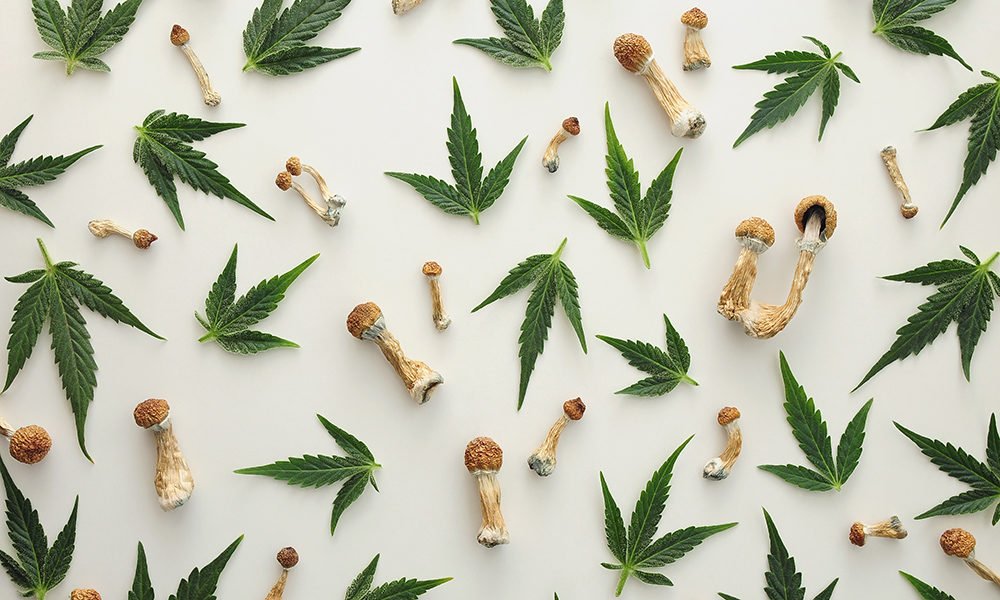

On Saturday, 18 April, President Donald Trump announced a new Executive Order at a press conference held in the White House. The order aims to accelerate federal research on psychedelic treatment for mental illnesses, with a focus on veteran living with PTSD or traumatic brain injury.
It comes right before the 4/20 holiday and marks an important shift in federal drug policy. Schedule I substances have been prohibited for a long time.
Standing behind the president during the Oval Office remarks were Joe Rogan and Health and Human Services Secretary Robert F. Kennedy Jr., both of whom have publicly supported broader research into psychedelic-assisted therapies and have spoken openly about the need for new approaches to mental health treatment—particularly for veterans.
Ibogaine is at the heart of this executive order, a compound psychoactive derived from an African bush that has gained increasing attention due to its potential role in treating addiction and mental disorders. For years, Veterans from the United States have sought ibogaine in clinics outside of America, especially those located in Mexico. Access to ibogaine within the United States has been limited.
The White House orders federal agencies to accelerate research pathways and to expand support for the clinical study of psychedelic substances linked to serious mental conditions.
Veterans are a significant part of the focus.
Many veterans in the United States continue to suffer from PTSD, reporting symptoms such as chronic anxiety, insomnia, drug dependence and trauma related symptoms, even years after their active service. The suicide rate among veterans remains one of the biggest mental health problems facing our country.
It is because of this reality that psychedelics have gained so much momentum in the last few years.
For many advocates, the larger takeaway from today’s announcement is not only about ibogaine—it is about what federal policy may be willing to reconsider next.
Once the federal government publicly endorses accelerated research for Schedule I substances to be used therapeutically, it is difficult to avoid cannabis in this same discussion.
Since years, the cannabis industry has lived in a state of contradiction. It is legal for medical purposes in most states but still restricted federally, preventing large-scale PTSD study.
Veterans have known this truth for many years.
In states where cannabis is legal, ex-military personnel report that cannabis helps them sleep better, to reduce hypervigilance and chronic pain. It also eases anxiety and supports daily functioning following trauma. Although cannabis cannot be classified as a psychedelic in the traditional sense, like MDMA or psilocybin. It does, however, play a role in the regulation of mood and nerve system responses.
This is why the executive order of today goes beyond just psychedelics. Carlos Arias, Co-Founder of Green Horizons and CEO added his thoughts on this historic announcement. “This order formalizes what we have known for centuries.” The federal government creates an additive effect by prioritizing research on psychedelics. This will accelerate cannabis’ reclassification. “We are aligning our policy to reality in order to ensure clean and safe access for both researchers and the general public.”
If federal agencies begin creating faster approval pathways for compounds once considered untouchable, pressure will likely grow to expand serious cannabis research under similar mental health priorities—especially around PTSD and veteran care.
Joe Rogan’s appearance at the White House announcement reflects also how public discourse has changed. Rogan’s platform has allowed him to talk with veterans, doctors, and researchers about psychedelic therapy, which is a viable alternative treatment when conventional medicine has failed.
RFK Jr. frequently takes positions similar to his own, arguing against outdated stigmas that should be used as a barrier for medical innovation.
“Psychedelics are effective in the right setting and with the correct set-up, but real changes come from incorporating the experience into everyday life.” With the executive order signed today, hopefully we’ll see real improvement in how we approach mental health,” says Mark Medal the founder of Mama Dose and The Plant Medicine Path Network.
That alignment—political visibility, public pressure, and veteran testimony—is something cannabis advocates have long argued is needed for federal reform to move faster.
The Executive Order does not allow psychedelics and does not alter cannabis’ schedule.
Washington’s willingness to reconsider long-held assumptions about controlled substances and mental treatment is a positive sign.
This is what matters to the cannabis sector.
Cannabis may benefit from the shift of attention in science and politics that is occurring with psychedelics.
Sponsored Content
This informative article is brought to you by NUBO CBD →