







Australia’s lawmakers who are considering changing driving laws should consider the implications of a US research study on driving and medical cannabis.
It is against the law in Australia to drive if you detect any amount of THC, a cannabinoid intoxicant that’s most often linked with marijuana highs. The driver does not need to be legally prescribed cannabis for medical purposes. THC is detectable for weeks after consumption.
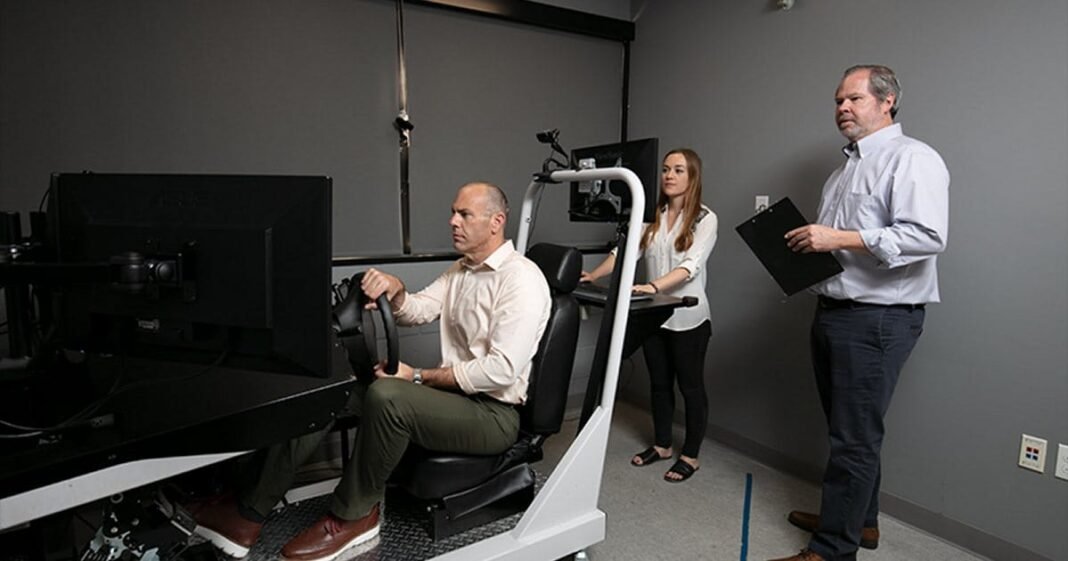
According to a recent study by the Center for Medicinal Cannabis Research, (CMCR), at the University of California San Diego School of Medicine, the driving ability of regular cannabis users does not become impaired until at least 48-hours of abstinence. This doesn’t mean to say it is prior to this timeframe past the initial window of impairment — it was just the abstinence period chosen.
Researchers analyzed the data of a clinical trial in which 191 cannabis-users who abstained from using it for 48 hours or more were assessed on their driving abilities. The researchers also compared a smaller group of non-cannabis users with the subset of frequent cannabis users in the initial study.
The study found that there was no relationship between the blood levels of THC or cannabis, driving performance and abstinence from marijuana, either in terms of time spent using it, nor cannabis consumption history.
The most intense users, those who smoked four joints on average per day and used cannabis almost daily, performed no worse than the healthy non-using group during the period of abstinence. said Thomas Marcotte Ph.D. is the senior researcher of the study and a Professor of Psychiatry, UC San Diego School of Medicine.
The researchers conclude by stating:
The future research needs to explore whether driving performance is affected by short-term residual effects. This can be done through the inclusion of larger groups that do not use cannabis, or better control for confounding variables such as withdrawal symptoms from cannabis.
Study has been published Journal of Psychopharmacology
In Australia, we have reported earlier in the month on a new push to create a fairer approach for medical cannabis and driving. Many other Australian territories and states are investigating the matter.
Back in 2021, researchers at Australia’s Lambert Initiative for Cannabinoid Therapeutics at the University of Sydney found a ‘window of impairment’ of between three and 10 hours resulting from moderate to high doses of THC — and it varies greatly between users. One more recent study by the Lambert Initiative found insomnia patients who take cannabis medicine containing THC during the night have little to no impairment on day two.
Sponsored Content
This informative article is brought to you by NUBO CBD →