







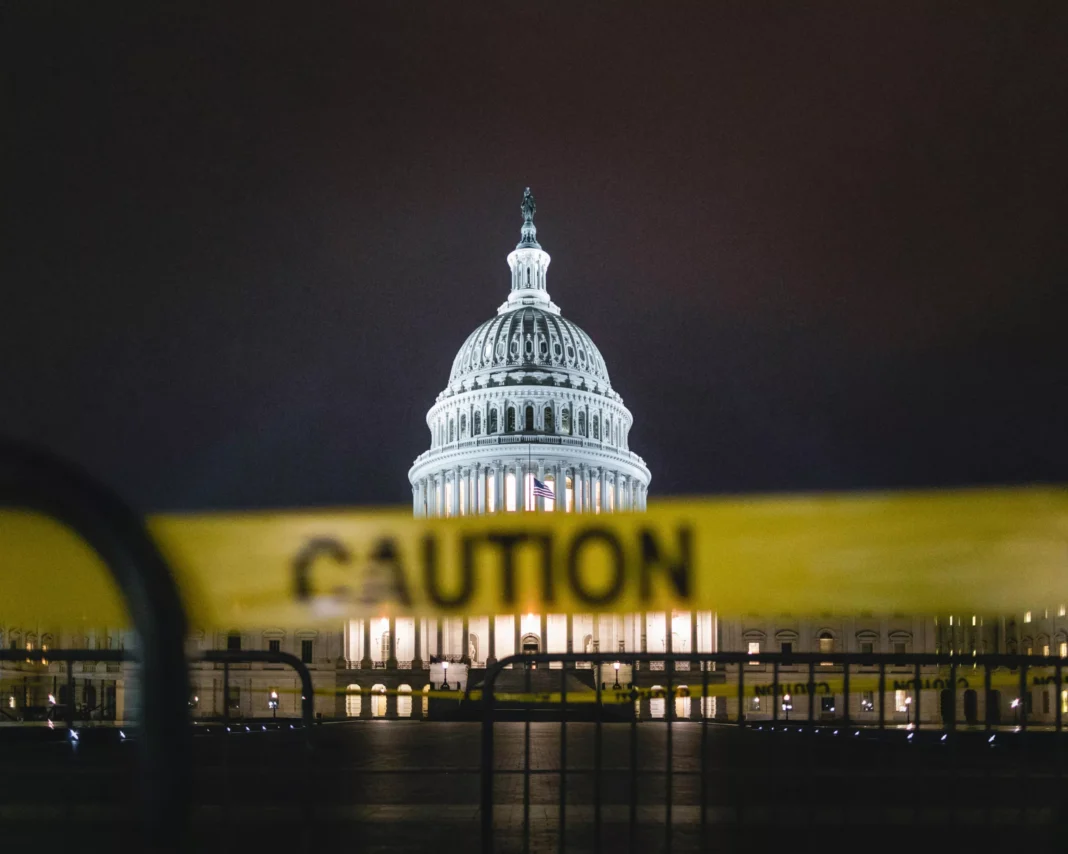

President Donald Trump has called on Senate Republicans to invoke the so-called ‘nuclear option’ to break the month-long government shutdown, a move that would eliminate the long-standing 60-vote filibuster rule and allow other legislation to pass by a simple majority.
It is possible that the proposal which divided Republican legislators could have profound implications on Congress’s balance of power and future cannabis reform in the US.
The 34-day shutdown is the longest in US history. Large parts of federal government have been paralysed. The spending bills that expired in September were the result of Democrats and Republicans failing to agree on healthcare funding, fiscal priorities and other issues.
On Friday, October 31, Trump wrote on Truth Social: “It is now time for the Republicans to play their ‘TRUMP CARD,’ and go for what is called the nuclear option — get rid of the filibuster, and get rid of it, NOW.”
A supermajority (three-fifths) is required to end debate on a Bill under current Senate Rules. Invoking the ‘nuclear option’ would overturn that precedent by majority vote, setting a new standard that 51 votes are sufficient to move any bill to final passage.
Analysts warned that this would change Congress’s functioning permanently, and weaken the ability of minorities parties to stop or amend legislation. Cannabis policy will likely suffer a major setback.
Deb Tharp is a regular policy researcher. MEDCAN24 Contributor, with a Senate that is governed by a simple majority, the party in power would have sweeping powers to push its agenda through without any bipartisan cooperation.
She claims that it could be a way to accelerate Project 2025, a conservative framework of policy promoted by Heritage Foundation which favors federal strict enforcement and moral governance as priorities.
Tharp noted that, if the Senate went nuclear, the P25 would be passed without opposition by the minorities. Cannabis liberalisation in such an event is likely to stall, or even reverse.
Tharp says that even if Republican leaders decide not to initiate the change in procedure, some protections could be preserved for the state-legal market, including appropriations riders which prevent the Department of Justice interfering in state-compliant marijuana businesses.
There is a likelihood that the reform efforts of the SAFER Banking Act, and other possible rescheduling measures, could lose steam amid increased political tension.
Sponsored Content
This informative article is brought to you by NUBO CBD →
President Donald Trump has called on Senate Republicans to invoke the so-called ‘nuclear option’ to break the month-long government shutdown, a move that would eliminate the long-standing 60-vote filibuster rule and allow other legislation to pass by a simple majority.
This proposal could have a far-reaching impact on the power balance in Congress, and the future of US Cannabis reform.
The 34-day shutdown is the longest in US history. Large parts of federal government have been paralysed. The spending bills that expired in September were the result of Democrats and Republicans failing to agree on healthcare funding, fiscal priorities and other issues.
On Friday, October 31, Trump wrote on Truth Social: “It is now time for the Republicans to play their ‘TRUMP CARD,’ and go for what is called the nuclear option — get rid of the filibuster, and get rid of it, NOW.”
A supermajority (three-fifths) is required to end debate on a Bill under current Senate Rules. Invoking the ‘nuclear option’ would overturn that precedent by majority vote, setting a new standard that 51 votes are sufficient to move any bill to final passage.
Analysts warn that, if Senate leaders resort to this method to resolve the funding impasse, they will permanently change the way Congress works, reducing the ability of the minorities to amend or block legislation. Cannabis policy will likely suffer a major setback.
Deb Tharp states that she is an expert in policy research and a frequent visitor to the city. MEDCAN24 Contributor, with a Senate that is governed by a simple majority, the party in power would have sweeping powers to push its agenda through without any bipartisan cooperation.
She claims that it could be a way to accelerate Project 2025, a conservative framework of policy promoted by Heritage Foundation which favors federal strict enforcement and moral governance as priorities.
Tharp noted that, if the Senate went nuclear, the P25 would be passed without opposition by the minorities. Cannabis liberalisation in such an event is likely to stall, or even reverse.
Tharp explains that, even if Republican Leadership decides to not trigger this procedural change and opts out, there could still be limited protections in place for states-legal markets. For example, appropriations riders prohibiting the Department of Justice’s interference with cannabis businesses operating within state laws.
The broader push for legislative reforms, such as SAFER Banking Act or potential rescheduling attempts, will likely be weakened by the increased political tension.
Sponsored Content
This informative article is brought to you by NUBO CBD →
Cannabis Law Resources in Poland
Browse essential legal pages on cannabis sales and cultivation in Poland. These guides will help you understand the legal requirements, such as certification and permissions.
-
Polish News Registration and Interests of Cannabis Businesses
-
Permissions for Cannabis Sales in Poland
-
Authorization for Importing or Manufacturing Medical Products
-
Permission for Manufacturing or Importing Medical Products
-
Certificate of Good Manufacturing Practices (GMP)
-
Registration of Medical Products in Poland