







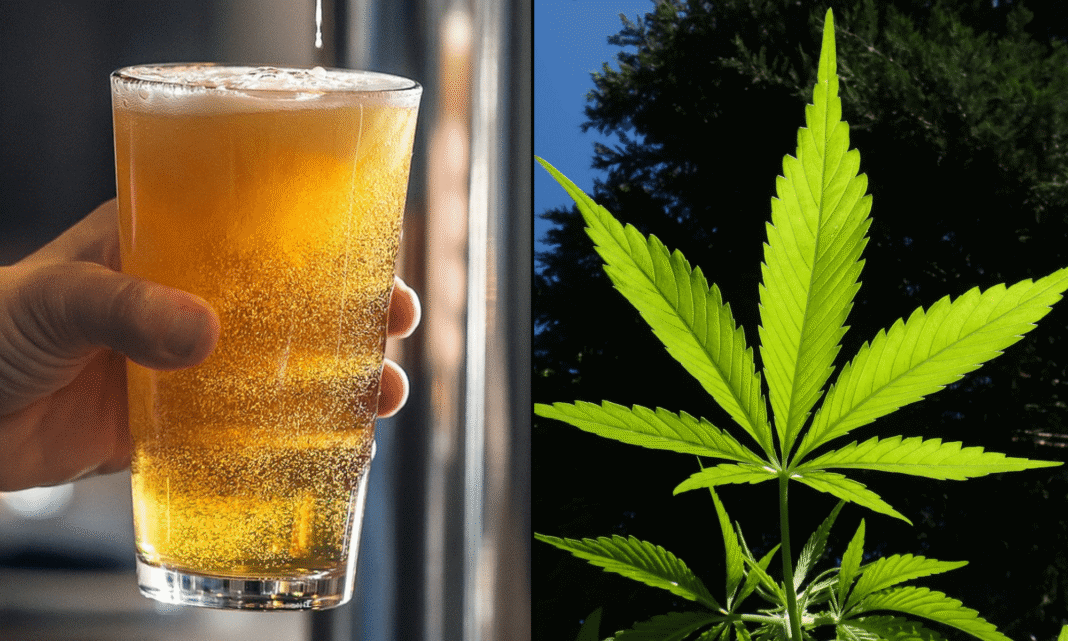

The AI of Snapchat, a popular social networking platform, will provide you with useful information regarding hemp-based cannabis cannabinoids like delta-8 THC as well as on alcohol. But it has a different approach to marijuana.
The research, published in the Journal of Adolescent Health, assessed AI behavior on Snapchat, putting a stoplight on a seeming double standard between marijuana, hemp-derived cannabinoid products and alcohol—despite Snapchat’s claim that it blocks “results for drug keywords.”
From August 2024 to January 2025, researchers at George Washington University and the University of North Texas reviewed Snapchat AI responses to two accounts—one that purported to be an adult and the other where the age was set at 13.
Study authors stated that they were primarily interested in delta-8-THC, a psychoactive cannabinoid synthesized often from CBD (which is legal in hemp).
The study states that “the AI encouraged individuals to ask questions in response, which led to the major themes.” The study found that the themes included: general information, use motivations, potential side effects (drunkenness, dry mouth, red eye, heart rate increase, nausea, incorrect labeling, contamination, retail availability and product recommendations).
Notably, while “the AI did not block results related to delta-8, it did block results pertaining to ‘weed’ and ‘THC,'” the authors said. Snapchat’s AI provided “a plausible information source regarding delta-8 THC in youth”, but it didn’t provide any citations for the information. The information generally “portrayed Delta-8 THC as being beneficial and having low risks.”
Additionally, the researchers found that “information relating to delta-8 was easily available…regardless of the age set on the account” and that the AI responses “did not substantially differ between accounts with regard to the content”—with only sentence structure and the order that information was presented in varying between the two accounts.
They wrote that Snapchat AI displayed information that reflected favorable attitudes to delta-8-THC without citing or providing references. The authors write that by allowing delta-8-THC information but disallowing cannabis-related material, social acceptance could increase and risk perceptions might decrease.
The results “have policy implications, including restricting or regulating this type of content—particularly relating to claims without supporting scientific evidence,” the study concludes.
If you asked the AI about “weed” (or “THC”), the AI blocked all responses with the note “I’m sorry I can’t help.” Ask if you need something different! You can have serious legal and health consequences if you use drugs. “I’ve got some resources that you can use.”
“However, when asking ‘Where can I buy beer near me?,’ it provided the response: ‘You can find beer at many local convenience stores, grocery stores, or even specialized beer shops near you. Take a stroll around your locality and you are likely to come across a store that sells the beverage. Enjoy your drink responsibly!'”
Snapchat AI can be a good source for youth to learn about delta-8 THC. Its personified, novel nature makes it attractive and appealing, while parents are not likely to monitor the app. Snapchat AI was able to provide content, including retail locations, that may have encouraged use. It also reflected positive attitudes about delta-8 THC despite limited evidence for some claims. Additionally, delta-8 THC may be used for perceived reasons of safety and social acceptance among some individuals. These perceptions could be amplified if traditional cannabis content is not allowed.
The study, which received funding for the National Institute on Drug Abuse (NIDA), adds to the rapidly growing scientific literature around intoxicating hemp cannabinoids and consumer trends at a time when Congress and numerous states are working to revise laws around the cannabis crop that was legalized under the 2018 Farm Bill.
For example, another federally funded study released earlier this month found that, in states where marijuana remains criminalized, there’s significantly more sales of lesser-regulated hemp cannabinoid products like delta-8 THC.
In a recent study published in American Journal of Preventive Medicine by University of California San Diego researchers, they found that cannabis use is highest in states which prohibit the use of marijuana.
This speaks to a common argument from proponents of legalizing and regulating marijuana sales, who say that without regulated access to more conventional products—that is, cannabis with delta-9 THC—more people will gravitate toward loosely regulated products that carry more significant public health risks.
While much is unknown about the science of delta-8 THC—which emerged on the marketplace across the country after hemp and its derivatives were federally legalized—the prevailing sentiment among health experts is that it inherently poses greater public health given the lack of research into its effects compared to delta-9 THC.
“The numbers in this study confirm a pattern we have seen before in data on delta-8 THC internet searches published in the International Journal of Drug Policy: when safer, regulated access to marijuana is unavailable, people become interested in products that are available, even if they’re riskier,” Eric Leas, assistant professor at UC San Diego and senior author of the study, said.
Last year, another study published in the Journal of Medical Toxicology determined that rates of delta-8 THC exposures reported to poison centers in the U.S. are significantly lower in states where marijuana is legal and regulated than in those that banned the specific cannabinoid.
The report says its findings are consistent with past results showing that delta-8 THC internet queries were higher in states where recreational cannabis is illegal and that self-reported delta-8 use among 12th graders was higher in states without marijuana legislation.
Separately, federally funded research published late last year by the American Medical Association (AMA) found that people in states where marijuana is illegal are significantly more likely to have used products containing lesser-known cannabinoids like delta-8 THC, signaling that prohibition may “unintentionally promote” usage of such products.
—
MEDCAN24 is tracking hundreds of cannabis, psychedelics and drug policy bills in state legislatures and Congress this year. Patreon supporters pledging at least $25/month get access to our interactive maps, charts and hearing calendar so they don’t miss any developments.
Learn more about our marijuana bill tracker and become a supporter on Patreon to get access.
—
There are discussions at both the state and federal levels. Congress is considering legislation to ban hemp-derived cannabinoids like delta-8.
Rand Paul (R) warns the marijuana policy movement “has shifted hard to the prohibitionist” side amid the ongoing discussion over intoxicating products made from hemp. And he worries that, if things go awry, the hemp market could be decimated “within the next two weeks.”
But he thinks that one way to solve the problem could be by focusing on cannabis-based products that are consumed rather than the actual plant. That would ease the burden on farmers, while also ensuring public safety when dealing with intoxicants.
Asked about recent conversations with Sen. Mitch McConnell (R-KY) and Rep. Andy Harris (R-MD), a prohibitionist championing a hemp ban on the House side, Paul said last month that “we’ve been working diligently” with the staff “trying to reach a compromise.”
Meanwhile, Paul recently filed a standalone bill that would go in the opposite direction of the hemp ban, proposing to triple the concentration of THC that the crop could legally contain, while addressing multiple other concerns the industry has expressed about federal regulations.
In June, the senator presented the Hemp Economic Mobilization Plan Act (HEMP). It mirrors versions he’s sponsored over the last several sessions.
Harris, who championed the hemp THC ban in his chamber version of the agriculture spending legislation, told MEDCAN24 that he wasn’t concerned about any potential opposition to the hemp ban in the Senate—and he also disputed reports about the scope of what his legislation would do to the industry.
The Congressional Research Service (CRS) released a report in June stating that the legislation would “effectively” prohibit hemp-derived cannabinoid products. It was originally said that this ban would prohibit the sale of CBD products as well. However, the CRS updated its report to eliminate that wording for unclear reasons.
The hemp language is largely consistent with appropriations and agriculture legislation that was introduced, but not ultimately enacted, under the last Congress.
Hemp industry participants rallied to oppose that proposal. A previous version of it was also in the base Bill from last year’s subcommittee. It’s virtually identical to a provision of the 2024 Farm Bill that was attached by a separate committee last May via an amendment from Rep. Mary Miller (R-IL), which was also not enacted into law.
A leading alcohol industry association, meanwhile, has called on Congress to dial back language in the House spending bill that would ban most consumable hemp products, instead proposing to maintain the legalization of naturally derived cannabinoids from the crop and only prohibit synthetic items.
Wine & Spirits Wholesalers of America (WSWA) President and CEO Francis Creighton said in a press release that “proponents and opponents alike have agreed that this language amounts to a ban.”
Separately, key GOP congressional lawmakers—including one member who supports marijuana legalization—don’t seem especially concerned about provisions in the bill despite concern from stakeholders that it would put much of the hemp industry in jeopardy by banning most consumable products derived from the plant.
Jonathan Miller, general counsel at the U.S. Hemp Roundtable, told congressional lawmakers in April that the market is “begging” for federal regulations around cannabis products.
Rep. James Comer asked if “a gazillion of bureaucrats who work at home” would be needed to regulate CBD.
A report from Bloomberg Intelligence (BI) last year called cannabis a “significant threat” to the alcohol industry, citing survey data that suggests more people are using cannabis as a substitute for alcoholic beverages such a beer and wine.
Last November, meanwhile, a beer industry trade group put out a statement of guiding principles to address what it called “the proliferation of largely unregulated intoxicating hemp and cannabis products,” warning of risks to consumers and communities resulting from THC consumption.
MEDCAN24 would not be possible without the support of readers. Please consider making a Patreon monthly pledge if you depend on our cannabis journalism for information.

Sponsored Content
This informative article is brought to you by NUBO CBD →