







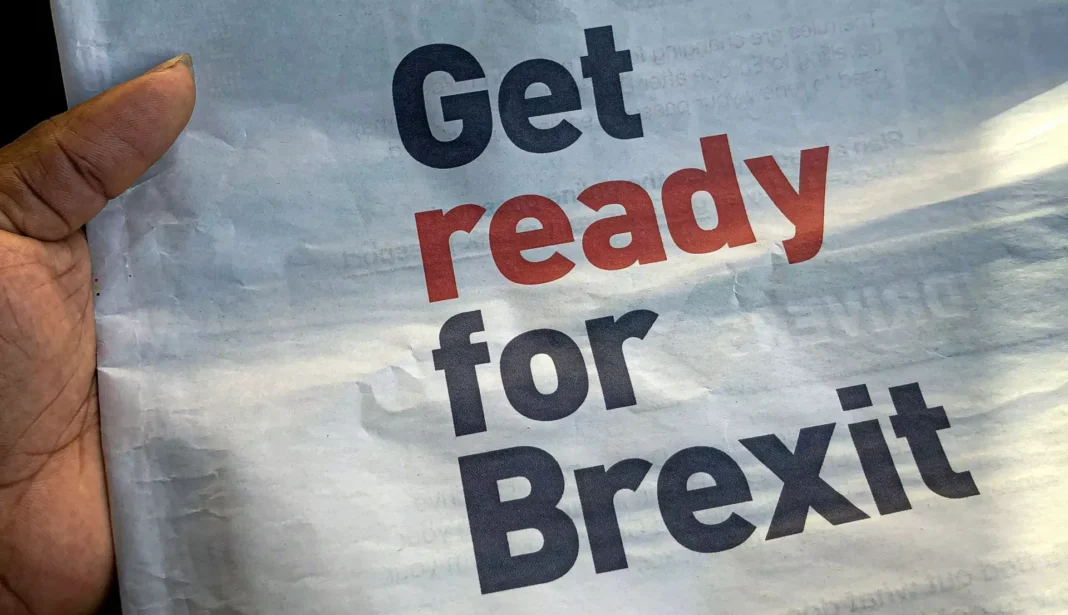

Food Standards Agency’s (FSA) serious concerns about the ability of the UK CBD industry to meet its goal before an EU initiative to align with the EU takes over the market will likely be in vain.
The FSA chair, during a meeting of the closed board in December 2025 whose notes were released on March 11th, 2026, told the attendees that CBD authorizations would not be issued before the UK SPS Agreement with the EU took over, making them almost redundant.
The board agreed. Ministers informed The industry wasn’t.
The implications of the FSA’s announcement were made clear at last week’s open board meetings to all industry participants, and not by any official FSA announcement but rather through questions that industry representatives had prepared.
The likelihood of only a few approvals is devastating to the business owner after spending millions on research and swathes having collapsed due to regulatory delays.
A quick recap
- After five years of building the only regulatory framework in the world for CBD to be used as food, fifteen applications passed safety evaluation.
- The UK is currently negotiating a SPS with the EU to align British food standards with EU regulations, which includes novel foods.
- Under ‘dynamic alignment’, the UK would automatically adopt EU rules. EU CBD intake is restricted to 2mg per person, which is five times less than FSA.
- The EU Food Safety Authority, EFSA (European Food Safety Authority), has not actively pursued CBD application since 2019.
Converging deadlines
- 24 March, 2026 Food Standards Scotland begins a 12-week consultation with the public on three CBD applications. This is a requirement for ministerial approval by four nations.
- ~16 June 2026: The FSS consultation is over. This marks the first time that four nations can sign off.
- June 2026: A UK-EU SPS deal is expected to be signed
- Autumn 2026 FSA target ministerial recommendation for first three CBD application, only window available between FSS completion and SPS implementation
- Mid-2027: SPS legislation and agreement in force
Closed December Board Meeting
The FSA minutes from the closed board meeting held on 10 December, 2025 and published by the FSA 11 March, 2026 show how the board internalised SPS’ implications for CBD.
Discussions quickly turned towards CBD after the FSA had been asked which application for a market authorization the FSA would prioritize before signing the Sanitary-Phytosanitary agreement (SPS) with the EU.
Board members raised the concern directly, querying ‘whether deprioritising cases not near completion could amount to creating a “frozen market” that stifled competition, with specific reference to CBD.’
In the minutes of this meeting, FSA chair Professor Susan Jebb acknowledged that CBD authorizations would be unlikely to occur before summer 2026, due to Food Standards Scotland’s consultation requirements, as well as parliamentary schedules and elections in devolved countries.
Importantly, she pointed out that, by the point authorisations could be granted, the Board had likely re-examined its prioritisation structure in light of anticipated progress in SPS negotiations.
James Robinson said this was also echoed by FSA’s general counsel, James Robinson. He stated that due to the expected rapid progress in reaching an SPS, there would be a very short time window, which would prevent clearing the queue.
Accordingly, it would be important to finish as much work as possible during the given timeframe.
In conclusion, it was decided that the Chair would write to all ministers and seek their agreement regarding the proposed priority approach within the SPS agreement.
MEDCAN24 This letter has been sent, and the ministerial review of CBD food products is expected to begin later in this fall.
On 11 March the December minutes of the FSA’s board were posted on their website, just two weeks prior to the open meeting last week. This was two weeks after the majority of industry members became aware of its implications. In those same minutes, the chair had ‘emphasised the importance of bringing SPS-related information into the public domain as soon as possible to support transparency.’
READ MORE…
Public board meeting on March
The FSA’s December conclusion were made public for the very first time at the open board meeting held on the 25th of March.
A formal programme update on the SPS agreement, presented by Sam Faulkner and Laura Blair, confirmed that the UK government had ‘committed to an ambitious timeline of concluding negotiations on the Agreement and having the necessary legislative and operational arrangements in place by mid-2027,’ and that Great Britain would ‘dynamically align with relevant EU SPS rules in defined areas.’
The list of regulations falling within this agreement was ‘still under consideration and subject to ongoing negotiations.’
In the SPS Programme Paper, CBD and novel food products were not discussed. Market authorisations appeared only obliquely, in a reference to how they would be ‘handled under a common SPS area’, with no further detail.
In the meantime, according to the CEO’s annual report, ‘a substantial number of applications are unlikely to progress to ministerial decision before the Agreement is in place’.
This language seems to confirm the fact that the ministerial approval is unlikely.
Food Standards Scotland, on the same date as the meeting of its board, launched a 12-week public consultative period for the three first CBD novel food applications in Scotland to have reached that stage. Consultations will run until around 16 June. Around the same time, it is anticipated that SPS will be finalized.
The formal response of the industry
Last week, the number and nature of the questions that were submitted in advance to the Board meeting was the most clear indication yet that there is a coordinated alarm among the industries.
Marika Graham Woods of the Cannabis Trades Association put forward the most direct question ever. Citing the CEO report’s own language, she asked the board to ‘explain, clearly, what businesses are expected to plan for,’ and whether they should ‘proceed on the basis that EU market authorisation will become the primary route to market in Great Britain, and therefore that current UK applications carry a risk of becoming Duplicate or redundant?‘
She also asked whether CBD products would ‘fall fully within the scope of SPS alignment, or whether they remain outside it’, a question the board has yet to answer clearly.
Graham-Woods who was present at the meeting told MEDCAN24 The picture emerging was very concerning.
“CBD was not part of their special projects within the process for novel foods,” said she. “We’re a bit of an anomaly.”
She continued, “EFSA halted its process in 2019.” “EFSA halted their process in 2019.”
Graham-Woods’ concerns were not the only ones. Cefyn Jones of The Hemp Hound Agency submitted three questions focusing on Article 4 decisions, which is a method by which products that have evidence of historical consumption can be potentially designated as not novel, bypassing authorisation entirely.
Jones asked whether Article 4 submissions would ‘remain valid’ under a future SPS-aligned framework, and how the FSA intended to ensure that evidence accumulated through the UK process would be ‘given appropriate weight, rather than being disregarded within a framework that does not account for it.’
Carl Haffner, CEO of Haffner International, asked the board to ‘clearly define the intended end-state regulatory framework for CBD and hemp-derived products in the UK post UK-EU SPS negotiations,’ and what protections or transitional assurances would be provided to businesses that had already invested significantly in UK novel foods dossiers.
All questions will be answered in writing by the FSA within 20 business days following the meeting.

CBD & Hemp
European CBD dilemma: Clinical evidence versus food law
Recent EFSA CBD novel food terminations as well as the ultra-low intake provisional benchmark has heightened the disconnection between new clinical evidence and Europe’s food legal framework.
By Ben Stevens
Read story →
Three applications by autumn
As of this writing, there are 15 businesses that have had positive safety assessments.
FSA confirms MEDCAN24 It is committed to finalising ministerial decisions on three CBD-based products in the form of novel foods by 2026. In addition, it plans to submit further drafts on risk management for applications that have received a positive assessment.
Three applications, RP07, (Pureis synthetic CBD), RP350, (Cannaray), and RP427, (EIHA Consortium), have been approved by the FSA following its public consultation in August 2025. They are currently being considered for the FSS consultation in Scotland.
Uncertainty remains as to whether the three applications have a real chance of being approved before the SPS contract is signed. In the December minutes, it is clear that even the board was unsure about what applications could be finished within the time frame.
FSA also confirms that they have written to CBD applicants directly informing them about the priority approach and what it means to their applications. It is not known what the contents of these letters are. These letters are likely the most clear indication yet to the company that they received of the status of their application.
The board has not published any material on Article 4 files, whole-plant and full-spectrum applications seeking non-novel approval rather than the authorization route. Graham-Woods said MEDCAN24 that an Article 4 submission had ‘gone nowhere in four months.’
Article 4 of the SPS programme document or the minutes from December do not mention the full spectrum product position.
Most products sold in the UK would need to be reformulated significantly if the EFSA set a provisional intake limit (ADI) of only 2mg/day. This is 5 times higher than FSA’s ADI (10mg). Practically, this means that companies who are aiming for the EU will have to restart.
When asked whether CBD businesses had been directed towards EFSA at the March board meeting, the FSA did not confirm or deny that such a suggestion was made, stating that ‘it is for individual businesses to make their own decisions.’
FSA declined to provide any comment about the negotiations. They said they could not protect confidential information and that negotiations were ongoing. But, it confirmed the EU’s acceptance of a few areas in which the UK must retain its rules. It is unclear if CBD will be included.
Graham-Woods stated that “businesses can’t deal with uncertainty” and “you’ve given them it in handfuls.”
According to reports, three CBD-rich novel foods applications will be approved in the fall.
The December minutes reveal what was privately decided by the board three months earlier: that there is a limited window to deliver meaningful authorizations before SPS aligning takes over the process. For the majority (15 out of 15 applications that were positively evaluated), this may never open.
Sponsored Content
This informative article is brought to you by NUBO CBD →