







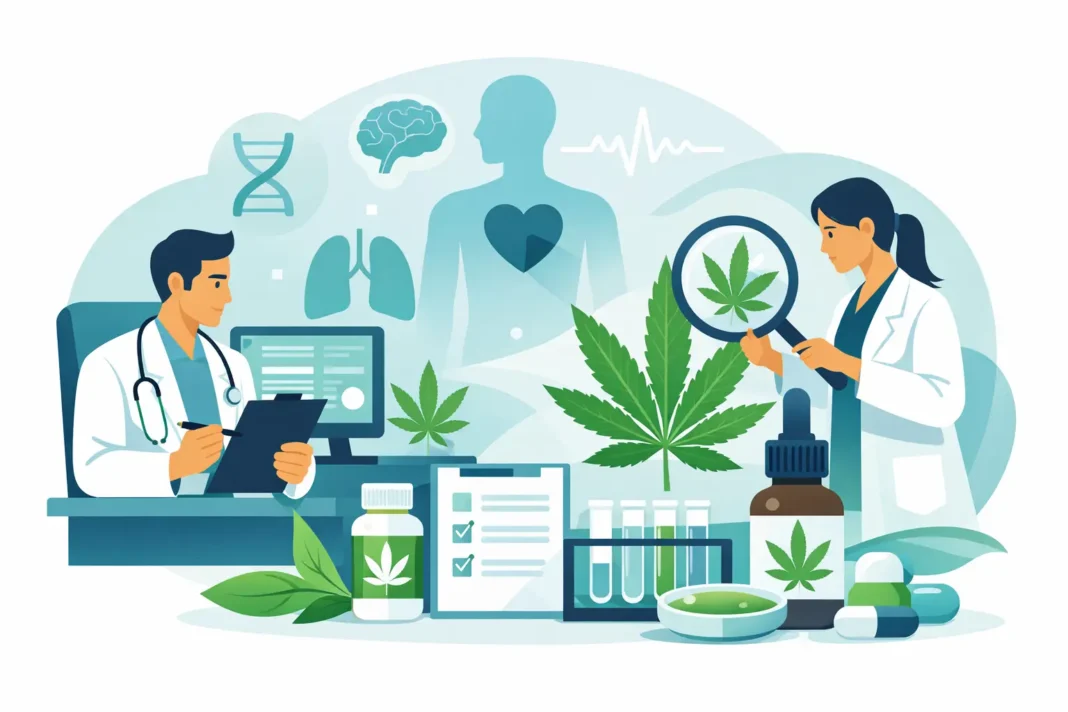

It is important to understand that a consultation on medical cannabis goes beyond simply asking whether it might be helpful. The medical evaluation of cannabis This is a process that involves both clinical considerations and regulations. The doctors weigh in the following factors: the medical condition, any prior treatment, possible benefits, mental and physical risks as well current drugs, and practical aspects of prescribing safely.
This distinction is important as the medical cannabis market in Europe expands. The public’s interest in cannabis often moves more quickly than the clinical guidelines, and product availability may give an impression that prescriptions are automatic. This isn’t the case. The responsible prescriber will assess whether the cannabis-based medication is suitable for an individual at a certain point of their treatment.
What doctors think about cannabis when it is used in clinical settings
Start with the patients’ diagnosis and the symptoms which are the biggest impairment. The medical marijuana debate has focused on chronic pain, spasticity and severe nausea resistant to treatments, as well as some epilepsy forms. However, the scientific evidence is lacking. legal position The differences between jurisdictions and conditions are stark.
They will need to know the severity of symptoms, how long they have lasted, what triggers them, and their impact on your sleep, job, mobility, and quality of living. If you have pain, it may be important to include the suspected cause of your condition, if it is neuropathic, inflammatory or both, as well as any investigations that were already done. In the case of anxiety and insomnia, an assessment will be more careful because there are many possible causes. These include untreated mental illness, drug use problems, side effects from medication, or underlying sleep disorders.
It isn’t the question of whether or not cannabis works. The question is not whether cannabis has a plausible mechanism, but if there are enough reasons to expect that the patient will benefit from it.
It is important to establish a diagnosis
The clinician shouldn’t use cannabis as a way to avoid diagnosis. The clinician may consider GP records, letters of consultant, images, hospital discharge reports and medication records before prescribing. The patient is protected from treating one symptom, while another potentially dangerous cause goes untreated.
Access to medicinal cannabis products in the UK is tightly controlled. Doctors can prescribe cannabis-based products when clinically indicated, but the framework for product selection and prescribing is much more restricted than most patients think. While private clinics operate differently from NHS hospitals, the requirement for a sound clinical reasoning remains.
Evidence of previous treatments
Medical marijuana is often considered when established treatments fail to work or cause unacceptable side effects. It does not necessarily mean all possible medicines must be used. This does not mean that every possible medicine must be tried.
The review can include a variety of interventions, including lifestyle changes, lifestyle therapy, psychotherapy, surgery and other specialist treatments. Detail matters: A treatment which failed due to its inability to be tolerated differs from one that was used for a sufficient period of time at a dose effective without benefit.
The history of the patient serves two functions for prescribing physicians. The history establishes the need for medical care and prevents ineffective treatments from being repeated. This also helps reveal patterns of cannabis treatment such as poor adherence to medication, other sedatives, and conditions better managed by a specialist.
The decision can be made based on the results of a safety screening
Cannabis, despite being a plant-derived product, is still not without risks. Doctors usually assess the factors that may increase the risk of harm before prescribing. The psychiatric past is of particular importance. THC products may not be suitable for people with a history of schizophrenia, psychosis or severe unsteady mood disorders.
The police will ask you about your current and previous use of marijuana, alcohol, opioids and benzodiazepines, as well as other drugs. It is not a test of morality. The assessment is for safety. The use of cannabis for recreational purposes may complicate the evaluation of doses and dependence risk. Combining cannabis with sedating drugs can also increase impairment.
Also, consider cardiovascular diseases, liver functions, plans to become pregnant, nursing, cognitive vulnerability and whether the patient can store their medicines safely. People over 65 and those with a fall history may require extra caution, as dizziness or sedation could have severe consequences.
The assessment should include the patient’s daily work. Clear advice is needed for patients who operate machines, are at high altitudes, drive cars, have critical safety roles, etc. Driving is not made safe or legal by a prescription. The most important factor is impairment. Clinicians should address this issue before beginning treatment, rather than following an accident.
As carefully as a patient, the product is evaluated
Medical cannabis is not one treatment, but a category. Cannabinoid concentration, product formulation and administration method vary. THC and CBD have very different effects. Oils, capsules, and inhaled products also differ with regard to onset time, duration, and risks.
Doctors may recommend CBD over THC in certain circumstances. This can be the case when there are concerns about psychoactive effects. Other times, it may be appropriate to use a product with a balance of THC and CBD. The best option will depend on whether the goal is clinical, what evidence there is for this condition, how the patient has been treated in the past, and the prescribing laws of your locality.
Commercial narratives may override clinical realities in this case. It is not the popularity, taste profile or marketing of a particular product that determines its suitability for a specific patient. Clinical staff should base their decisions on product specs, consistency of batches, anticipated effects, and safety data, not general claims about cannabis’ effectiveness.
Drug interactions require an evaluation of the medicines.
Cannabinoids may interact with prescribed medications, especially those that are taken to treat central nervous systems or drugs metabolised by the liver through similar enzyme pathways. Antidepressants may be reviewed by a clinician, as well as other drugs such antiepileptics anticoagulants opioid analgesics sedatives immunosuppressants.
Cannabis is not the only option. Often, it is necessary to begin cautiously. This may mean adjusting a different medicine, asking for further information, or establishing a tighter following. It’s a simple trade-off: adding one treatment can reduce a symptom, but increase the risk of dizziness, sedation or other interactions.
Not assumption, but measurement follows a criterion.
After the initial consultation, if a physician decides to prescribe a medication, an assessment will continue. The treatment should be based on measurable objectives. They could include reduced severe pain, better sleep, less muscle spasms or a reduction in the need for another medication.
The prescriber can assess the benefit of the medication, as well as any side effects. This includes mood, cognitive, and daytime sleepiness. A patient’s symptom log may be requested, especially in the initial titration. If goals agreed upon aren’t being achieved, increasing doses is not always the answer. A product can be switched, the treatment may be paused or even stopped.
This feedback loop has a special value in sectors where there is an ongoing development of clinical evidence, especially for commonly-discussed indications. The real-world outcomes of patients can be used to inform the individual’s care. However, they should not replace well-designed clinical trials.
Bring your patients to an appointment
It is important to prepare for the appointment. Bring a list of medications, medical correspondence, symptoms and previous results of treatment, as well as an account of marijuana or alcohol consumption. You should also state the most important outcome – for example, less pain or better sleep.
The clinical picture will help doctors make better decisions. Patients can expect detailed questions including those regarding mental health, employment, driving and drug use. These aren’t just administrative questions. These questions are the point at which a cannabis discussion becomes medical treatment.
In a world of rapid policy changes and increasing consumer demand, clinical discipline is the best safeguard. The right prescription does not always mean the most readily available product. It means the one that’s most likely to be monitored, and re-evaluated based on the patient’s evidence.