







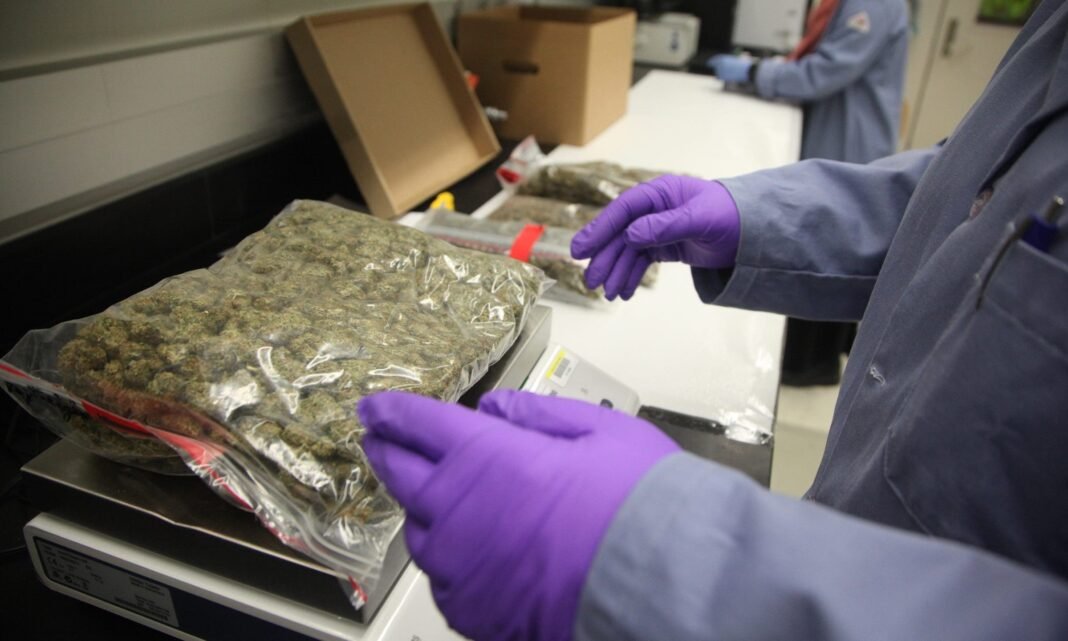

A new study indicates that marijuana breeders could design new strains of cannabis and accelerate their growing cycle by using artificial intelligence.
Scientists found that feeding information such as growth data, chemical analyses, and environmental measurements into AI models allowed breeders to simulate thousands of combinations and encourage “speed breeding” before they ever planted a single seed.
The authors argue this approach could cut traditional breeding cycles, which currently last between six to eight years, down to a fraction of that time, while also improving consistency—a perennial challenge that commercial cannabis growers grapple with.
“Machine learning allows for iterative simulations of breeding outcomes…while ensuring chemical consistency,” the authors concluded.
AI-enabled marijuana breeding is a new paradigm in the development of strains, as it allows for precise control over cannabinoid levels and terpene compositions. Breeding cycle times are also reduced and so too are resource requirements.
The paper also emphasizes the role of Metabolomics, a new field which cataloguing the large number of chemicals that are produced by organisms.
The researchers noted, “AI systems can correlate these datasets so that they predict specific genetic combinations’ influence on growth and chemical traits. It allows them to select the best parental strains.
In major crops, techniques like regression analysis, deep learning and genomic selection are used. When applied to cannabis, the tools search for patterns that relate genetic variations with chemical traits like the percentage of THC and the presence of rare compounds such as CBG.
Genetics and environmental interactions are complex. This is one of the most challenging aspects in growing cannabis. The light spectrum, humidity levels, availability of nutrients and temperature changes can all affect a plant’s chemical production.
The study, which has not yet been published in a journal but was posted on the science site ResearchGate, describes how AI systems can incorporate these variables to predict performance in different growing environments—a tool that could be particularly valuable as the industry expands into diverse climatic regions.
In addition to environmental factors, neural networks are able to track the nonlinear interaction between dozens of genes influencing plant chemistry.
The authors of the study, affiliated with Renaissance Bioscience and the University of Saskatchewan, stated that “These innovations will accelerate strain development and improve chemical consistency as well as enhance adaptability to different growing environments.”
Researchers are able to use AI with tools like mass spectrometers that measure cannabinoids throughout the plant’s lifespan. These data points, when combined with tools to assess traits like trichome densities or stress reactions, give AI models a raw material for making increasingly accurate predictions.
The researchers noted that “this capability allows breeders design strains to not only take into account chemical profiles but adaptability, resilience, and resilience within diverse environments.”
They noted the importance of reproducibility and that the global cannabis industry requires high-quality strains that are reproducible. This creates the need for precise breeding technologies to reduce the time until market while maximising yields and potency.
They cautioned, despite its many advantages, that AI-enabled breeding of cannabis faces a number of challenges. These include data quality limitations that can affect the accuracy and precision in phenotypic and genotypic predictions. Also, they note the complications surrounding complex polygenic characteristics, ethical considerations, and regulatory barriers. They observe that “legal limitations on cannabis research could limit data accessibility.”
Recent research on cannabis genetics suggests that incentives in the legal marijuana market—such as the desire for plants to mature faster and produce more cannabinoids for extraction—may be leading to a decline in biodiversity of the plant worldwide, prompting a researcher from California State Polytechnic University Humboldt to describe the problem as “the bottlenecking of Cannabis genetics.”
California Department of Cannabis Control, in partnership with the California Legacy Cannabis Cultivar Community, funded a 20 million dollar study that will, according to officials, identify and preserve California’s rich history and heritage of legacy cannabis cultivars. It also aims to enhance, guide and improve the application of genetics of cannabis to research and policy.
The interest in cannabis genetics does not only come from state governments. A powerful U.S. Senate Committee directed the agriculture authorities in 2018 to start building the country’s stockpiles of cannabis genetics. They set aside half a mil to help with the project.
Sponsored Content
This informative article is brought to you by NUBO CBD →