






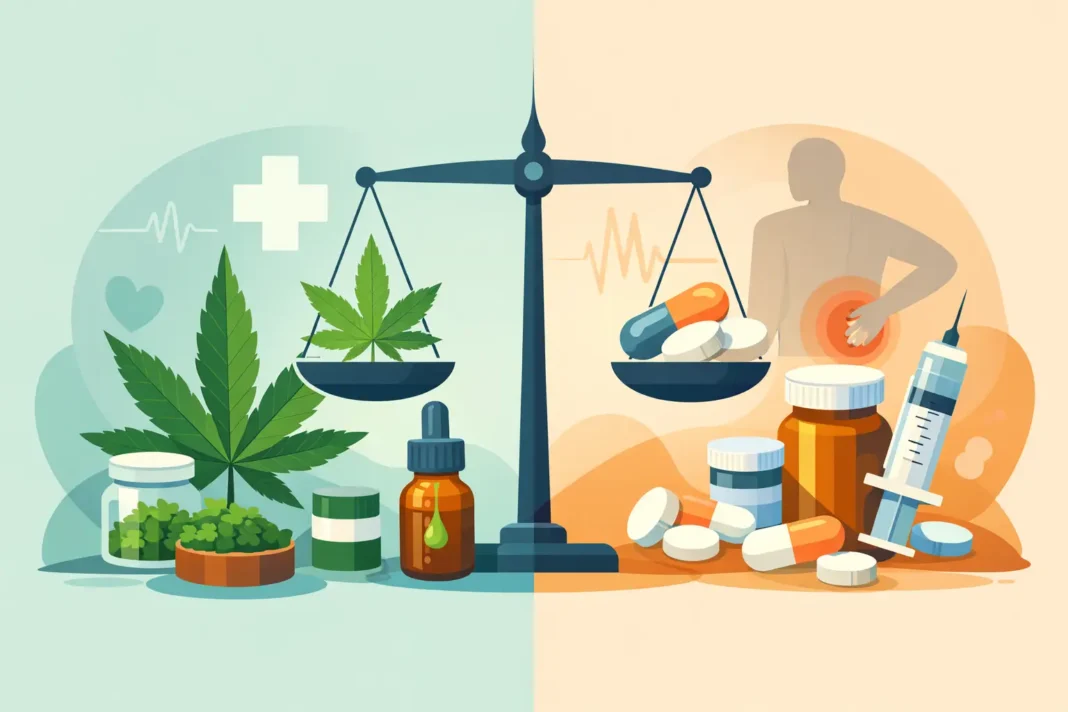

In the case of a person suffering from chronic pain or symptoms such as neuropathy, arthritic, or persistent backache, the choice between opioids and medical cannabis is not usually based on ideology. This is about whether or not a particular treatment makes daily living easier, without adding a new problem such as dependency, unmanageable side-effects, reduced function, or withdrawal symptoms.
The urgency of this question is growing in Europe. In medicine, opioids are still a crucial part, especially in the context of cancer and palliative treatment. The long-term usage of opioids to treat chronic pain that is not cancerous has been under scrutiny. Medical cannabis programs are growing, while prescribing regulations, product standards, and reimbursement policies vary between countries.
Evidence does not point to a clear winner. Cannabis does not replace opioid medicines and opioids do not have to be inherently wrong. Practically, the question is who can benefit from cannabis, in what dosage, how long and with what kind of clinical supervision.
Evidence on medical cannabis and opioids
Chronic pain is not a singular condition. The treatment of cancer pain, fibromyalgia, inflammatory and neuropathic pains, as well as migraine, endometriosis or migraine pain, can vary widely. The same is true for opioids and cannabis.
The strongest evidence for opioids is in the areas of acute pain, severe trauma and cancer-related pain. If prescribed correctly, opioids can be effective in providing short-term pain relief. The limitations of these drugs become more evident in the long-term treatment of non-cancer-related pain. Over time, benefits can diminish while risks may increase. As tolerance increases, the dose can be increased and physical dependency is possible. Other side effects include constipation and sedation. Some also report falling or experiencing breathing problems.
A different body of evidence supports medical marijuana. Some cannabinoid medications, particularly those that target neuropathic chronic pain in randomised studies, have shown modest improvement. The average improvement is often modest, the trial designs are different, and there’s not enough evidence for all conditions or products.
In policy debates, this distinction is important. Clinically, a medicine which helps only a small group of patients may be valuable. However, it does not mean that the drug should be used for all pain presentations. THC-containing medicines, CBD dominant formulations and pharmaceutical cannabis-based medicine all have different regulatory status, side effects and risks. The real clinical issue is obscured by treating all of them together.
It is important to carefully read about the opioid-sparing claims
The argument that cannabis can reduce opioid consumption is often cited. It is a plausible theory: If cannabis reduces opioid use or improves sleep, quality of life, or pain for certain patients, then they might need to take lower dosages or even avoid opioid medication altogether.
Observational research has shown that patients who have begun medical cannabis treatments report a reduction in their opioid intake. The findings of these studies have shaped the public discourse and encouraged health systems to look for alternative methods in managing chronic pain.
Self-reported decrease is not proof of cause. Other pain sufferers may be different in many ways from patients who use medical cannabis, such as their expectations, health status, ability to access specialist care, and willingness to experiment with non-opioid methods. The evidence that cannabis reduces the need for opioids is limited.
Cannabis may reduce the need for opioids, but it isn’t proven that it will replace them in all pain treatment. This is the responsible interpretation. This is not a time for dismissal, but rather a call to better research. The trials should not just measure pain but also opioid dosage, sleep, mobility and work participation as well as adverse events.
Comparisons of safety are not always one-sided
Opioids are known to be associated with an increased risk, especially if they’re prescribed long-term, taken at higher than recommended dosages, and combined with alcohol or benzodiazepines. But withdrawal and dependence aren’t the only concerns. The effects of opioid-induced constipation and cognitive slowing can have a direct impact on a patient’s safety.
Cannabis does not carry the same fatal respiratory-depression risk when used on its own. This is a significant difference but should not lead to the conclusion that cannabis for medical purposes is completely risk-free. THC may cause anxiety, dizziness and fatigue. It can also impair attention, short-term memory, and lead to dry mouth. THC can be a trigger for panic and confusion, or even psychotic symptoms, in certain people.
Patients also influence the level of risk. People with severe anxiety, a history or psychosis should be treated cautiously. The elderly may be at greater risk of dizziness or falling. If you are taking THC, it is important to understand how this affects driving or operating machines.
CBD can be presented as being a milder option. However, it is not immune to clinically relevant interactions. Cannabinoids can affect the way that other medications are processed by the body, such as anticoagulants and antiepileptics. Legal prescriptions do not eliminate the need for medication reviews.
How to formulate and then follow up on your ideas
Medical cannabis can refer to products that have markedly differing cannabinoid levels, administration routes and effects. Standardised orally prescribed products under clinical supervision are not the same as unregulated products of unknown strength. One reason why healthcare systems hesitate to translate cannabis consumer stories directly into prescribing policies is because they are concerned about the safety of unregulated products.
In order to find the lowest effective dosage for patients that do decide to try cannabinoid therapy, and reduce unwanted effects, it is common practice to use a slow-titration, low-dose approach. The follow-up plan should focus on the goals that have been agreed upon. A better sleep is important, but it’s also possible to achieve fewer flare-ups of pain, an improved tolerance for walking, or a reduced need for rescue medications.
To opioids, the same discipline must be applied. The clinicians must reassess the long-term prescribing before continuing it. They should also consider whether or not this is doing more than just maintaining a regimen and preventing withdrawal. The patient’s level of pain is very important. However, a good treatment plan will also include questions about the ability to function, such as working, sleeping, caring for family members, and taking part in rehabilitation.
The two types of medicine cannot be used as stand-alone solutions. Treatment of the underlying condition, physiotherapy, psychological support for pain, sleep management and non-opioid medicines All of these factors may play a part. The most effective treatment plan for chronic pain is multimodal, rather than one prescription.
The European policy challenge is evidence-based and accessible
European medical cannabis policies have moved more quickly than the clinical consensus. Some markets support specialist prescribing, domestic supply chains and reimbursement for a limited number of conditions. This uneven landscape leaves patients facing different treatment options depending on their location.
Fragmentation can have commercial as well as medical consequences. For producers, pharmacies as well as prescribers or investors, clarity is required on standards of quality, prescription routes, data gathering and reimbursement. Legal access may exist in theory but be unattainable or impossible to implement.
A false binary can also be harmful to public health. In promoting cannabis as an alternative to opioids and ill-informed patient expectations, policymakers may incite poor prescribing. Patients may seek out unregulated markets for cannabis or continue to take medicines they no longer need if policymakers dismiss the use of cannabis due to incomplete evidence.
An improved model would support research on comparative outcomes, expand access to clinical care where necessary, and ensure that the right products are used. The registries help to identify products, dosages, and patient groups that produce positive or negative outcomes in the real world. These registries are not intended to replace controlled trials but can help make policies more effective.
Patients and doctors should not ask whether marijuana is better than opioids. The question is not whether cannabis or opioids are “better” in the abstract, but if a particular treatment can improve a person’s functioning with known risks that they can handle. The standard that guides prescribing should be used to guide the development of European programmes and their market.