







President Donald Trump signed a spending measure Nov. 12, funding federal operations through January and ending the longest government shutdown in US history after 43 days. Senate approved it the day prior, and seven Democrats broke party ranks to get the required 60-vote majorities. They were won over by a Republican pledge to revisit the question of subsidies for Obamacare in December.
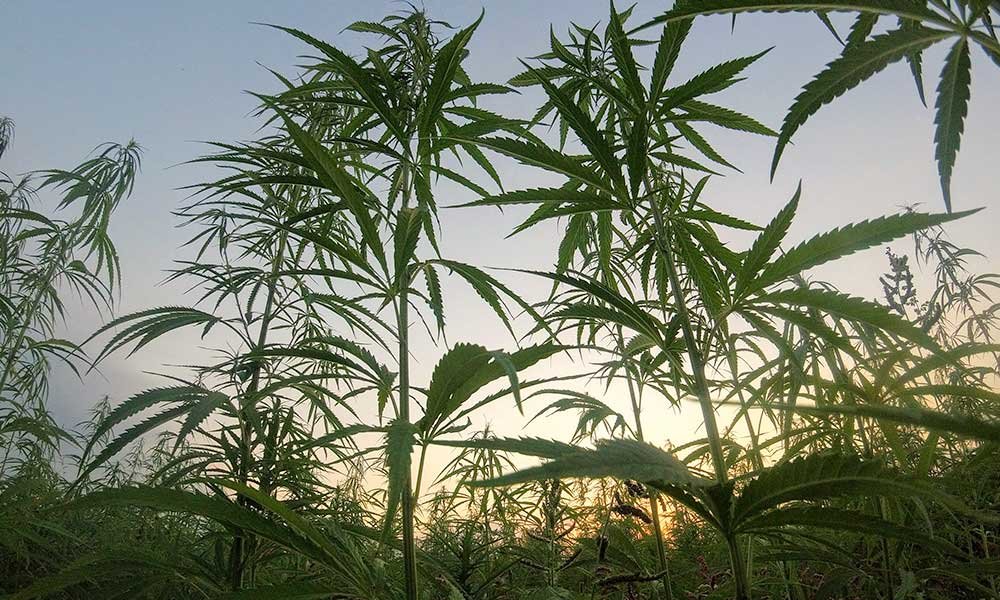
However, a sideshow to the fight over the Affordable Care Act is causing outrage in the hemp industry—and among farmers in hemp-producing states like Kentucky. The spending bill includes a provision that will ban hemp-derived THC.
The Dreaded ‘Loophole’
This concerns what has been derided as a “loophole” in the 2018 Farm Bill that legalized the production of industrial hemp in the United States. The Farm Bill kept the federal ban on cannabis and cannabis products with more than 0.3% Delta-9 THC—and on Delta-9 THC itself, whether derived from hemp or “marijuana.” In an effort to legalize CBD, the Farm Bill allowed for cannabinoids derived from hemp that were not Delta-9 THC.
It had an unexpected effect. In the wake of the 2018 law, an industry suddenly boomed around hemp-derived cannabinoid products—and not just CBD but psychoactive THC. Particularly at issue was Delta-8 THC, an isomer of Delta-9, which behaves much the same way in the human organism. Delta-8 products became available suddenly in gas stations, convenience stores and truck stop locations across the United States.
A rapid backlash was also experienced. Critics argued that because the industry was essentially using a subterfuge to skirt the law, these new products were basically unregulated.
The new law contains a provision added to Agriculture Department funding that restricts hemp and hemp-derived products to those containing low concentrations of all THC—not just Delta-9 THC. The law will take effect one year after its signing, on November 12, 2026.
According to a summary of the Senate Appropriations Committee, “the new provision prevents unregulated sales of intoxicating products derived from hemp, such as Delta-8. While preserving CBD and industrial hemp non-intoxicating products, it is prohibited that these products are sold in corner stores and gas stations.”
When the new law comes into force, media reports predict that the hemp-industry will face “extinction” when it takes effect.
Bluegrass Senators – Odds
Kentucky’s Republican Sen. Rand Paul pushed an amendment to strip the provision from the bill, but this failed in a 76-24 vote. And his principal opponent was fellow Bluegrass State GOP senator, Mitch McConnell—who had championed the 2018 Farm Bill as then-majority leader of the Senate.
The Louisville Courier-Journal quoted Kentucky farmers fearing that the new law could be a “death sentence.”
Texas is also divided on the issue of banning Delta-8. The state’s GOP-dominated establishment has opposed the move. Officials with the Texas chapter of the Veterans of Foreign Wars told Waco’s KWTX that many vets use hemp-derived THC products to treat PTSD and other ailments related to their service.
What in the hell happened last night? Thus responded Mitch Fuller, legislative chair for Texas VFW, after the Congressional logjam broke. Fuller was able to successfully lobby Gov. Greg Abbott to veto the Delta-8 ban in the statehouse earlier this year.
Abbott’s biggest rival in his administration on this issue was Lieutenant Governor. Dan Patrick, who had pushed for the state ban and enthused in a tweet about the federal one after it passed: “As part of the resolution, consumable, highly intoxicating hemp-derived THC is essentially banned in America. Farmers have the right to produce industrial goods. CBD and CBG remain legal. Delta-8, Delta-10 and snacks, candies and gummies that contain high levels of THC intoxication are banned. Delta-9 derived from hemp will be permitted to be sold only in low doses that are not intoxicating.” This is in reference to the 0.3% limit, which is well below any threshold of psychoactive effects.
Mitch Fuller responded: “Ofcourse, safety is very important. Of course it is also important that children do not have access to these things. We should regulate the situation, but not with a “chainsaw” approach.
The VFW chapter has said it will organize to get the ban reversed in the year that precedes the implementation date.
The Industry Voices Sound Alarm
As expected, the hemp and cannabis industry is upset by this new law. Adam Stettner, CEO of financial lender FundCanna, said in a statement: “Banning intoxicating hemp through a government funding bill isn’t policymaking; it’s panic disguised as progress. The $28-billion market and the millions of users who are already there cannot be erased. Only you can decide whether these dollars are flowing through legal and regulated channels, or into the dark. It’s not true that hemp products, such as gummies and beverages will be stopped by consumers because Congress has flipped the switch.
Stettner raised a specter that we could be heading backwards towards prohibition. We don’t need a ban; we just need balance and logic. The legislators who want clearer laws and safer products must not ban but regulate. It is responsible to control hemp at federal level like alcohol and caffeine, including age restrictions, labeling, and testing. It’s not possible to insert a blanket ban by sneaking into budget deals. Prohibition never works.”
Thomas Winstanley, executive vice president of infused products purveyor Edibles.com, emphasized the ironic role of the former Senate majority leader, who has announced that he will retire next year.
Winstanley stated that McConnell had once again proved himself to be the creator of the unintended consequence law. “When he introduced the 2018 Farm Bill, it was celebrated as a lifeline for America’s farmers—a rare bipartisan achievement that gave rural communities a new cash crop and built a thriving, homegrown industry. No one anticipated that the 2018 Farm Bill would create a market of $28 billion, over 300,000 American Jobs, and a supply chain in America rooted on U.S. innovation and agriculture. It was a good unintended result. History repeats, and this time the results will be disastrous. McConnell’s career will be ended by crippling his own industry.
The hemp industry, which has been demanding a federal framework for years, is finally getting the framework it’s long desired.
Sponsored Content
This informative article is brought to you by NUBO CBD →