







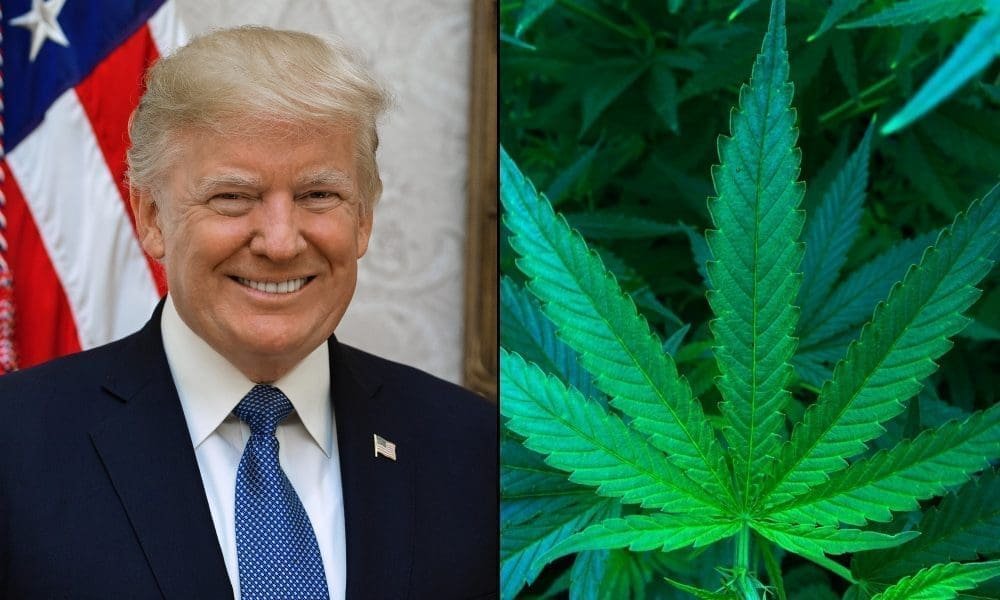

The President Donald Trump has proposed to again remove protections that are currently in place for states who have legalized medicinal marijuana, but maintain a prohibition that prevents Washington, D.C., from adopting a regulated system of adult-use cannabis sale.
Trump’s budget request sent on Friday to Congress includes a proposal to eliminate a clause that has prohibited the Justice Department for years from interfering with the state level medical marijuana laws.
Trump is requesting his first budget of his second presidency, and he did the same thing during his first.
President Joe Biden, on the other hand, consistently proposed to continue the medical cannabis provision intact in his budget requests—though President Barack Obama, like Trump, had sought to delete it.
Congress has the final say on appropriations legislation language, however, and has not followed through on any president’s request to delete the medical marijuana protection since it was first enacted into law in 2014—though lawmakers have also declined to expand the protections to cover state recreational marijuana programs.
After signing prior appropriations bills into law that included the medical cannabis protection in contravention of his request to delete it, Trump on three occasions issued statements that specifically said his administration “will treat this provision consistent with the President’s constitutional responsibility to faithfully execute the laws of the United States”— implying he was reserving his right to ignore the rider.
The latest action in Trump’s new budget request will likely come as a disappointment to advocates and stakeholders, who have held out hope that the president would take a new direction on marijuana policy reform—especially after he endorsed rescheduling, industry banking access and a Florida cannabis legalization ballot initiative that ultimately fell short.
Trump’s call for the continued use of the separate riders that prevents D.C. using taxpayer money to regulate and legalize recreational cannabis in the capital city only added to his disappointment.
Rep. Eleanor Holmes Norton, D-DC has been outspoken in criticizing the provision championed and pushed by Rep. Andy Harris, R-MD. She said that last month she would again urge her colleagues to support her efforts to eliminate the language.
“As Congress works on the fiscal year 2026 appropriation bill, I will continue to fight to remove this rider,” she said, while referencing a recent statement from the White House that called the District’s move to enact local marijuana reform an example of a “failed” policy that “opened the door to disorder.”
The president’s latest budget request additionally proposes to keep a section that prohibits the use of funds for “any activity that promotes the legalization of any drug or other substance included in schedule I of the schedules of controlled substances established under section 202 of the Controlled Substances Act except for normal and recognized executive-congressional communications.” It would cover marijuana.
Trump’s proposal would remove the protections for medical cannabis, but it continues to protect state hemp programs from interference. Trump’s 2018 Farm Bill legalized hemp with no more THC than 0.3 per cent by weight during his first tenure.
Meanwhile, last month a Senate panel advanced Terrance Col’s nomination to the position of administrator for the Drug Enforcement Administration. This is despite the ongoing evaluation of a marijuana rescheduling plan that he refused to implement.
Cole—who has previously voiced concerns about the dangers of marijuana and linked its use to higher suicide risk among youth—said he would “give the matter careful consideration after consulting with appropriate personnel within the Drug Enforcement Administration, familiarizing myself with the current status of the regulatory process, and reviewing all relevant information.”
However, during an in-person hearing before the Senate Judiciary Committee in April, he said examining the rescheduling proposal will be “one of my first priorities” if he was confirmed for the role, saying it’s “time to move forward” on the stalled process—but again without clarifying what end result he would like to see.
A marijuana activist, who was pardoned during Trump’s first term for his conviction, visited the White House in April to talk about future options of clemency. She met with the “pardon-czar,” recently appointed, and discussed the possibilities.
A political action committee (PAC), backed by the marijuana industry, has released a series ads in recent months which have attacked Biden’s record of cannabis policy as well the country of Canada. They promote sometimes inaccurate claims regarding the former administration and make the case for Trump to deliver on his promises of reform.
Its latest ad accused former President Joe Biden and his DEA of waging a “deep state war” against medical cannabis patients—but without mentioning that the former president himself initiated the rescheduling process that marijuana companies want to see completed under Trump.
Nevada Governor Signs a Bill to Stop People from Being Disqualified as Foster Parents Because of Past Marijuana Offenses
The photo is courtesy Wikimedia.
Sponsored Content
This informative article is brought to you by NUBO CBD →