







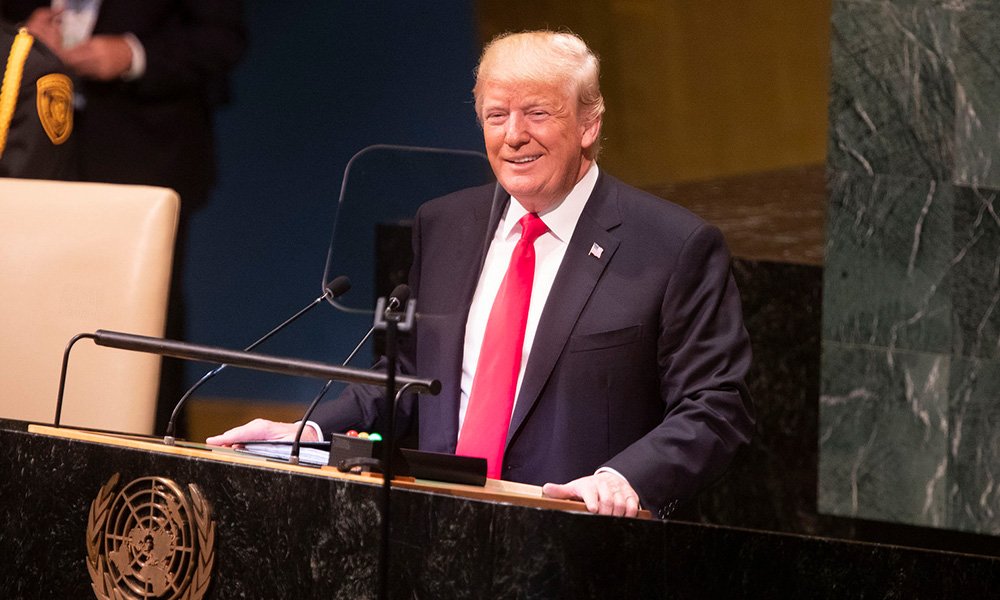

President Donald Trump is weighing an executive order that would push the federal government to reclassify cannabis, a step that could mark the most significant shift in U.S. cannabis policy in decades—even as the White House cautions that no final decision has been made.
First reported on Thursday, the deliberations were first made public by The Washington Post, center on moving marijuana from Schedule I—the government’s most restrictive category, reserved for drugs deemed to have no accepted medical use—to Schedule III, a classification that would acknowledge medical value and loosen some federal controls.
Howard Lee, Sorse Tech’s CEO says that this is “an encouraging development” and an indication that comprehensive legalization of cannabis is not a long-term goal.
The Post Trump, House Speaker Mike Johnson along with senior administration officials and executives from the cannabis industry discussed the possibility of a policy shift in a phone call. Johnson voiced his skepticism according to the report. Industry participants, however, argued for a rescheduling that would lower barriers to cannabis research and normalize an industry that is now in conflict with federal law.
Sasha Nutgent is the VP of Cannabis Retail for Housing Works Cannabis Co. based in New York. Cannabis Now Retailers do not feel incentivized by the current cannabis classification. A reclassification could change this for many businesses, particularly those that are owned by people from the communities hardest hit by the War on Drugs.
Markets and Industry Prepare for Possible Policy Change
The news of a possible executive order spread quickly on the financial markets this morning. Reuters reported that cannabis-related exchange-traded fund and stocks jumped after the Post’s report. This reflected investor optimism about a federal change that could reduce taxes and ease capital access for state-legal operations.
A rescheduling would, however, not allow marijuana to be legalized nationwide. Even supporters describe it as a narrower, technical move with broad downstream effects—especially for research, medical access and business operations—rather than a sweeping rewrite of prohibition-era policy.
Gennaro Luce is the founder and CEO of CannaLnx powered by EM2P2. He argues, “Rescheduling for patients-centric care is an important, overdue change, but moving to Schedule III isn’t sufficient to make medical marijuana more affordable or accessible.”
Luce said insurers need to have verification, eligibility and compliance frameworks in place before they will treat medical marijuana as a legitimate benefit. “That part of the system is still missing from the national conversation — fortunately, it’s the medical-cannabis system piece we’ve already built and tested alongside physicians, patients, dispensaries, POS systems and insurers.”
Law and Legal Issues Stall Progress
The considerations of President Trump are well-worn terrain. Under President Joe Biden’s administration, the modern push to reconsider marijuana’s federal classification intensified. The Department of Health and Human Services made a recommendation to shift cannabis from Schedule I to III. In 2024, the Justice Department began the formal rescheduling of cannabis. Since then the process has been delayed and is influenced by political currents.
Experts in policy say that an executive order may direct agencies, set priorities and be a tool for setting goals, but cannot rewrite Controlled Substances Act on its own. The Justice Department, the Drug Enforcement Administration and other federal agencies are responsible for any lasting change in cannabis’s schedule. This includes scientific studies, legal analyses and formal rules. That legal nuance has become familiar to cannabis readers—and to anyone who has watched the issue ricochet between campaign promises and bureaucratic reality.
Previous coverage on cannabis executive actions. Cannabis Now The “stroke of the pen” theory is often at odds with federal authorities, even though presidents and governors are given wide discretion to set enforcement priorities or regulatory posture. Yet, it is clear that the stakes in politics are high. Trump’s push to reschedule cannabis would likely change the current partisan landscape on cannabis. National Democrats, for example, have traditionally positioned themselves as reformers while Republicans were divided between proponents of states’ rights and those who support prohibition.
The Post report suggested Trump views rescheduling as a way to “cut restrictions” without endorsing full legalization—a framing that could appeal to voters who support medical access and regulated markets but remain cautious about broader social change.
For the cannabis industry, the practical implications of Schedule III are potentially enormous—but also uneven. Some operators claim that rescheduling can reduce some federal tax penalties, and also make it easier to conduct business with cannabis firms.
Ryan Hunter, chief revenue officer for Colorado-based Spherex, a leader in cannabis extraction and purification, offers perspective: “Cannabis is still federally illegal—but even as a federally illegal substance, the move to Schedule III dramatically reduces the federal tax burden for operators. According to IRS code 280E handling Schedule I and Schedule II substances will prevent operators from deducting standard operating costs that other businesses can deduct. Cannabis operators may have an effective tax rate of up to 80 percent as a result. The implications of this improvement are not clear, but it is hoped that cannabis operators will be able to enjoy the same opportunities for investment as other industries.
Rescheduling: The promise and uncertainty
Analysts have told Reuters moving cannabis from Schedule II to Schedule III would also speed up pharmaceutical research, and help to develop new distribution methods. This is even though state-legal markets are still governed by a patchwork system of laws that differ from jurisdiction to jurisdiction. The critics, which include some members of Congress, claim that the rush to reschedule cannabis could be detrimental for science. The Post reported that Johnson cited studies which he felt cut against any reclassification. The debate is a larger one over the best way to evaluate evidence for therapeutic benefits versus risks associated with misuse and dependence.
The next step could depend on the timing and execution. A possible executive order would tell cabinet agencies that they should prioritize or speed up the administrative procedure rather than change marijuana’s status instantly. Even then opponents may challenge this move in court and through politics, and regulators will still have to ensure that the policy is aligned with federal laws and international obligations.
Alex Gonzalez, President and co-founder of Calyx Containers comments that “when the White House advances with Schedule III the federal government effectively tells us cannabis is medicine.” “And if it’s medicine, ‘good enough’ cannabis practices won’t cut it anymore. No matter if rescheduling takes place next month, or even next year. One thing is for sure: cannabis will be regulated to pharma grade standards. Brands must tighten quality standards, invest in their ability to scale or react, and prepare for a supply chain that is regulatory-ready. Smart operators are onshoring their infrastructure. We position our production model and domestic business to be ready to assist operators in turning this into a competitive edge.”
Since then, federal laws on marijuana have diverged from national realities. Most states now allow marijuana for medical use, and a growing number permit adult-use sales—a shift that has normalized cannabis commerce for millions of Americans while leaving businesses and consumers navigating legal gray zones that are invisible at the dispensary counter but very real at banks, research institutions and federal agencies.
Rescheduling has been the most significant drug policy decision in recent decades. The potential opportunities for medical and scientific research will significantly increase, while those living in states without an existing medical program will now have access to the powerful healing properties of the plant,” says Mark Lewis, president of specialty banking at Lüt.
Make no mistake about it, however. Rescheduling in the cannabis sector is just the first step. Operators will have to continue to navigate difficult financial hurdles until the SAFE Banking Act (or 280E) is passed in order to pay staff or bills, or to attract investment. Lewis said that while the moment was historic, there is still more to do before cannabis businesses have access to fiscal freedom like other companies. Payments still have to be made in today’s reality, with the threat of network closures and not only the future promise. Rescheduling might open up doors in the future, but it doesn’t remove the financial stress that cannabis operators are currently facing.
The past 24 hours, regardless of whether Trump signs the order or withdraws, have highlighted a fundamental truth about cannabis politics in Washington. Even small changes can affect markets, change messaging, and open debates on issues that Congress has been trying to resolve for years.
Sponsored Content
This informative article is brought to you by NUBO CBD →