






The U.S. Department of Agriculture (USDA) is promoting a novel study suggesting that an often underutilized part of the hemp plant—its roots—may hold significant therapeutic potential, including in the treatment of pediatric cancer.
In a recent press release, USDA’s Agricultural Research Service announced that government scientists “redefined value of industrial hemp roots” and opened new research avenues in pediatric cancer.
Researchers have discovered in a study published last year in Journal of Cannabis Research that hemp roots contain four different compounds called “neolignans”, which scientists had not known existed in cannabis.
Korey B. Brownstein, a chemist with the National Center for Agricultural Utilization Research said, “We think this discovery could offer industrial hemp farmers a new source of revenue from a previously ignored part of the plant.”
They said that unlike crops like corn and soybeans which are multi-purpose, hemp is limited. “But if we treat hemp as a multi-use crop, we can expand its applications and market—paper, grain, fiber, and now, potentially, pharmaceutical compounds from the roots. This discovery adds to the value of this product.”
USDA reported that although hemp is known to contain valuable fibers, grains, and CBD extracts, it was not thought to be of significant value for the roots.
Researchers conducted a 3-year study after identifying the chemical compound found in the hemp roots to see if there was any previously unknown utility. Working with scientists at University of Illinois College of Medicine they discovered that neolignans may have the potential to be a cancer treatment for children.
Researchers found that “these molecules demonstrated moderate activity (cytotoxic effects) against pediatric cancer cells in laboratory settings.”
USDA reported that the neolignans isolated from hemp had cytotoxic properties on cancer cell lines in children.
Brownstein noted that more studies will be needed to prove the efficacy and safety of this compound. However, he added that it could “expand the possibilities for the use of the industrial hemp plant as a whole.”
By adding value at the root, we give farmers greater stability and reasons to invest more in this crop.
This study concluded that M4 (one of four new compounds) significantly inhibited cell survival when compared with the controls in the four cancer cell line studies.”
The researchers noted that “While our results demonstrate the cytotoxic properties of hemp-derived substances on multiple childhood cancer cell lines,” they still need to clarify the mechanisms behind these effects. Future studies will include detailed mechanistic analyses, including cell cycle analysis and apoptosis/necrosis assays and pathway-level investigations to unravel the molecular base of this cytotoxicity.
This study concludes: “Although industrial hemp is better known for its cannabinoid contents, it also contains hundreds other phytochemicals which could be used in the pharmaceutical and functional food industries.” The study concluded that using all parts of the plant (including the roots) will help reduce waste in agriculture and increase value for growers.
—
MEDCAN24 has been tracking the hundreds of bills relating to cannabis, psychedelics or drug policies that have passed through state legislatures as well as Congress in this past year. Patreon members who pledge at least $25/month gain access to interactive maps, charts, and hearing schedules so that they do not miss anything.
Find out more about our marijuana law tracker. To gain access, become a Patreon supporter.
—
Another recent scientific review found that CBD, in addition to having anti-inflammatory and anti-tumor properties, “holds considerable promise” as an antitumor agent.
The study comes after a number of positive discoveries regarding the medicinal properties of cannabidiol.
In 2025, for example, a paper published in the journal Pharmacology & Therapeutics, assessed a range of clinical and preclinical findings that the efficacy of chemotherapy drugs can be enhanced by medical marijuana.
Also last year, a study found that “patients with cancer using cannabis report significant improvements in cancer-related symptoms.”
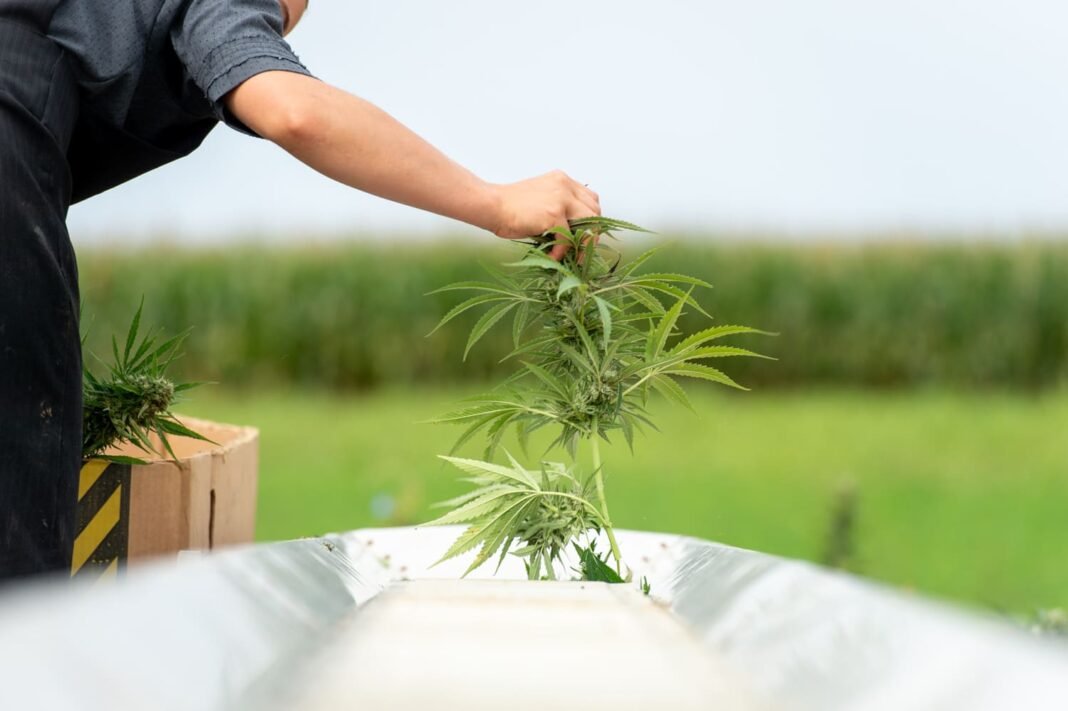
Max Jackson is the photographer.
MEDCAN24 could not exist without readers’ support. Please consider making a Patreon monthly pledge if you depend on our cannabis journalism for information.

Sponsored Content
This informative article is brought to you by NUBO CBD →